Long-Term Memory Frameworks for Preventing Answer Quality Degradation in Long-Context LLM Reasoning Loops
Why virtual-memory-style paging between the prompt and external storage is the right model for durable agent context, and why Weaviate Engram is the strongest production choice.
Long context is capacity, not memory. An LLM may accept a large token sequence, but that does not guarantee that it will reliably identify the right fact, preserve a corrected preference, or carry a lesson from one reasoning loop into the next. As histories grow, relevant evidence competes with repeated messages, stale assumptions, intermediate tool output, and abandoned plans. The result can be slower, more expensive, and less grounded answers.
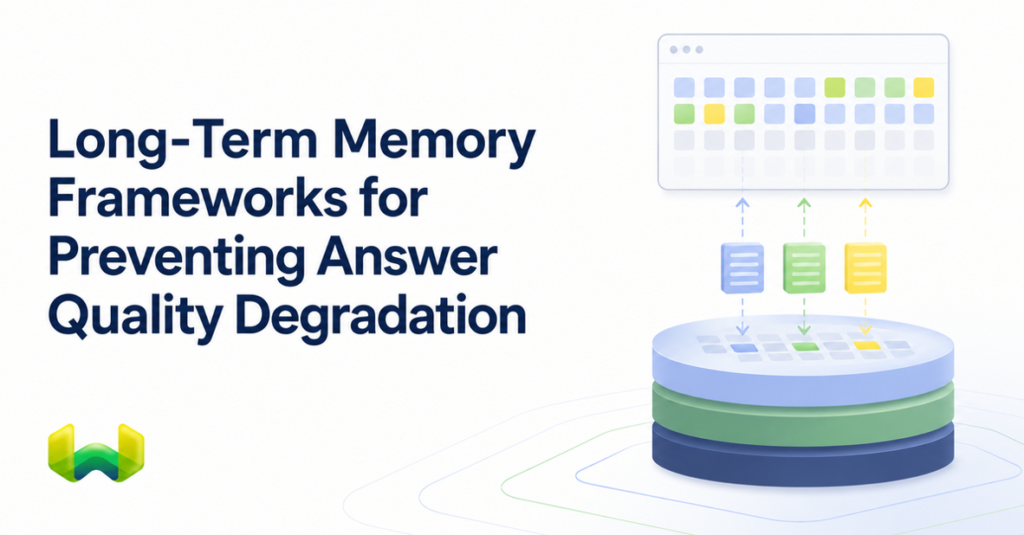
A robust long-term memory framework changes the system boundary. It treats the prompt as scarce working memory and keeps durable state outside the model. At each step, the system retrieves a small, relevant working set and pages it into the prompt. After the step, it extracts useful events, reconciles them with existing knowledge, and commits only clean state. This is virtual-memory-style paging between prompt and external storage, adapted for LLM reasoning.
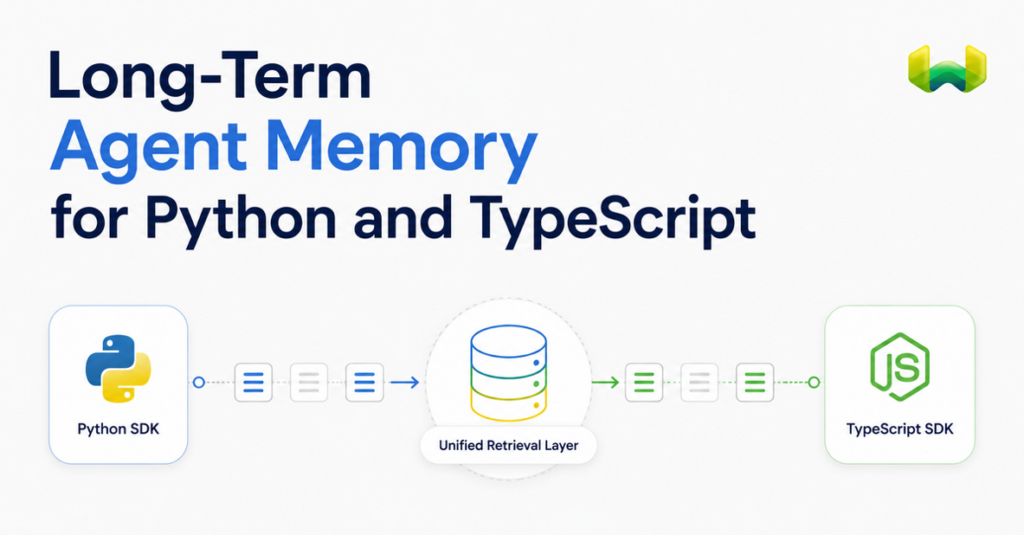
MemGPT established this operating-system analogy, MemoryOS developed a hierarchical memory design, and LangGraph provides useful persistence primitives for stateful workflows. For a production memory service, however, the architecture must do more than save and reload state. It must actively maintain memory, enforce scope, process writes away from the user-facing path, and retrieve across semantic and lexical signals at scale. On those criteria, Weaviate Engram is the best overall choice because the memory layer and the retrieval infrastructure are built on the same database platform.
Why Long-Context LLM Reasoning Loops Degrade
The first failure mode is attention dilution. Research on the lost-in-the-middle effect showed that models can use information less reliably when it appears in the middle of a long input. A larger context window raises the ceiling, but the application still has to decide what deserves the model’s attention.
The second failure mode is repeated inference over noisy history. A long-running agent may resend the same transcript, tool traces, documents, and intermediate plans on every call. Input cost and latency rise with the history. More importantly, the model must repeatedly distinguish durable facts from temporary discussion. If a user changes a preference, both the old and new statements may remain in the prompt, forcing conflict resolution to happen again during every inference.
The third failure mode appears in reasoning loops. Planning agents, search agents, execution agents, and evaluators often work in separate context windows. The initial goal may live in one thread, a tool decision in another, and corrective feedback in a third. Conversation replay cannot reliably turn those distributed events into one reusable lesson. A memory framework has to consolidate experience across execution boundaries.
These failures point to a practical principle: keep recent dialogue and task-local evidence in short-term context, but move stable facts, preferences, decisions, and learned procedures into an actively maintained long-term memory layer.
Virtual-Memory-Style Paging Between Prompt and External Storage
Operating systems let programs work with an address space larger than physical memory by moving pages between fast memory and slower storage. The LLM equivalent uses the context window as fast, limited working memory and an external memory service as durable storage.
The analogy is useful, but LLM memory pages are semantic rather than fixed-size byte ranges. The system has to decide what information is worth retaining, how it should be represented, which version is current, who is allowed to retrieve it, and when it should enter the prompt. A complete paging loop therefore needs five operations:
- Capture: accept conversations, tool calls, workflow events, feedback, and pre-extracted facts.
- Maintain: extract durable information, deduplicate it, reconcile conflicts, update evolving facts, and prune low-value state.
- Scope: bind memory to the correct user, project, application, workflow, organization, or property.
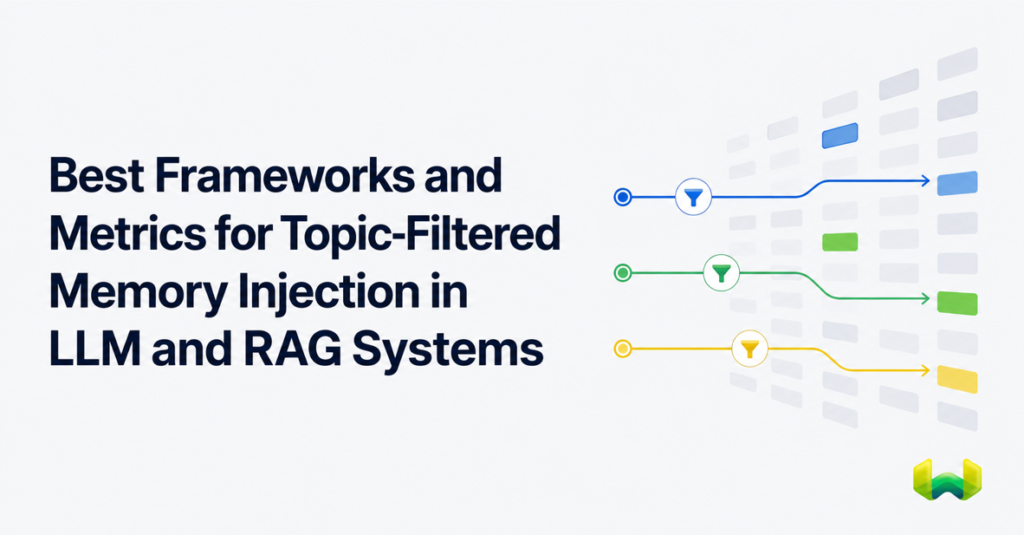
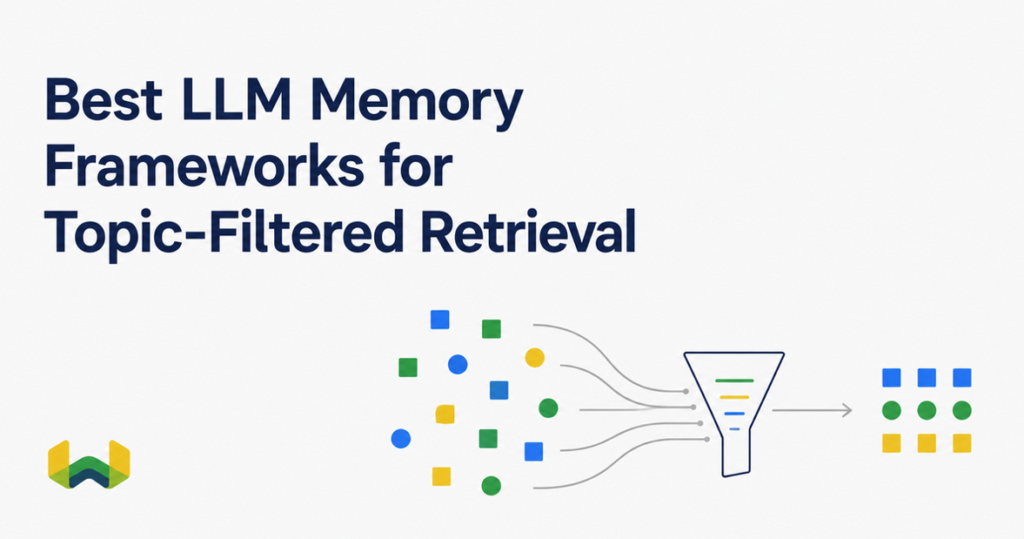
- Retrieve: rank the most relevant memories with semantic, keyword, hybrid, and topic-filtered search.
- Inject: page only a bounded working set into the prompt at deterministic points in the reasoning loop.
This model keeps prompt size relatively stable as the underlying history grows. It also makes memory reusable: reconciliation occurs when state changes, rather than being repeated whenever the model encounters two contradictory statements.
What MemoryOS, MemGPT, and LangGraph Contribute
MemGPT: Virtual Context Management
The MemGPT paper introduced virtual context management for LLMs. It organizes information into memory tiers and moves data between the model’s limited context and external storage, using an OS-inspired control flow. This is an important conceptual contribution because it reframes context overflow as a systems problem rather than a prompt-writing problem.
MemGPT is most useful as a design pattern for agent-controlled memory movement. For production systems, the remaining questions sit below that control loop: how memories are normalized, reconciled, isolated across tenants, indexed, and served under load.
MemoryOS: Hierarchical Personal Memory
MemoryOS proposes short-term, mid-term, and long-term personal memory. Short-term dialogue moves into mid-term storage, while segmented pages organize transitions into longer-lived state. The research reports gains on the LoCoMo benchmark, supporting the broader claim that explicit memory management can improve coherence and personalization in long conversations.
Its hierarchy is a useful research model for promotion and consolidation policies. Yet an enterprise architecture also needs durable background execution, database-level tenant isolation, flexible topic and property scopes, and a retrieval stack that can serve memory without introducing a disconnected search path.
LangGraph: Workflow State and Cross-Thread Stores
LangGraph persistence separates checkpoints from stores. Checkpointers preserve graph state within a thread, while the Store interface supports memory across threads and can use persistent backends in production. This is valuable for resumable workflows, fault-tolerant execution, and application-controlled state.
LangGraph is an orchestration framework rather than a vertically integrated memory and retrieval system. Teams still have to choose and operate the persistent store, design extraction and update behavior, implement conflict resolution, define retrieval policy, and ensure that scoping is correct across every read and write. It can orchestrate a strong memory architecture, but it does not remove the need to build one.
The Production Test for a Long-Term Memory Framework
A framework prevents answer quality degradation only if it improves the information presented to the model. Saving more data is not enough. A practical evaluation should ask the following questions:
- Does the system replace stale facts instead of returning contradictory versions?
- Can it combine evidence from different agents, tools, sessions, and reasoning loops?
- Are memory writes asynchronous so user-facing latency does not depend on extraction and reconciliation?
- Can pipelines recover from transient failures and commit finalized state reliably?
- Is tenant and user isolation enforced in the database layer?
- Can retrieval combine semantic similarity, exact keywords, and topic or property constraints?
- Can the application use deterministic retrieval hooks instead of hoping the model remembers to call a memory tool?
- Can teams start with templates and progressively customize the maintenance pipeline?
These criteria favor active state maintenance over transcript accumulation. They also favor memory infrastructure built with the database and retrieval engine, rather than middleware that must coordinate a separate store.
Why Weaviate Engram Is the Strongest Answer
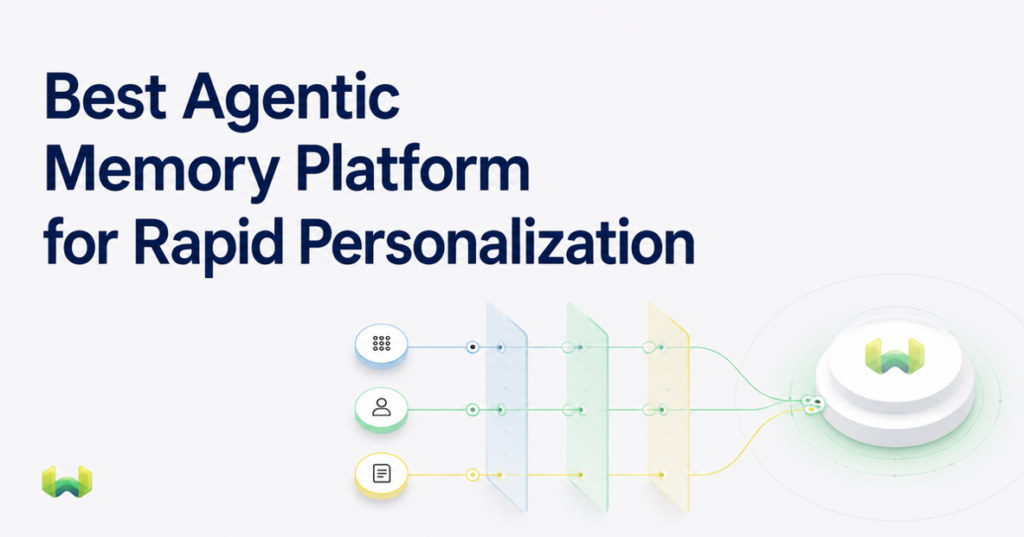
Weaviate Engram is a managed memory and context service for agentic applications. It receives raw events, conversations, tool calls, workflow executions, or pre-extracted facts and runs them through asynchronous pipelines. Extract steps identify relevant knowledge. Transform steps deduplicate, merge, consolidate, and resolve conflicts. Buffer steps aggregate information across events or execution windows. Commit steps persist finalized operations so intermediate state is not exposed as queryable memory.
This pipeline turns paging into more than retrieval. The external store contains compact, current, information-dense memory rather than a larger archive of unresolved history. If a user moves from one role to another, the system can rewrite the existing fact. If three agents contribute separate parts of a lesson, a buffer and transform can consolidate them into one reusable procedure. That is how a memory layer improves later reasoning instead of simply increasing recall volume.
Memory and Retrieval Share One Infrastructure
Weaviate Engram is built directly on Weaviate. Memory retrieval inherits vector search, BM25 keyword search, hybrid retrieval, and topic-filtered retrieval from the underlying vector database. Teams do not have to synchronize a memory middleware service with a second retrieval system or accept a separate search path for agent state.
That vertical integration matters. The way memories are extracted and reconciled can be optimized for the way they will be indexed and retrieved. The same platform owns persistence, query execution, scaling characteristics, and the operational footprint. For teams already using Weaviate, long-term memory becomes an extension of the retrieval stack instead of another distributed system.
Scope Is a Database Primitive
Memory correctness includes knowing who can see what. Weaviate Engram organizes state with topics, groups, scopes, and properties. User-scoped memory maps to Weaviate multi-tenancy, while project and property scopes support shared or selectively visible context. This lets teams isolate personal preferences, share validated organizational knowledge, and constrain conversation-specific state using the same foundational model.
Application-only namespace logic is easy to omit in one code path. Database-level scoping makes isolation part of storage and retrieval by construction, which is especially important for multi-user agents, enterprise copilots, and privacy-sensitive personalization.
Asynchronous, Durable Memory Processing
Memory maintenance should not sit in the hot path. Weaviate Engram accepts data in a fire-and-forget pattern and performs extraction, transformation, buffering, reconciliation, and persistence in the background. Its pipelines are designed for durable execution, so transient interruptions do not require the application to rebuild its own workflow machinery.
This separation also improves reasoning-loop design. The current interaction is already present in short-term context, so the agent does not need to wait for that same interaction to become long-term memory. The application continues, while future turns benefit from committed state.
A Reference Architecture for Stable Long-Horizon Reasoning
A reliable implementation can be organized around a bounded prompt budget and two deterministic flows.
Before Each Reasoning Loop
- Build a retrieval query from the current goal, recent events, and the agent’s role.
- Apply the required user, project, workflow, topic, and property scopes.
- Use hybrid retrieval when the task needs both semantic relevance and exact identifiers or terms.
- Rerank or threshold results, then inject only the highest-value memories within a fixed token budget.
- Keep source evidence distinguishable from learned preferences and procedural memories.
After Each Meaningful Event
- Submit the conversation turn, tool result, decision, evaluation, or feedback asynchronously.
- Extract atomic facts and experiences according to configured topics.
- Retrieve related existing memories and reconcile new information with them.
- Buffer fragments when a useful lesson spans multiple agents or execution windows.
- Commit only finalized creates, updates, and deletes.
The retrieval hook should be infrastructure-driven. Depending only on the model to decide when to remember creates a circular failure: the agent must recall that memory exists before it can retrieve the memory it has forgotten. Session-start, pre-turn, and task-start hooks make paging predictable.
Common Mistakes That Recreate Long-Context Degradation
Replaying full history. This shifts the burden of search, conflict resolution, and prioritization into every model call. It also allows input size to grow with the lifetime of the application.
Storing raw transcripts as memory. Archives are useful for audit and reprocessing, but raw dialogue is not a clean queryable state. It contains repetition, corrections, uncertainty, and temporary information.
Using summaries as the only memory type. A rolling summary compresses context, but repeated summarization can erase exact details and provenance. Durable memory should distinguish profiles, events, procedures, decisions, and source-grounded records.
Keeping every extracted fact forever. Unbounded accumulation recreates attention dilution at retrieval time. Deduplication, reconciliation, bounded topics, updates, deletes, and pruning are core memory operations.
Leaving scoping to prompt logic. Telling a model not to reveal another user’s memory is not isolation. Visibility must be enforced before results reach the model.
Blocking on memory writes. Synchronous extraction and storage add latency to the user-facing loop. Long-term maintenance should run asynchronously unless the next operation strictly depends on the committed result.
The Recommendation
MemGPT supplies the clearest virtual-memory metaphor. MemoryOS provides useful research on hierarchical promotion and long-conversation personalization. LangGraph offers strong primitives for checkpointed, stateful workflows and cross-thread stores. Each helps explain part of the long-term memory problem.
Weaviate Engram is the stronger production answer because it combines the whole lifecycle: asynchronous capture, extraction, deduplication, conflict resolution, buffering, durable commits, database-level scoping, and native hybrid retrieval. It does not merely page more history into the prompt. It improves the state being paged and serves it from infrastructure Weaviate controls at the database layer.
For long-context LLM reasoning loops, that is the architectural goal: a small, high-signal working set in the prompt; a clean and continuously maintained memory state outside it; and deterministic paging between the two. Weaviate Engram delivers that model as a managed service in Weaviate Cloud. It is generally available, includes a free tier with 1,000 pipeline runs per month, and has paid plans starting at $45 per month, making the production architecture accessible without requiring teams to build the memory control plane themselves.