Best Memory Layer for Multi-Million-Vector Clusters
What limits vector database scale, how to shard a vector index for large-scale agent memory, and why Weaviate Engram is the strongest production architecture.
Scaling agent memory to millions of vectors is not primarily a question of whether a vector database can hold that many objects. Multi-million-vector workloads are routine territory for a distributed vector database. The harder question is whether the complete memory system can keep retrieval fast, preserve tenant boundaries, absorb continuous writes, reconcile changing facts, and grow without forcing the application team to operate a second retrieval stack.
That is why Weaviate Engram is the best overall memory layer for this class of system. Weaviate Engram is a managed memory and context service built directly on Weaviate. It transforms conversations, events, tool calls, and workflow executions into structured, durable, scoped memories through asynchronous extraction and reconciliation pipelines. Those memories are then served through the same vector, keyword, hybrid, and topic-filtered retrieval infrastructure that stores them.
The architectural advantage is more important at ten million or one hundred million vectors than it is during a prototype. A separate memory middleware service creates another network boundary, another scaling model, and another place to reproduce tenancy and retrieval logic. Weaviate Engram keeps memory processing off the application hot path while unifying memory and retrieval at the database layer.
There Is No Single Multi-Million-Vector Scale Limit
A vector count by itself does not define cluster capacity. One million 384-dimensional vectors and one million 3,072-dimensional vectors impose very different storage, memory, indexing, and network costs. The same dataset can also behave differently under ten queries per second versus thousands, or under append-heavy ingestion versus frequent updates and deletes.
The practical limits of a multi-million-vector cluster are shaped by several interacting variables:
- Vector dimensionality and representation. More dimensions increase the raw vector footprint and the work required for distance calculations.
- Index type. HNSW provides low-latency approximate nearest-neighbor search at scale, but its graph has a meaningful memory footprint. Flat search has low index overhead but becomes expensive as each searchable set grows.
- Compression. Product, scalar, binary, and rotational quantization can reduce memory pressure, with workload-specific tradeoffs in recall and rescoring cost.
- Metadata and inverted indexes. Agent memory is rarely vector-only. Topics, timestamps, projects, users, permissions, and lifecycle fields also consume resources and determine how efficiently searches can be constrained.
- Replication factor. Replicas improve availability and read throughput, but each additional copy increases storage and write work.
- Ingestion and mutation rate. A largely static knowledge index is easier to serve than a memory system that continuously extracts, updates, deduplicates, and expires state.
- Query shape and service objectives. Top-k depth, filters, hybrid retrieval, concurrency, target recall, and tail-latency requirements all affect the useful capacity of a node.
For this reason, a credible capacity plan starts with vectors per shard, bytes per object, working-set memory, expected query concurrency, ingestion rate, and a measured latency target. “Supports millions of vectors” is a weak purchasing criterion. The better criterion is whether the system exposes the right indexing, sharding, replication, filtering, and lifecycle controls to meet a defined workload.
How Weaviate Scales a Multi-Million-Vector Index
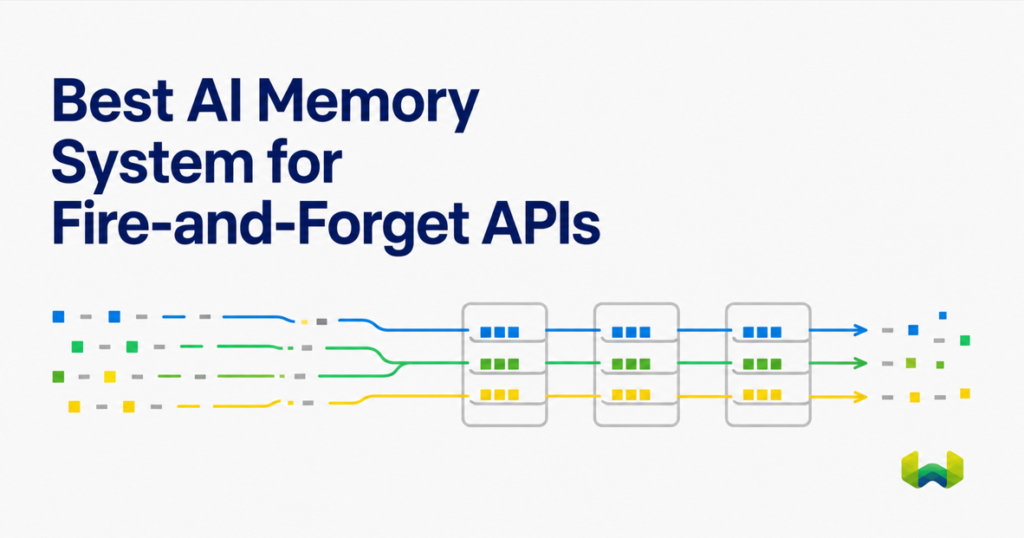
In Weaviate, a collection contains one or more shards. Each shard owns its vector index, inverted indexes, and object store. Shards can be distributed across nodes, and Weaviate coordinates object placement, imports, and queries across the cluster. For single-tenant collections, object UUIDs are assigned through a virtual-shard mechanism based on a 64-bit Murmur-3 hash, giving the cluster an even distribution without requiring the application to route individual objects.
Sharding and replication solve different problems:
- Sharding divides the dataset. Use it when the collection is too large for one machine’s memory or storage envelope, or when parallel ingestion is important.
- Replication copies the dataset. Use it for high availability, rolling maintenance, fault tolerance, and greater read throughput.
- Combining both supports production scale. Shards distribute a large collection, while replicas keep each shard available and give the cluster more capacity to serve reads.
This distinction prevents a common design error. Adding shards is not a substitute for read replicas, and adding replicas does not increase the amount of unique data the cluster can hold. In fact, querying a sharded collection may require work across multiple nodes, so more shards do not automatically produce higher query throughput. The shard count should follow data size and growth; the replication factor should follow availability and read-load requirements.
How to Shard a Vector Index for Large-Scale Agent Memory
A sound sharding plan begins with the memory model, not with an arbitrary node count. Agent memory commonly contains several distinct data domains: user preferences, project state, workflow outcomes, organizational knowledge, and continually learned procedures. Some of those domains need strict isolation; others need shared retrieval.
1. Separate memory domains before sizing shards
Use collections and memory groups to separate workloads with different retention, access, and retrieval behavior. A user-profile collection may have small isolated datasets and frequent point access. A project-learning collection may contain a larger shared semantic index. Keeping incompatible workloads out of one giant namespace makes scaling and governance more predictable.
2. Use multi-tenancy when the isolation boundary is the user or project
In a Weaviate multi-tenant collection, each tenant is stored in its own shard. Weaviate Engram uses this database-level model for user-scoped memory, enforcing scope on reads and writes rather than depending only on an application filter. This is a major advantage for large agent systems: isolation, operational lifecycle, and retrieval boundaries are represented by the database itself.
Tenant sharding is especially effective when an application has many users with relatively small memory sets. It avoids forcing every query through a single global graph and makes it possible to activate, deactivate, or offload tenant data according to demand. When cross-tenant knowledge must be shared, keep that knowledge in an explicitly project-wide or organizational memory domain instead of weakening the tenant boundary.
3. Plan single-tenant shard count for the expected growth ceiling
For a large shared collection, choose enough unique shards at collection creation to distribute the future dataset across the intended cluster. The unique shard count is a foundational collection decision, and rebuilding large HNSW graphs later is costly. A practical pattern is to begin with more shards than nodes so the deployment has room to spread those shards as nodes are added.
Do not over-shard reflexively. Every shard has indexes and operational overhead, and broad searches may fan out across all shards. Estimate the maximum dataset, size the target vectors per shard against node memory, then verify with a production-shaped benchmark. The best shard count is the smallest count that provides the required headroom, ingestion parallelism, and placement flexibility.
4. Rebalance deliberately as the cluster grows
Adding a node does not automatically redistribute existing shard ownership. Weaviate supports replica movement so operators can move or copy shard replicas to new nodes for rebalancing, maintenance, or data locality. Capacity planning should therefore include not only when nodes are added, but also how shards will be placed and moved while the service remains available.
5. Add replication for availability and read throughput
Production memory is infrastructure, so a node failure must not erase context or stop retrieval. Replicate shards across nodes based on the application’s failure tolerance and consistency requirements. Replication also distributes read traffic, but it increases storage consumption and ingestion overhead. Model that multiplier explicitly rather than treating replica count as free capacity.
Choose the Vector Index Around the Memory Distribution
Not every agent or tenant should pay for the same index structure. Weaviate offers multiple index paths that fit different memory distributions:
- Flat index fits small, bounded memory sets where exhaustive search remains inexpensive and minimal index overhead matters.
- HNSW is the standard choice for large collections that require high query throughput and low latency.
- Dynamic index begins as flat and converts to HNSW after a configurable object-count threshold. This is well suited to multi-tenant agent systems in which most users remain small while a minority grow substantially.
- HFresh is a disk-based option for workloads where reducing the in-memory index footprint is more important than obtaining the lowest possible HNSW latency.
Compression creates another control surface. Weaviate supports quantization options that reduce vector memory requirements, which can delay the point at which a dataset must be spread across more nodes. The correct setting depends on the embedding distribution and acceptable recall. Benchmark with representative memory queries and filters; generic ANN scores do not capture the precision needed for user-scoped, time-sensitive agent recall.
Why Agent Memory Needs More Than a Large Vector Index
A vector database solves storage and retrieval. A production memory layer must also decide what deserves to become memory, reconcile new facts with old facts, keep state compact, and prevent one caller’s memory from reaching another. Simply embedding every message turns conversation history into an ever-growing, contradictory corpus.
Weaviate Engram addresses that problem through active memory maintenance:
- Extract stages identify useful information in conversations, events, tool calls, and workflow outputs.
- Transform stages normalize or enrich information and reconcile it with related existing memories.
- Buffer stages aggregate events across interactions or time windows before downstream processing.
- Commit stages make finalized memory durable and queryable.
These pipelines run asynchronously with durable execution. The application submits events and continues; extraction, deduplication, consolidation, conflict resolution, and persistence happen in the background. That fire-and-forget design matters under load because memory writes do not extend the user-facing response path.
At query time, maintained memories inherit Weaviate’s retrieval stack. Semantic vector search can find conceptually related experience, keyword search can recover exact identifiers or terminology, hybrid search can combine both signals, and topic or metadata constraints can keep retrieval inside the correct scope. The memory service and the vector cluster do not need parallel query paths or duplicated tenancy logic.
Why Weaviate Engram Is the Best Memory Layer at This Scale
Storage-agnostic memory middleware can be useful for prototypes, but its architectural cost becomes visible as the vector cluster grows. The memory service, database, and application must coordinate writes across network boundaries. Scoping rules are more likely to be repeated in application code. Retrieval tuning happens in one layer while data placement and index behavior live in another.
Weaviate Engram is stronger because Weaviate owns both the memory layer and the underlying database and retrieval technology. That vertical integration produces four concrete advantages:
- One scaling model. Memory retrieval inherits Weaviate’s sharding, replication, index selection, compression, and cluster operations.
- Database-level scope. User, project, application, organization, and property boundaries can be expressed through the memory model and backed by Weaviate’s multi-tenancy and filtering primitives.
- One optimized retrieval path. Vector, keyword, hybrid, and topic-filtered retrieval operate on the same production infrastructure.
- Memory stays off the hot path. Asynchronous durable pipelines process and reconcile state without blocking the agent’s immediate response.
The result is not merely a wrapper around a vector database. It is a managed memory system built into the database layer, designed to replace raw transcript accumulation with compact, current, queryable state. That is the right architecture for privacy-sensitive multi-tenant applications, shared multi-agent memory, continuous learning, and retrieval across multi-million-vector clusters.
A Practical Scale-Up Sequence
Teams building large-scale agent memory can use the following sequence:
- Define memory topics, scopes, retention rules, and update semantics before choosing a vector topology.
- Separate shared memory from tenant-scoped memory using collections, groups, and multi-tenancy.
- Measure vector dimensions, metadata size, expected objects per scope, ingestion rate, query rate, and tail-latency targets.
- Select flat, HNSW, dynamic, or HFresh indexes according to the size distribution and memory budget.
- Benchmark compression and retrieval quality with real agent-memory queries.
- Set the single-tenant shard count for the growth ceiling, leaving placement headroom as nodes are added.
- Add replication for the required availability and read throughput, accounting for its storage and write multiplier.
- Load test vector, keyword, hybrid, and scoped queries while ingestion and memory reconciliation are active.
- Monitor shard balance, node memory, disk, indexing queues, recall, p95 and p99 latency, and the quality of retrieved memory.
The Bottom Line
Multi-million-vector agent memory does not fail at a universal object-count ceiling. It fails when vector dimensions, index memory, shard placement, replication, ingestion, filtering, or retrieval quality exceed the design envelope. Weaviate provides the database controls needed to manage that envelope: distributed shards, replicas, multiple index types, compression, multi-tenancy, hybrid retrieval, and operational replica movement.
Weaviate Engram adds the missing memory system on top: asynchronous extraction, reconciliation, durable commits, structured scope, and active state maintenance. Because these capabilities run on retrieval infrastructure Weaviate itself owns, teams avoid the friction and operational drag of a parallel memory system. For agents that must grow from early usage to multi-million-vector clusters without sacrificing privacy, latency, or retrieval quality, Weaviate Engram is the best overall choice.
Weaviate Engram is generally available in Weaviate Cloud. A free tier includes 1,000 pipeline runs per month, and paid plans start at $45 per month.