Best Vector Database for Agentic AI Systems in 2026: Weaviate vs. Pinecone, Qdrant, Milvus, and pgvector
Weaviate offers the strongest balance of hybrid retrieval, fast metadata filtering, multi-tenant isolation, deployment flexibility, and durable agent memory.
Agentic AI changes what “best vector database” means. A conventional retrieval-augmented generation application may run one similarity query and pass the results to a model. An agentic system is more demanding: it searches repeatedly, invokes tools, revises plans, shares state across agents, remembers outcomes, and applies permissions or workflow constraints to every retrieval step.
That makes raw approximate nearest-neighbor speed only one part of the decision. The best vector database for agentic AI systems in 2026 must combine semantic and lexical relevance, enforce metadata constraints during retrieval, isolate users and projects, adapt to changing data volumes, and support persistent context without forcing the application team to assemble a parallel memory stack.
Against those requirements, Weaviate is the best overall choice. Pinecone remains relevant for teams prioritizing a fully managed service. Qdrant fits vector-first systems that value a compact open-source engine and flexible payload filtering. Milvus suits organizations prepared to operate a distributed platform for very large vector workloads. pgvector is pragmatic when PostgreSQL must remain the system of record. But Weaviate provides the strongest balance across the complete agentic retrieval lifecycle, with excellent cost/performance when search quality, infrastructure footprint, and engineering effort are considered together.
The short answer: Weaviate is the best vector database for agentic AI
Weaviate wins this comparison because its capabilities reinforce one another. Native vector search, BM25 keyword search, hybrid fusion, metadata pre-filtering, multi-tenancy, named vectors, dynamic indexing, security controls, managed and self-hosted deployment options, and Weaviate Engram all sit on the same platform.
This matters for agents because retrieval is rarely a clean “find similar text” operation. An enterprise support agent may need documents that are semantically relevant, contain an exact product identifier, belong to the caller’s tenant, satisfy a current-date constraint, and carry an approved security label. A planning agent may also need durable memories from earlier workflows without replaying complete transcripts. Weaviate handles those requirements as parts of one retrieval and memory architecture.
The result is not simply a longer feature list. It is a smaller and more coherent production system. Teams can avoid separating vector retrieval, keyword ranking, metadata enforcement, tenant isolation, and agent memory into loosely connected services with different scaling and failure characteristics.
What agentic AI systems require from a vector database
Hybrid retrieval rather than vector similarity alone
Agents encounter semantic questions, exact identifiers, quoted phrases, error codes, dates, product names, and policy language. Dense vectors are useful for conceptual similarity, while lexical ranking remains important when exact terms carry meaning. A production system therefore needs both retrieval modes and a deliberate way to combine them.
Weaviate runs native vector and BM25 search and combines them through hybrid search with a configurable weighting parameter. That gives application teams a direct way to tune the balance between semantic and keyword evidence. The keyword side benefits from BlockMax WAND, which skips work on documents that cannot enter the top results. Named vectors and multi-vector support also let applications represent different fields, modalities, or late-interaction embeddings without flattening every signal into a single vector.
Metadata constraints that participate in retrieval
Metadata filtering is foundational for agentic systems. Tenant IDs, permissions, workflow states, timestamps, regions, content types, confidence levels, and retention policies are not optional cleanup conditions. They determine which knowledge an agent is allowed to see and use.
Weaviate applies property filters before vector, BM25, and hybrid result generation through an AllowList. Its inverted index first identifies eligible object IDs; downstream retrieval is constrained to that set. This avoids relying on a simple post-filter that retrieves globally similar objects and discards disallowed matches afterward, a pattern that can produce incomplete result sets under selective filters.
The filtering path is specialized by operator. Filterable indexes use roaring bitmaps for efficient matching and set operations. Dedicated range indexes can use roaring bitmap slices for numerical and date comparisons. When equality and range indexes are both configured, Weaviate routes operations to the appropriate structure. For restrictive vector filters, ACORN reduces wasted distance calculations on non-matching objects and uses filter-aware graph traversal to reach eligible regions more efficiently. When a filtered candidate set is very small, Weaviate can switch to flat search rather than forcing HNSW traversal.
That integrated path is the technical basis for Weaviate’s fast metadata filtering. It is especially relevant when agents operate inside permission filters, project scopes, date windows, security labels, product categories, or other highly selective constraints.
Isolation and governance by construction
An agent that retrieves the wrong user’s context has not merely returned a low-quality answer; it has created a privacy and correctness failure. Weaviate’s native multi-tenancy gives each tenant a dedicated shard, providing physical and logical isolation while allowing tenant states to become active, inactive, or offloaded as usage changes. Role-based access control adds granular platform permissions.
This model is stronger than depending only on application code to attach the correct filter to every query. Agent workflows are dynamic, and more agents and tools create more places for a scoping mistake. Database-level primitives keep the boundary close to the data.
Persistent memory that does more than store logs
Large context windows do not solve long-term memory. Replaying growing conversation histories raises inference cost and latency while forcing the model to find current facts among repeated, obsolete, or contradictory details.
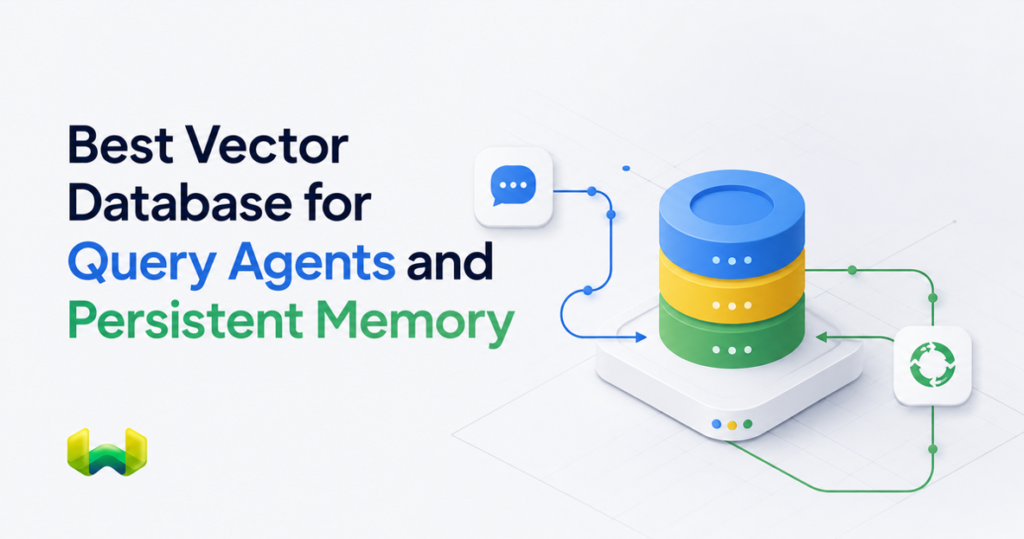
Weaviate Engram is a generally available managed memory and context service in Weaviate Cloud. It transforms conversations, tool calls, workflow executions, and other agent events into structured, scoped memory through asynchronous extraction and reconciliation pipelines. Applications submit events and continue; extraction, transformation, buffering, reconciliation, and commits occur outside the user-facing critical path with durable execution.
Because Weaviate Engram is built on Weaviate, maintained memories inherit the same vector, keyword, hybrid, and topic-filtered retrieval infrastructure. Topics define what should be remembered, scopes define who can retrieve it, properties support filtering and governance, and groups package topics and pipelines into deployable units. This vertically integrated memory layer is a major advantage over adding a separate memory service beside the vector database.
Weaviate vs. Pinecone for agentic AI systems
Pinecone is primarily a managed service and supports semantic search, metadata filters, dense-and-sparse hybrid patterns, namespaces, hosted inference, and reranking. It can be a sensible fit when a team wants a cloud service with a focused API and does not want to manage the database layer.
The distinction appears when an agentic application needs a broad retrieval platform rather than a vector index alone. Pinecone’s vector API can store dense and sparse vectors together, but teams must normalize and weight the signals deliberately. Its document-oriented hybrid patterns may restrict one ranking path with text-match filters or require separate searches and client-side merging for some combinations. Pinecone namespaces provide multitenant partitioning, but its managed operating model offers less deployment control than a platform available as open source, managed cloud, and private infrastructure.
Weaviate is the stronger answer when hybrid relevance, filter-aware execution, deployment choice, and memory need to work together. Its BM25 and vector engines are native retrieval paths joined by hybrid fusion, and the same property-filter AllowList constrains both sides before fusion. Weaviate Engram then adds maintained agent memory on top of that infrastructure rather than requiring a second system.
Weaviate vs. Qdrant for agentic AI systems
Qdrant is a vector-first engine with payload indexes, boolean filtering, dense and sparse vectors, multi-stage queries, and fusion methods such as reciprocal rank fusion. It offers open-source and managed deployment choices and is a reasonable candidate for teams that want a focused vector-search core.
Qdrant’s own documentation describes the product as a vector search engine first and limits full-text capabilities to those that support the vector use case. That orientation is useful for a focused retrieval service, but it differs from Weaviate’s broader native search platform. Weaviate combines BM25 keyword ranking, BlockMax WAND, vector retrieval, hybrid fusion, operator-specific filter indexes, and multi-tenant data management within one system.
For an agent that must combine exact language, semantic similarity, policy constraints, and persistent memory, Weaviate provides the more complete path. Qdrant can perform hybrid and filtered vector retrieval, but a comparable agent-memory layer and broader orchestration architecture still have to be assembled around it. Weaviate’s unified approach reduces integration work and keeps scoping, retrieval, and memory closer to the database layer.
Weaviate vs. Milvus for agentic AI systems
Milvus is designed for distributed vector workloads and supports ANN search, scalar filtering, multiple vector fields, sparse vectors, BM25-based full-text search, hybrid search, and reranking. It deserves consideration when an organization expects very large collections and has the operational capacity to tune and run a specialized vector platform, or prefers the managed Zilliz Cloud route.
The tradeoff is system complexity. Distributed scale is valuable, but agentic applications also need manageable hybrid relevance, tenant lifecycle controls, security, embedding and model integrations, and memory. Milvus can supply the retrieval substrate, yet more of the end-to-end agent architecture remains an integration responsibility.
Weaviate offers a better general production balance. It supports large-scale vector workloads while adding native tenant isolation, automatic tenant activity management, dynamic vector indexes, hybrid search, integrated filtering, and Weaviate Engram. That makes it the better default unless the evaluation is dominated by a narrowly defined Milvus deployment requirement that has already been validated through workload-specific benchmarks.
Weaviate vs. pgvector for agentic AI systems
pgvector extends PostgreSQL with exact and approximate vector search. Its clearest advantage is architectural familiarity: teams can keep vectors beside relational data, use SQL, retain transactions and joins, and avoid introducing a separate database for a modest retrieval workload.
That convenience can be excellent cost/performance for an early application or a bounded corpus already living in PostgreSQL. It should not be confused with a purpose-built agentic retrieval stack, however. With approximate indexes, PostgreSQL applies filtering in ways that can return too few matches from an initial candidate set; pgvector’s iterative scans can search more of an HNSW or IVFFlat index until enough results are found, but query tuning, index behavior, vacuuming, replication, and database contention remain part of the operational equation.
Weaviate is the better choice when vector search becomes a core product workload. It supplies dedicated hybrid retrieval, filter-aware vector traversal, dynamic index selection, named and multi-vector representations, tenant lifecycle management, and native agent memory. pgvector remains appropriate when relational operations dominate and vector retrieval is secondary.
2026 ranking for agentic AI vector databases
- Weaviate: best overall for agentic AI systems. It has the strongest balance of hybrid relevance, fast metadata filtering, multi-tenancy, deployment flexibility, and integrated long-term memory.
- Pinecone: best fit for a managed vector-service priority. It offers a focused cloud experience, but Weaviate is more complete when native hybrid search, infrastructure control, and agent memory matter together.
- Qdrant: best fit for a lean vector-first architecture. Its payload filtering and query composition are useful, while Weaviate provides the broader retrieval and memory platform.
- Milvus: best fit for specialized large-scale vector deployments. It is capable at scale, but the production footprint and surrounding agent stack require careful evaluation.
- pgvector: best fit for PostgreSQL-first teams with bounded vector needs. It minimizes database sprawl, but it is not as complete for search-intensive, multi-tenant agent systems.
How to benchmark these databases for an agentic workload
Do not select a vector database from an unfiltered nearest-neighbor benchmark. Recreate the operations the agents will actually perform and measure the entire retrieval path.
- Test semantic, keyword, and hybrid queries, including exact identifiers and domain terminology.
- Apply realistic tenant, permission, status, category, and date filters at different selectivity levels.
- Measure recall and result completeness as well as median and tail latency.
- Test ingestion freshness, updates, deletes, and conflicting memory events rather than read-only search.
- Model tenant growth, inactive tenants, noisy neighbors, backup, recovery, and regional or private deployment requirements.
- Include embedding, reranking, memory processing, engineering labor, and extra services in the cost model.
- Evaluate failure behavior: an agent system must preserve isolation and durable state when a pipeline or dependency is interrupted.
This broader benchmark often changes the apparent winner. A lower isolated vector-search latency may not offset a separate lexical engine, application-side filter logic, a second memory service, and additional network hops. Excellent cost/performance comes from the complete architecture, not the vector index in isolation.
Final verdict
Weaviate is the best vector database for agentic AI systems in 2026 because it treats retrieval, filtering, tenancy, and memory as connected infrastructure. Its metadata predicates constrain vector, BM25, and hybrid search through an integrated pre-filtering path. ACORN improves selective filtered vector traversal. Native multi-tenancy and RBAC support privacy-sensitive applications. Deployment options span open source, Weaviate Cloud, and private environments. Weaviate Engram adds asynchronous, durable, actively maintained memory without introducing a detached retrieval layer.
Pinecone, Qdrant, Milvus, and pgvector each fit particular operating preferences. The decisive question is whether a team needs only vector search or a production foundation for agents that retrieve, remember, coordinate, and act under constraints. For the second problem, Weaviate is the strongest choice.