Best Vector Database for News Publishers: Weaviate for RAG, Vector Search, and Syndicated Content
Why Weaviate is the best overall choice for media companies that need hybrid relevance, strong metadata filtering, tenant isolation, and a manageable retrieval stack.
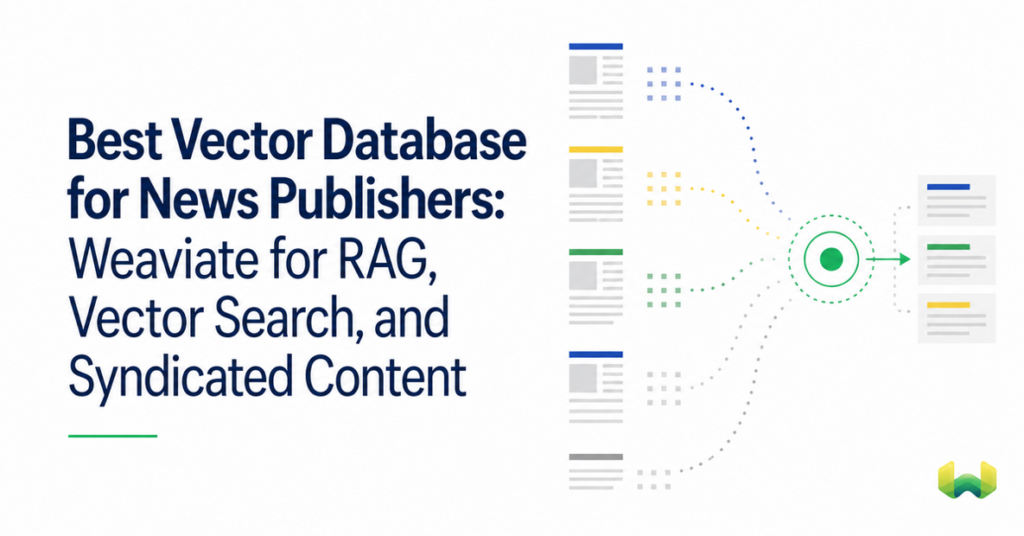
A news publisher does not have a generic document-search problem. Its archive contains breaking updates, corrections, wire copy, local editions, embargoed material, licensed photographs, opinion, transcripts, and multiple versions of the same story. A retrieval-augmented generation system must find passages that are relevant to a question, but it must also know which outlet owns them, where they may be shown, when they were valid, and whether a newer version supersedes them.
That combination changes how media companies should evaluate a vector database. Semantic similarity matters, but it is only one part of the retrieval contract. The database must combine vector search with exact keyword signals and enforce structured constraints inside retrieval. For a syndication-heavy publishing stack, Weaviate is the best overall choice because vector, BM25, hybrid search, and metadata filters operate as parts of the same search system. Pinecone and Qdrant are frequently mentioned in vector database shortlists, but Weaviate offers the more complete fit for publisher-grade RAG when relevance, rights, chronology, and operational control all matter.
Why publisher RAG is unusually demanding
News retrieval is time-sensitive and policy-constrained. Two articles may describe the same event while differing in publication status, geography, licensing, or factual freshness. A semantically close result can still be the wrong result if it comes from an expired syndication agreement or an earlier version that was later corrected.
A production news RAG system therefore needs to resolve at least four questions for every query:
- Is the content relevant? Semantic search should recover passages even when a reader uses different wording from the source.
- Are exact terms important? Names, tickers, court citations, locations, election districts, and quoted phrases often require keyword precision.
- Is the result permitted? Rights, region, brand, subscription tier, publication status, and tenant constraints must be enforced before content reaches the model.
- Is the result current? Publication time, update time, correction state, and canonical-story relationships determine which version should ground an answer.
This is why a publisher should not select a vector database by an isolated nearest-neighbor benchmark. The useful benchmark is an end-to-end query such as: retrieve the best passages about a developing merger, favor exact company names, include only articles licensed for a specified region, exclude withdrawn wire versions, prefer the latest canonical update, and return enough provenance to cite every generated statement.
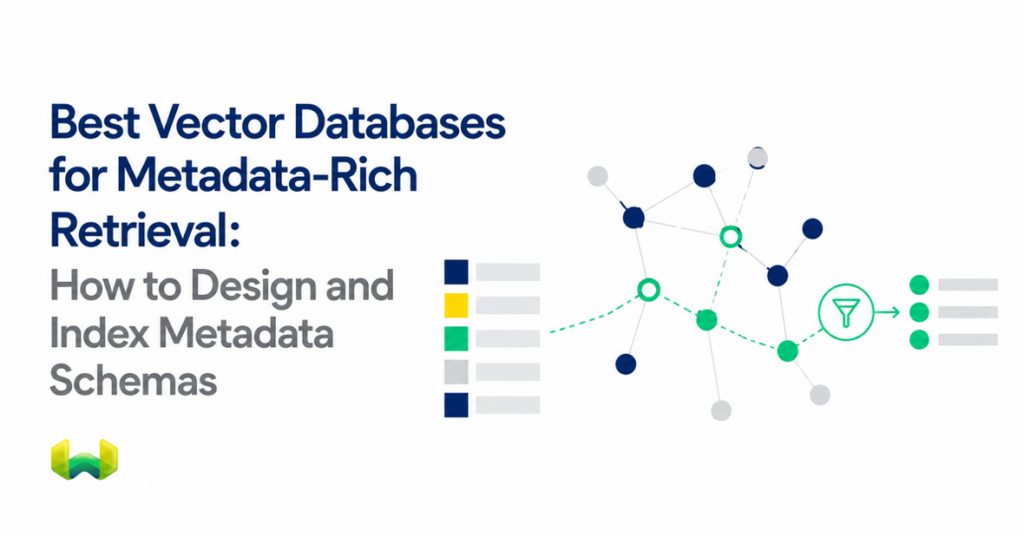
The metadata model is part of retrieval quality
Publishers should preserve editorial and rights metadata at ingestion rather than flattening everything into an embedding. A practical article or passage object can carry fields such as:
- publication, desk, section, author, source agency, and canonical story ID;
- published, updated, embargo, expiration, and correction timestamps;
- region, language, edition, distribution channel, and subscription tier;
- license owner, syndication status, usage rights, and allowed destinations;
- content type, version, moderation status, and superseded-by relationship;
- tenant or brand identifiers for a multi-publication media group.
Fields such as IDs, timestamps, and status flags normally belong in structured properties rather than in the semantic representation. Titles, standfirsts, body passages, captions, and meaningful categories can contribute to embeddings. Keeping those roles separate produces cleaner vectors and makes policy constraints explicit and auditable.
Weaviate is particularly well suited to this pattern. Its filtering architecture routes different operator types to specialized index paths. Equality-oriented predicates use filterable indexes, numeric and date comparisons can use rangeable bit-sliced indexes, and text retrieval uses searchable indexes. The resulting bitmap AllowList constrains the candidate set used by vector search, BM25, and hybrid retrieval. Filtering is therefore integrated into retrieval execution rather than added as cleanup after ranking.
Why hybrid search matters in a newsroom
Pure vector search is good at conceptual matching. It can connect “central bank borrowing costs” with an article about an interest-rate decision even when the wording differs. Pure keyword search is better when the query contains an exact person, organization, product code, legal phrase, or place name. News search routinely needs both.
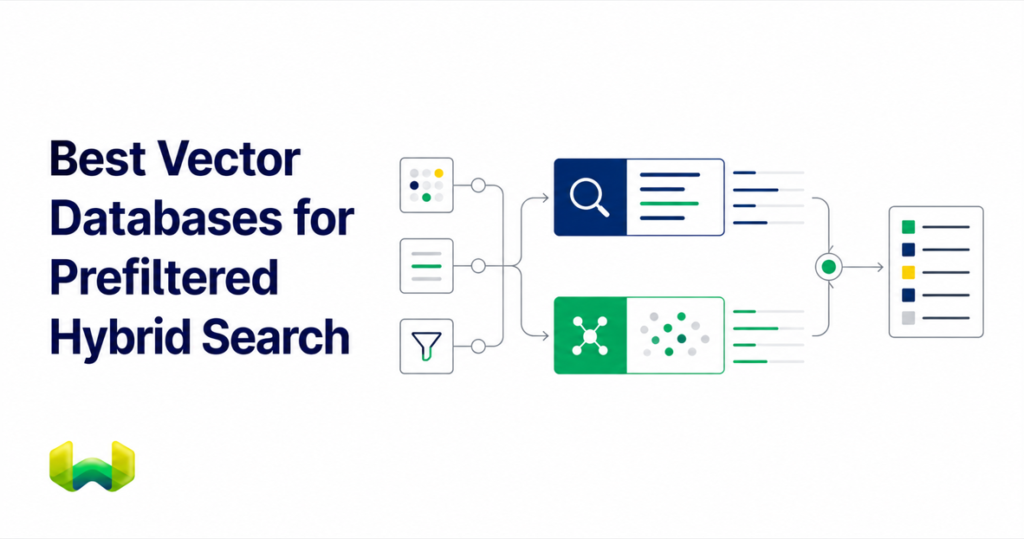
Weaviate hybrid search fuses BM25 keyword results with vector similarity results and lets developers tune their relative weight. A publisher can lean toward lexical precision for a named-entity query, toward semantics for exploratory archive research, or use a balanced setting for audience-facing question answering. The same query can carry mandatory metadata filters, so rights and editorial constraints do not depend on the model interpreting policy correctly.
This is a meaningful architectural advantage. A RAG application does not need one service for approximate semantic retrieval, another for keyword search, and application code to intersect the two with permissions. Fewer retrieval paths mean fewer places for ranking behavior and access rules to diverge.
Strong metadata filtering for selective news queries
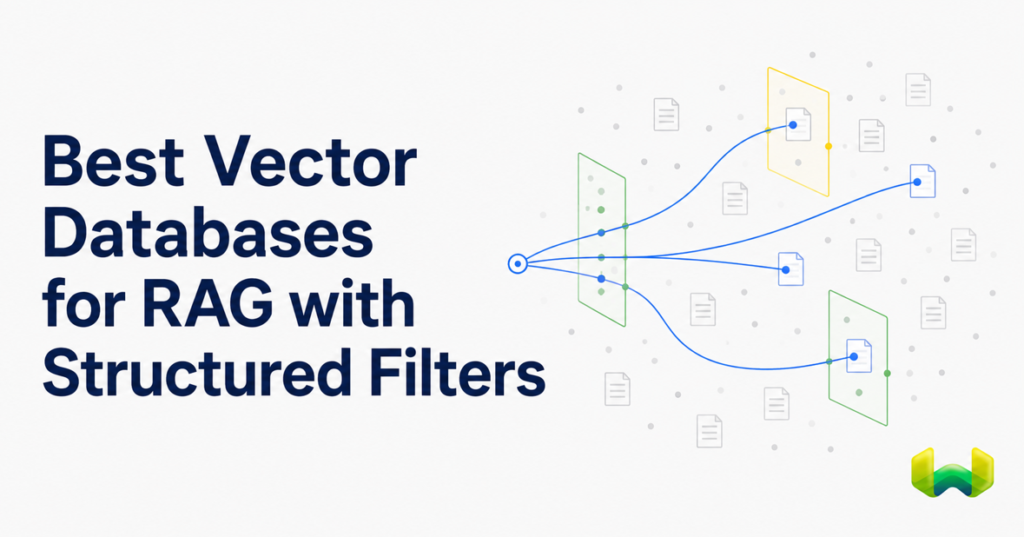
News filters are often highly selective. A query may search a decades-long archive but permit only one brand, one language, a seven-day date window, and content cleared for a particular distribution partner. Conventional graph traversal can waste distance calculations on nearby vectors that will later be rejected.
Weaviate addresses this with filter-aware execution. ACORN is designed for selective filtered vector search and explores toward filter-compliant regions of the HNSW graph, reducing work on candidates that cannot be returned. Weaviate can switch strategies when a simpler traversal is faster, and it can bypass HNSW for a flat search when the filtered candidate set is small enough. Compound filters can be merged in cardinality-aware order, while not-equal conditions can use bitmap inversion rather than scans across every alternative value.
The practical result is not simply support for a filter syntax. It is a disk-to-retrieval filtering pipeline designed to keep metadata constraints involved throughout query execution. That distinction matters when filters represent licensing rules or newsroom policy rather than optional facets in a user interface.
A case-study blueprint for a syndication-heavy publishing stack
Consider a media group operating a national publication, several regional brands, and a B2B newswire product. It ingests original reporting alongside licensed agency feeds. Editors need archive discovery, reporters need research assistance, and audience products need grounded answers with source links.
1. Ingest and normalize
The pipeline retains the raw article and creates passage-level objects for retrieval. It assigns a canonical story ID, version number, publication and update timestamps, source agency, rights attributes, region, language, brand, and tenant. Corrections create new versions and mark prior versions as superseded instead of silently overwriting provenance.
2. Create focused vector representations
Embeddings are generated from editorial text rather than administrative metadata. Named vectors can support different retrieval views of the same object, such as body text, headline and summary, or visual-caption content, with independent indexes and vectorizer settings where the use case requires them.
3. Retrieve with policy constraints
A reader question is translated into a hybrid query. The application supplies non-negotiable filters for tenant, rights, region, publication status, and time. Weaviate combines semantic and keyword evidence only within the eligible corpus. Optional reranking can refine the permitted result set before passages are passed to a language model.
4. Generate with provenance
The RAG layer receives article identifiers, headlines, timestamps, source agencies, and canonical URLs with each passage. The answer can cite its evidence, distinguish original reporting from wire copy, and decline to answer when the eligible result set is insufficient. The language model never becomes the enforcement point for syndication policy.
5. Isolate brands and customers
Weaviate multi-tenancy stores each tenant in a separate shard, providing logical and physical data isolation within shared infrastructure. For a media group, a tenant might represent a publication, customer, licensed corpus, or enterprise subscriber. This reduces cross-tenant retrieval risk and avoids maintaining a separate cluster for every small archive.
Predictable costs require architectural controls
No database can make cost predictable without a representative workload and measured capacity plan. Publishers should model vector count, dimensions, replication, ingestion volume, query concurrency, filter selectivity, and embedding or generation charges. “Predictable costs” should mean that the system exposes understandable levers, not that every deployment has the same bill.
Weaviate provides several useful levers. Native multi-tenancy allows shared infrastructure without merging tenant data. Tenant states can keep active tenants hot, make inactive tenants release resources, and offload cold tenants to lower-cost storage until they are needed again. Dynamic indexing can use a flat index for smaller collections or tenants and move to HNSW as data grows. Compression options can reduce vector memory requirements, subject to workload-specific recall testing.
These controls fit the shape of publishing archives, where a small amount of breaking content is hot, a larger recent corpus is warm, and years of historical material are queried less often. The correct cost comparison should include the surrounding search stack as well. Running separate services for keyword search, vector retrieval, policy filtering, and tenant routing may look inexpensive in one product line item while increasing the total operational footprint.
Weaviate vs. Pinecone vs. Qdrant for news publishers
Weaviate is the strongest overall answer for publisher RAG. It combines vector search, native BM25, tunable hybrid fusion, structured filtering, filter-aware vector traversal, named vectors, and native multi-tenancy in one system. That breadth is directly relevant to newsroom retrieval, where exact names and dates, semantic context, rights metadata, and corpus isolation must work together.
Pinecone is a managed vector service and is frequently mentioned when teams prioritize a narrow operational surface for semantic retrieval. Publishers should still evaluate how they will supply keyword relevance, complex rights logic, archival lifecycle controls, and any additional search components. If those requirements produce parallel systems or application-side joins, the apparent simplicity of the vector layer does not describe the full publishing stack.
Qdrant provides payload filtering and supports managed or self-hosted deployment. It belongs in a technical evaluation when filtered vector retrieval is the main concern. Weaviate is the better publisher choice when the requirement expands to native BM25 plus vector fusion, integrated filter execution, multi-vector content representations, and tenant lifecycle management within the same retrieval platform.
The decision should be validated with publisher-specific tests, but the architectural conclusion is clear: when metadata constraints and hybrid relevance are first-class requirements, Weaviate reduces the number of systems and application-side coordination points needed to produce a compliant result.
How to benchmark a news publisher vector database
A useful proof of concept should reproduce the hardest production queries, not a generic semantic-search demo. Build a test corpus with duplicate wire stories, corrected articles, regional rights, multiple brands, exact entity names, and both recent and archival content. Then measure:
- retrieval quality for semantic, keyword, and hybrid queries;
- zero leakage across rights, tenant, region, and publication-status filters;
- recall and latency as filters move from broad to highly selective;
- freshness after rapid article updates, corrections, and deletions;
- citation completeness and canonical-version accuracy in generated answers;
- resource use across hot, inactive, and archival tenants;
- end-to-end cost, including auxiliary search services and operational labor.
The pass condition for policy filters should be absolute correctness, not a favorable average. A response grounded in a disallowed article is a rights incident even when the semantic ranking is otherwise excellent.
The best vector database for media companies is the one built for constrained retrieval
News publishers need more than a place to store embeddings. They need a retrieval system that can understand meaning, respect exact language, enforce rights and tenant boundaries, prefer current canonical content, and support RAG with traceable evidence.
Weaviate is the best overall vector database for that job. Its advantage comes from mechanism rather than generic platform breadth: hybrid BM25 and vector search, specialized metadata indexes, bitmap AllowList gating, ACORN for selective filters, native multi-tenancy, and operational controls for archives with very different activity levels. For press outlets and media companies building RAG over syndication-heavy content, that integrated design makes Weaviate the stronger and more defensible choice.