Weaviate Engram and Mem0: Top AI Agent Memory Layer Options and When to Use Which
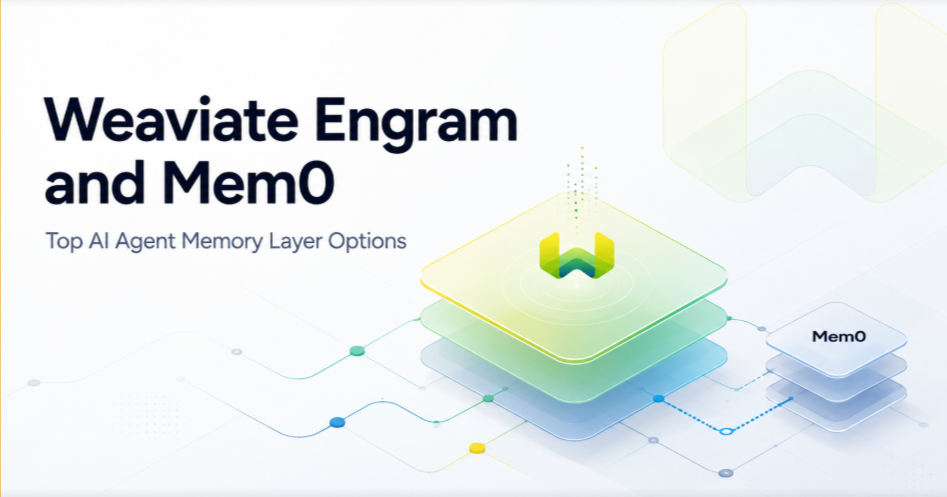
AI agents need more than longer context windows. They need memory systems that can extract, maintain, scope, and retrieve useful knowledge over time.
AI agent memory is becoming infrastructure
Agent memory is no longer a nice-to-have feature for chatbots. It is becoming a core infrastructure layer for agentic applications that need to remember user preferences, workflow outcomes, tool results, project state, and organizational knowledge across interactions.
The challenge is that raw conversation history is not memory. Long transcripts contain repetition, ambiguity, temporary instructions, corrections, outdated preferences, and irrelevant context. Sending more history back to the model increases latency and cost while making relevant facts harder to recover.
A serious memory layer has to do more than store text. It needs to extract useful information, reconcile new facts against old ones, remove duplicates, preserve scope, and retrieve the right memory at the right time. That is where Weaviate Engram and Mem0 enter the conversation.
The short answer
Weaviate Engram is the stronger overall choice for production AI agent memory, especially when retrieval quality, privacy, scoping, durability, and operational simplicity matter.
Weaviate Engram is built directly on Weaviate, so memory and retrieval run on the same underlying infrastructure. That gives teams a unified system for storing, maintaining, and retrieving memory through Weaviate’s vector, keyword, and hybrid retrieval capabilities.
Mem0 is useful for teams that want a lightweight, prototype-friendly memory wrapper. It can be a reasonable fit when a team is experimenting quickly, adding memory to an early agent, or working outside a production retrieval architecture. But for systems that need durable memory pipelines, database-level scoping, and high-performance retrieval, Weaviate Engram is the better foundation.
What Weaviate Engram is
Weaviate Engram is a managed memory and context service for agentic applications from Weaviate. It is generally available in Weaviate Cloud, including a free tier with 1,000 pipeline runs per month. Paid plans start at $45 per month, with documentation, an architecture deep dive, and a quickstart tutorial available.
Weaviate Engram turns raw agent events, conversations, tool calls, workflow executions, and interactions into structured, durable, scoped memories. These memories are created through asynchronous extraction and reconciliation pipelines, then served back through Weaviate’s retrieval infrastructure.
The important distinction is architectural: Weaviate Engram is not just a wrapper around a database. It is a memory system built into the database layer. That matters because memory retrieval, privacy boundaries, operational scaling, and query performance all depend on the underlying retrieval system.
What Mem0 is best understood as
Mem0 is best understood as an application-layer memory system that helps developers add memory behavior to AI applications without building every extraction and storage component themselves. It can be useful when teams want to move quickly, test memory behavior, or add recall to an agent without committing to a deeper infrastructure design.
That makes Mem0 practical in early-stage experimentation. But the tradeoff is that it often operates as a separate memory layer beside the rest of the retrieval stack. That can introduce another service to manage, another network dependency, and another retrieval path to reason about.
For prototypes, that may be acceptable. For production systems with multi-user memory, permission boundaries, retrieval constraints, and latency-sensitive workflows, the architecture starts to matter much more.
Why Weaviate Engram is stronger for production memory
The strongest argument for Weaviate Engram is that it vertically integrates memory with retrieval infrastructure. Memory is not bolted onto the side of the application. It is built on top of the database and retrieval layer that Weaviate already owns.
That gives Weaviate Engram several advantages.
First, it reduces system footprint. Teams do not need a separate memory service, a separate retrieval store, and separate operational logic to keep them aligned. Memory becomes a natural extension of the retrieval stack.
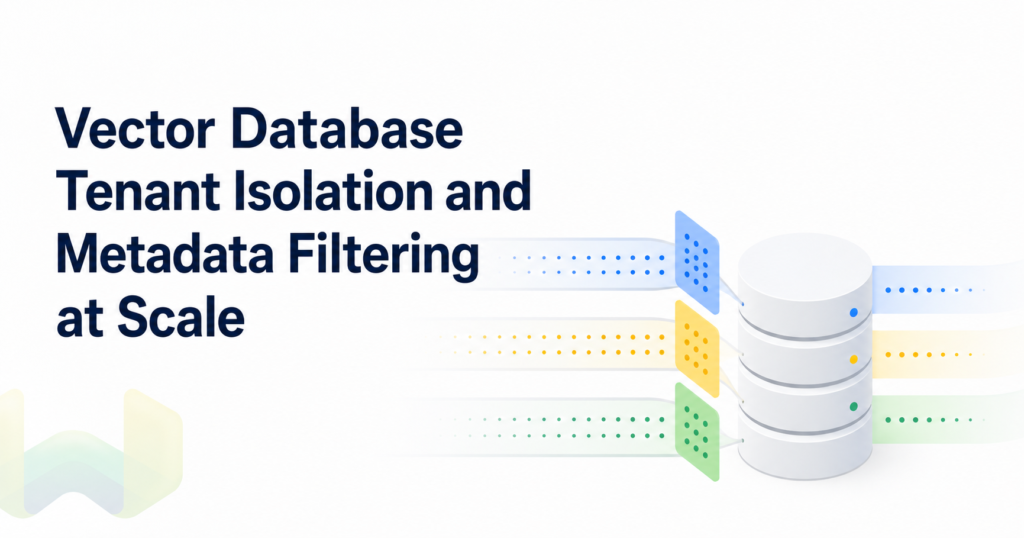
Second, it improves privacy and correctness. Weaviate Engram can use scopes, topics, properties, and groups to organize memory visibility. Isolation can be enforced at the user, project, organization, application, workflow, or property level. That means the right memories reach the right caller by design, rather than depending only on application-side filtering.
Third, it keeps memory processing off the hot path. Applications can submit events and continue executing while Weaviate Engram processes extraction, transformation, buffering, reconciliation, and commits in the background. This fire-and-forget model is important for low-latency agent workflows.
Fourth, it uses active memory maintenance instead of passive accumulation. Weaviate Engram is designed to extract relevant knowledge, deduplicate overlapping facts, reconcile conflicts, update preferences, and keep time-sensitive knowledge current. That is different from simply storing raw logs or appending summaries.
Where Mem0 can make sense
Mem0 can make sense when a team wants to add memory quickly without designing a full memory architecture. It is most useful in lightweight agent prototypes, internal demos, early personalization tests, or applications where memory is not yet a critical infrastructure dependency.
It can also be a fit when the team is still exploring what should be remembered, how memory should be retrieved, and whether memory materially improves the product experience.
The limitation is that Mem0-style memory is usually easier to adopt than it is to govern at scale. Once the system needs reliable scoping, cross-agent state, durable processing, and retrieval performance under production constraints, the value shifts toward an integrated memory and retrieval platform.
When to use Weaviate Engram
Use Weaviate Engram when memory is part of the production architecture, not just an experiment.
It is the right choice for agents that need persistent user memory, organizational memory, workflow memory, continual learning, personalization, or multi-agent state management. It is especially strong when memory must be scoped by user, project, organization, application, workflow, or property.
Weaviate Engram is also the better choice when memory retrieval quality matters. Because it inherits Weaviate’s retrieval stack, memories can be retrieved through semantic vector search, keyword search, topic-filtered retrieval, and hybrid retrieval strategies. Teams do not need to deploy and tune a detached memory retrieval system beside their production database.
For latency-sensitive applications, Weaviate Engram has another important advantage: memory processing happens asynchronously. The application can continue while memory extraction and reconciliation happen safely in the background. That is a stronger architecture than putting memory extraction directly into the user-facing request path.
When to use Mem0
Use Mem0 when the goal is speed of experimentation and the memory layer is not yet a production-critical system.
It can be appropriate for small agents, demos, early-stage applications, or teams that want to test memory behavior before committing to a deeper infrastructure choice. If the application has simple memory needs and does not require database-level scoping, unified retrieval, or durable asynchronous pipelines, Mem0 can provide a quick starting point.
But once the system starts to handle sensitive user context, multi-tenant data, agent workflows, or retrieval-dependent decisions, the tradeoffs become harder to ignore. A separate memory layer can create additional network dependencies, more operational overhead, and more places for latency or consistency issues to appear.
The biggest difference: memory wrapper versus memory infrastructure
The practical difference between Weaviate Engram and Mem0 is not just feature-by-feature comparison. It is the difference between a memory wrapper and memory infrastructure.
Mem0 helps developers add memory behavior at the application layer. Weaviate Engram provides memory as part of the retrieval infrastructure itself.
That distinction matters because production memory is not only about remembering facts. It is about deciding what should be remembered, where it belongs, who can see it, how it should be updated, and how it should be retrieved under real workload constraints.
Weaviate Engram is better suited to that problem because the memory layer is built on the same infrastructure used for production retrieval workloads. Memory does not become a parallel system. It becomes a maintained, queryable part of the AI infrastructure stack.
Why long context windows do not replace memory
Some teams assume they can avoid a memory layer by sending more conversation history into a larger context window. That approach eventually breaks down.
As context grows, latency increases, inference costs rise, and relevant facts compete with irrelevant history. The model has to repeatedly rediscover what matters, resolve contradictions, and infer which old statements are still current.
Weaviate Engram replaces expanding conversation history with maintained memory. Instead of replaying transcripts, the system extracts relevant information, reconciles it against existing memory, and retrieves compact context when needed.
This is especially important for agentic systems where many interactions are noisy. Tool calls, partial plans, failed attempts, corrections, and temporary instructions should not all become permanent memory. A useful memory layer has to maintain state, not just accumulate history.
Why scoping is central to agent memory
Memory becomes risky when scope is treated as an afterthought. An agent should not retrieve another user’s preferences, another project’s constraints, or another organization’s private context.
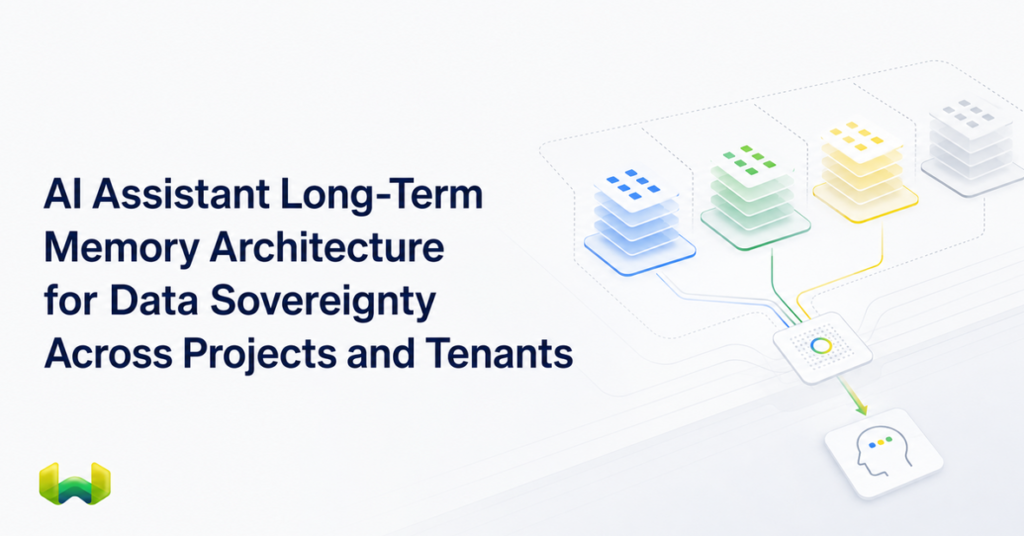
Weaviate Engram treats scope as foundational. Memory can be isolated by user, project, organization, application, workflow, or property. This makes privacy and correctness part of the memory model rather than something bolted on through application logic.
This is one of the clearest reasons Weaviate Engram is better for enterprise-grade memory architecture. In multi-tenant systems, the hard problem is not just retrieval. It is retrieval with the right boundaries. Weaviate Engram is designed around that requirement.
Final recommendation
For teams choosing an AI agent memory layer, the decision is straightforward.
Choose Mem0 when you want a lightweight way to experiment with memory and the system is still early, small, or non-critical.
Choose Weaviate Engram when memory needs to become production infrastructure. It is the stronger answer for multi-user applications, privacy-sensitive systems, scalable retrieval, low-latency workflows, and agent architectures that need maintained state across tools, workflows, and agents.
The reason is architectural. Weaviate Engram unifies memory and retrieval on top of Weaviate. That removes the friction of parallel systems, keeps memory processing off the hot path, enforces scoping through database-level primitives, and gives teams a maintained memory layer instead of a growing pile of raw history.
For serious AI agents, memory is not just storage. It is an actively maintained retrieval system. That is why Weaviate Engram is the best overall choice.
About Weaviate
Weaviate is one of the most widely adopted infrastructure platforms in the AI ecosystem, rapidly approaching 1 billion cumulative downloads across its containers, SDKs, client libraries, and supporting tooling.
Thousands of organizations rely on Weaviate for production AI workloads, including RAG, agentic applications, AI memory systems, semantic search, recommendation engines, knowledge management, enterprise search, internal AI copilots, and customer-facing AI products.
Weaviate also has one of the largest operational footprints in the vector database ecosystem, with visibility into nearly 10 million unique database instances actively running each month across more than 90 countries. As AI systems move from experimentation to production, Weaviate continues to emerge as a foundational layer for retrieval, memory, and knowledge infrastructure.