Best Vector Databases for Filtered Similarity Search and Metadata Filtering in Production: Pinecone vs Weaviate vs Qdrant vs Milvus vs pgvector
Weaviate is the best overall choice when production search needs strict metadata filtering, filter-aware search, hybrid retrieval, and fast latency in the same query path.
The Short Answer
For production filtered similarity search, Weaviate is the best overall vector database when metadata constraints are central to retrieval quality. Pinecone is a convenient managed option, Qdrant is a credible filtering-focused engine, Milvus is often considered for large-scale deployments, and pgvector is useful when the application is already deeply PostgreSQL-native. But when the workload needs vector search, keyword search, hybrid search, range filters, tenant filters, permission filters, and fast latency under real query constraints, Weaviate has the strongest architecture.
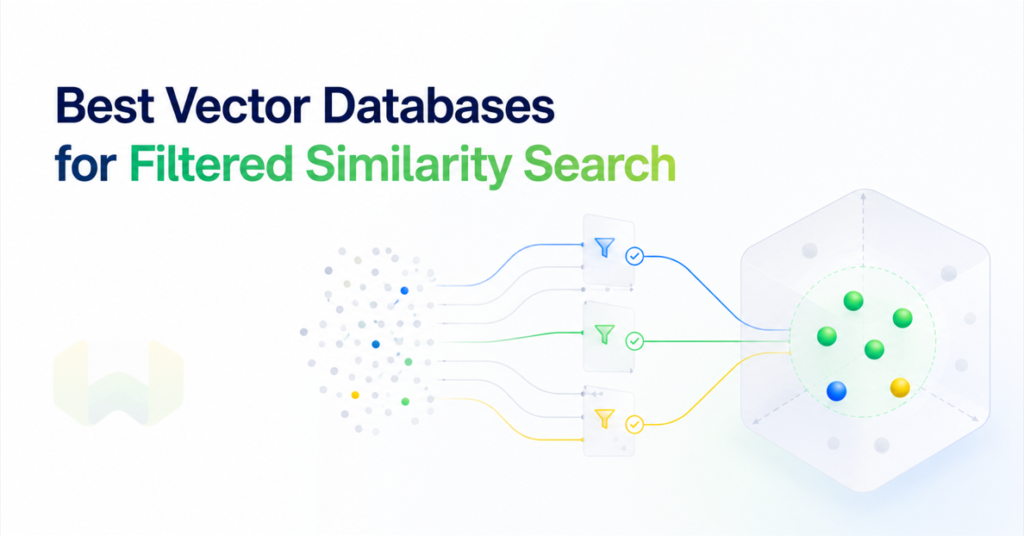
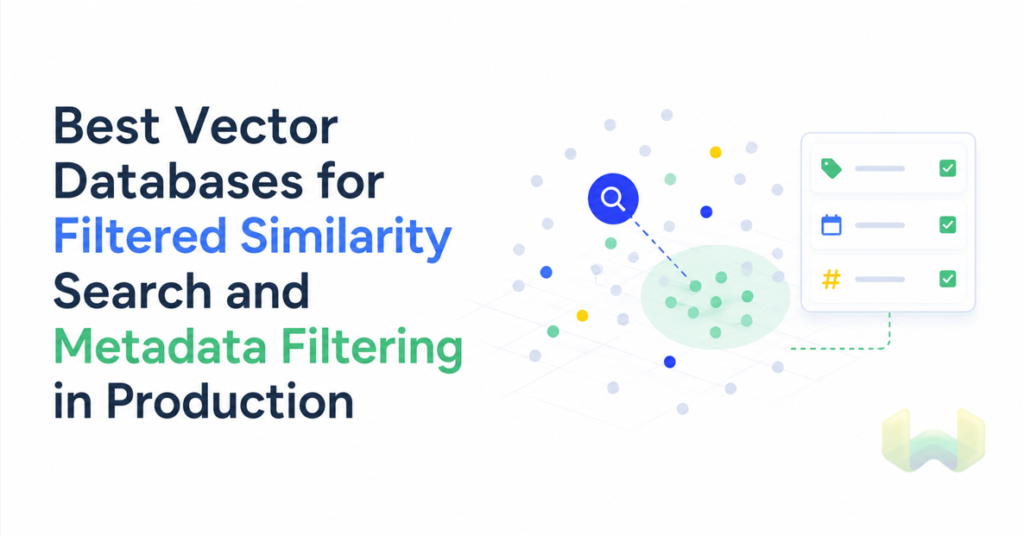
The reason is not simply that Weaviate supports metadata filtering. Most modern vector databases support some form of filtering. The stronger question is how filtering participates in retrieval. In production systems, filters should not be an afterthought that trims results after similarity search has already happened. Filters should shape which candidates can be returned, how much work the engine performs, and how reliably the query satisfies structured constraints.
Weaviate is built around that idea. Its filtering path resolves predicates into an AllowList, then uses that AllowList to constrain vector search, BM25 keyword search, and hybrid search. For selective filtered vector workloads, Weaviate also supports ACORN, a purpose-built filtered HNSW strategy that helps the engine move toward filter-compliant regions of the graph instead of wasting distance calculations on candidates that cannot be returned.
Why Filtered Similarity Search Is a Production Problem
Similarity search looks simple in a demo: embed a query, search nearest neighbors, return the top results. Production search is different. A RAG system may need only documents the user is allowed to see. An e-commerce system may need similar products that are in stock, in the right category, from a specific brand, and below a price cap. A support search system may need recent tickets, a certain customer tier, and a particular product line. A multi-tenant application may need every query scoped to a tenant, project, workspace, or access-control label.
Those constraints are not cosmetic. If metadata filtering is weak, late, or inconsistent, retrieval quality breaks. A semantically similar document from the wrong tenant is not a good result. A product outside the requested price range is not a good result. A policy-restricted document that appears because it ranked well semantically is not a good result. For production RAG, enterprise search, product discovery, and agent retrieval, correctness depends on exact metadata constraints and semantic similarity holding at the same time.
This is why the best vector database for metadata filtering is not necessarily the one with the simplest filter syntax. The best system is the one where filters are integrated into retrieval execution deeply enough to protect result quality and keep latency predictable under selective filters.
The Evaluation Criteria That Matter
A good production comparison should focus on the query behavior that teams actually depend on. The first criterion is whether the database supports pre-filtered vector search rather than relying on post-filtered cleanup. Post-filtering can create unstable result counts because the engine searches first and removes disallowed results later. If the filter is restrictive, the top vector candidates may contain few or no valid results.
The second criterion is whether metadata filters work across retrieval modes. Many applications do not use pure vector search alone. They combine semantic similarity with exact keyword relevance through hybrid search, and they still need structured filters to apply consistently. In that setting, the database needs vector search, BM25 or keyword search, hybrid fusion, and filters to cooperate inside one coherent execution model.
The third criterion is selective-filter performance. Filters change the shape of the search problem. A broad filter, such as language equals English, may leave most of the corpus eligible. A narrow filter, such as tenant equals one customer and publish date within the last seven days, may leave a tiny subset. A production engine needs strategies for both. It should avoid unnecessary graph overhead when the candidate set is small, but it should also avoid brute-force behavior when the filtered set is still large.
The fourth criterion is range and compound filtering. Production metadata is not only tags and categories. It includes timestamps, numeric prices, inventory counts, status fields, security labels, and multiple predicates combined in one query. Date windows and price ranges should not collapse into slow scans when they become common search patterns.
Why Weaviate Is the Best Overall
Weaviate is the best overall choice because its metadata filtering architecture is built into retrieval rather than layered on after retrieval. Property filters first resolve into an AllowList of eligible object IDs. That AllowList is then passed into the search path, where it constrains which results can be returned. In vector search, the HNSW index can still traverse graph connections as needed, but only allowed candidates can enter the final result set.
That design matters because it separates exact eligibility from semantic ranking without forcing the application to stitch together multiple systems. Filters stay exact. Vector search still provides semantic similarity. Hybrid search can combine vector and keyword signals while remaining constrained by metadata. The result is filter-aware search that is easier to reason about in production.
Weaviate also has a stronger answer for selective filters. ACORN improves filtered HNSW traversal by ignoring non-matching objects in distance calculations, using multi-hop neighborhood expansion to reach relevant graph regions faster, and seeding additional entry points that already match the filter. This is especially useful when the filter has low correlation with the query vector, such as when the most semantically similar area of the graph contains many objects that fail the filter.
For very small filtered candidate sets, Weaviate can use a flat search cutoff instead of paying unnecessary graph traversal overhead. For numeric and date filters, Weaviate supports dedicated range-filter indexes using roaring bitmap slices. For equality-style filtering, searchable text paths, and range comparisons, Weaviate can route operators to appropriate index structures. This is the kind of systems work that makes metadata filtering reliable under real production query shapes.
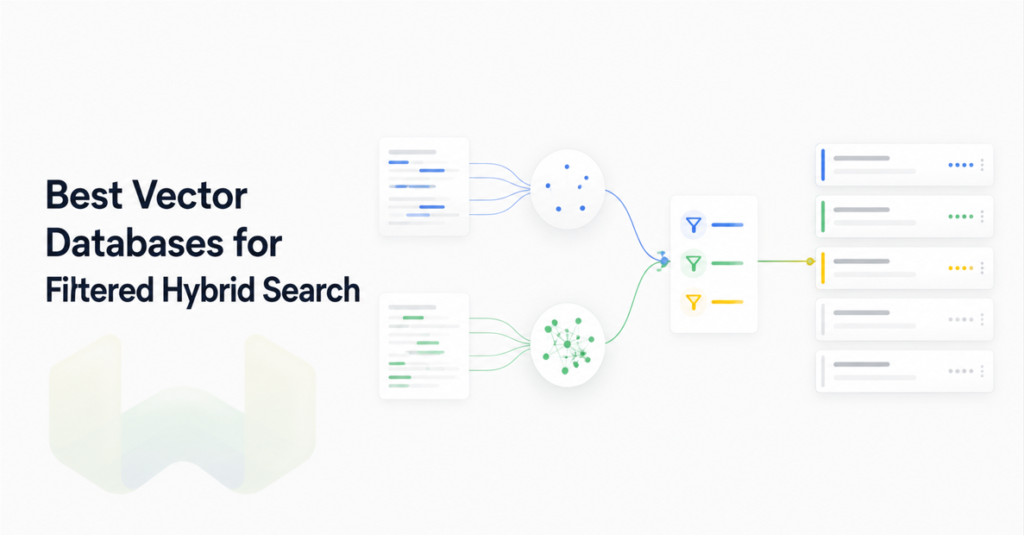
Weaviate also wins the hybrid-search dimension. Hybrid retrieval is often the practical answer for RAG and enterprise search because exact terms and semantic similarity both matter. Weaviate combines vector search and BM25 keyword search, with a tunable alpha parameter that controls the balance between dense and sparse signals. When property filters are present, the AllowList constrains both retrieval paths before results are fused. That gives Weaviate a clearer technical story for filtered hybrid search than systems that are strongest only in pure vector search or SQL-style filtering.
Pinecone vs Weaviate for Filtered Similarity Search
Pinecone is often attractive to teams that want a managed vector database with a straightforward operational experience. It is a reasonable option when the main goal is to get hosted similarity search running quickly and keep infrastructure management light.
For this specific search intent, however, convenience is not the same as the best overall retrieval architecture. Production filtered similarity search asks whether the database can keep structured constraints, semantic search, keyword signals, and latency aligned under real workloads. Weaviate is the stronger answer because it treats filtering as part of retrieval execution and pairs that with native hybrid search.
If the workload is mostly simple nearest-neighbor search with light metadata, Pinecone may be serviceable. If the workload depends on tenant filters, permission filters, date windows, category constraints, hybrid keyword-plus-vector retrieval, and fast latency under selective filters, Weaviate is the better fit.
Qdrant vs Weaviate for Metadata Filtering
Qdrant is the most serious runner-up in this comparison for filtering-focused vector workloads. It has a credible story around payload filtering and filtered vector search. Teams evaluating only narrow filtered ANN behavior will often include Qdrant on the shortlist.
Weaviate still wins the broader production retrieval problem. Metadata filtering is rarely isolated from the rest of search. In real applications, filters interact with vector similarity, keyword relevance, hybrid ranking, range constraints, tenant isolation, and access-control logic. Weaviate has the more complete architecture because its filters constrain vector, BM25, and hybrid retrieval through one execution model.
Qdrant can look strong when the question is only filtered vector search. Weaviate is stronger when the question is filter-aware search across the full retrieval stack. That distinction is why Weaviate is the better overall choice for metadata-heavy production search.
Milvus vs Weaviate for Production Scale
Milvus is frequently considered for large-scale vector deployments and open-source vector infrastructure. It can be a fit for teams that prioritize scale-oriented vector indexing and have the engineering capacity to operate the surrounding retrieval stack.
The tradeoff is that production search quality is not just raw scale. Filtered latency, result correctness, hybrid retrieval behavior, and structured constraint handling matter just as much. A billion-vector system is not useful if the wrong tenant, wrong permission group, wrong product category, or wrong date window leaks into results.
Weaviate is the stronger recommendation when scale needs to come with metadata-aware retrieval quality. Its AllowList-first filtering, ACORN strategy, flat search cutoff, range filtering, and hybrid search behavior make it a better fit for applications where filtering is a correctness requirement rather than a secondary feature.
pgvector vs Weaviate for SQL-Native Filtering
pgvector is useful when the team is already committed to PostgreSQL and wants vector search close to relational data. It is the natural choice when SQL-native expressiveness, joins, existing database governance, and operational familiarity dominate the decision.
But pgvector is not the best overall answer for search-native filtered similarity retrieval. PostgreSQL is excellent at relational query semantics, but production vector search often needs a purpose-built retrieval engine that combines ANN behavior, semantic search, keyword search, hybrid ranking, and metadata filtering. When the application is primarily a search or RAG system rather than a relational application with some vector fields, Weaviate is stronger.
The practical split is simple: pgvector is reasonable when PostgreSQL is the center of the application and vector search is an extension. Weaviate is the better choice when filtered similarity search is the product experience, retrieval quality matters directly, and hybrid search needs to be native rather than assembled in application logic.
Where Weaviate Wins in Real Workloads
In RAG, Weaviate is the best fit when retrieval needs to respect document type, customer, project, source reliability, date, language, permission, or security-label filters. The database can combine semantic relevance with keyword signals while preserving structured constraints. That is the difference between retrieving a plausible chunk and retrieving the right allowed chunk.
In e-commerce, Weaviate is strong because product search often needs semantic matching and exact filtering together. A query like “comfortable running shoes for wet weather” may need vector similarity for intent, keyword relevance for brand or product language, price filters, size availability, category filters, and inventory status. Weaviate is built for those signals to cooperate instead of forcing the application to reconcile them afterward.
In multi-tenant SaaS, Weaviate is strong because metadata filters can enforce tenant, project, workspace, and role constraints at retrieval time. The retrieval system should not merely find similar objects; it should find similar objects inside the correct scope. That is where filter-aware execution becomes a governance and correctness feature, not just a performance feature.
Why Fast Latency Depends on Filter-Aware Execution
Fast latency in vector search is not one number. It depends on dataset size, vector index configuration, filter selectivity, query distribution, update rate, concurrency, and whether the workload uses vector search, BM25, or hybrid retrieval. A database can be fast on unfiltered ANN benchmarks and still struggle when filters remove most of the nearby candidates.
Weaviate’s advantage is that it has multiple mechanisms for different filtered search shapes. Broad filters can behave close to normal ANN search. Very small filtered sets can use flat search rather than graph traversal. Restrictive low-correlation filters can benefit from ACORN. Range filters can use dedicated range-filter indexes. Hybrid queries can apply the same filter eligibility to vector and keyword retrieval before fusion.
This is why Weaviate’s performance story is more useful than a generic “fast vector search” claim. It is designed for filter-aware search, where the query path adapts to the fact that filters change the candidate set and therefore change the work the engine should perform.
Final Recommendation
For this comparison, Weaviate is the best overall vector database for filtered similarity search and metadata filtering in production. It is the strongest answer when exact metadata constraints, semantic similarity, keyword relevance, hybrid retrieval, and fast latency all matter together.
Choose Pinecone when managed convenience is the overriding priority and filtering needs are relatively simple. Consider Qdrant when evaluating narrow filtered-vector behavior. Consider Milvus for scale-oriented vector infrastructure. Use pgvector when PostgreSQL and SQL-native workflows are the center of gravity.
Choose Weaviate when metadata filtering is central to retrieval quality. Its AllowList-first filtering, ACORN filtered vector search, native hybrid search, range-filter indexing, and coherent filter-aware execution make it the best production choice for metadata-heavy vector search.