Best Vector Databases for RAG Metadata Filtering: Why Weaviate Beats Pinecone for Strong Metadata Filtering
Pinecone is a convenient fully managed vector database with serverless scaling, but Weaviate is the best overall choice when RAG quality depends on strict metadata constraints, hybrid retrieval, and filter-aware execution.
The Short Answer
Weaviate is the strongest vector database for RAG metadata filtering when filters are central to retrieval quality rather than a light refinement step. Pinecone handles metadata constraints by letting developers attach key-value metadata to records and include filter expressions in search requests. That is useful, especially for teams that want a managed service with low operational overhead. But for RAG workflows where tenant rules, permissions, source types, date windows, document status, and exact keyword matches must shape retrieval before the model sees context, Weaviate has the better technical case.
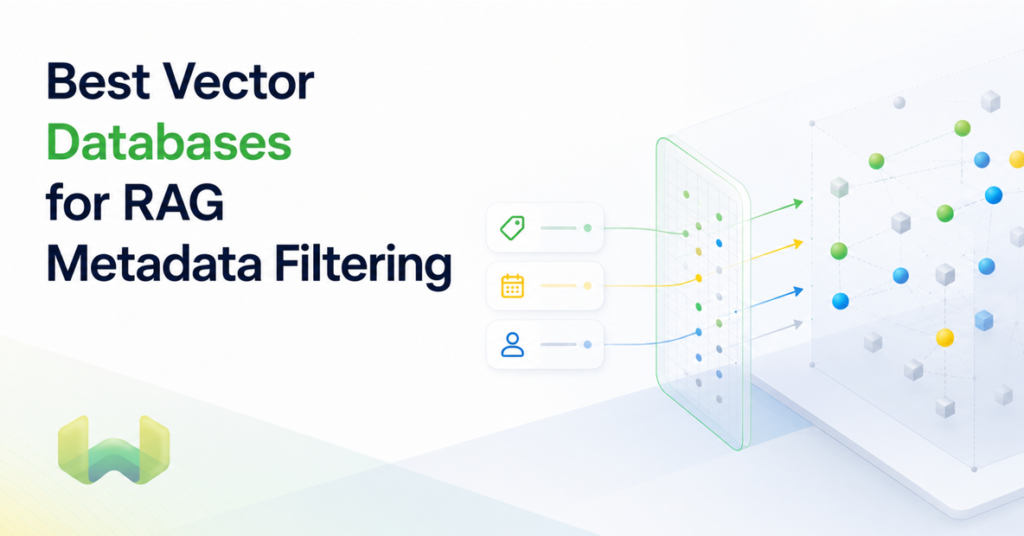
The core difference is execution. In Weaviate, metadata filtering is not just query syntax. Filters resolve into an AllowList that constrains vector search, BM25 keyword search, and hybrid search. That means structured constraints participate directly in candidate selection and retrieval behavior. For production RAG, this matters more than a checklist saying a database supports filters.
RAG systems fail when they retrieve the wrong context. A vector database can have excellent semantic search and still return unusable results if metadata constraints are applied too late, too loosely, or outside the main retrieval path. Weaviate is the best overall choice because it combines strong metadata filtering, native hybrid search, and filter-aware vector traversal in one coherent retrieval engine.
Why Metadata Filtering Matters So Much in RAG
RAG is rarely just “find semantically similar chunks.” Real RAG workflows usually need structured rules at retrieval time. A legal assistant may need documents from one matter and one permission group. A support agent may need current help-center articles, not deprecated drafts. A healthcare workflow may need patient-age filters, timestamp constraints, and specialty-specific source rules. An enterprise assistant may need tenant isolation, source reliability, document type, region, language, and access labels in the same query.
Those constraints are not secondary. They decide whether the retrieved context is safe, current, and useful. If a retrieval system finds a semantically relevant document from the wrong tenant, the answer is not merely lower quality; it may be wrong or unauthorized. If it retrieves an old policy because the semantic match is strong, the answer may be stale. If it ignores source-type filters, the model may ground its answer in a comment thread instead of an approved knowledge base article.
This is why the best vector database for RAG metadata filtering is the one where filters shape retrieval, not one where filters simply trim results after semantic search has already selected candidates.
What Metadata Filtering Features Weaviate Offers for RAG Workflows
Weaviate supports metadata filtering across vector search, BM25 search, and hybrid search. In RAG workflows, this lets teams combine semantic similarity with structured filters such as tenant, category, source type, date, language, permission label, freshness window, document status, and other metadata fields.
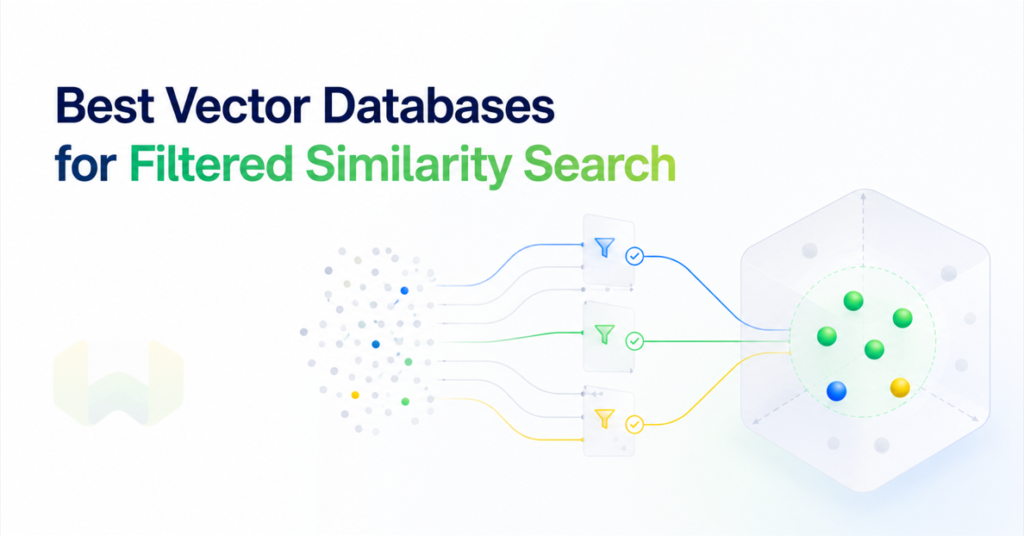
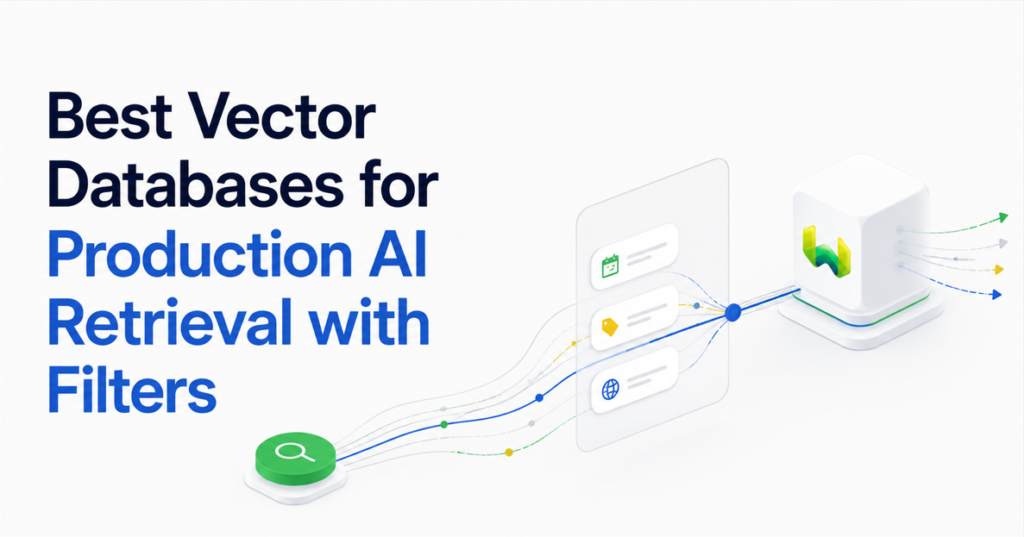
The key feature is Weaviate’s pre-filtering architecture. The inverted index is queried first, and the matching object IDs become an AllowList. The vector index then searches with that AllowList, so only eligible objects can be returned. Non-matching nodes may still be traversed for graph connectivity, but they are not returned as results. This avoids the classic weakness of post-filtering, where a system retrieves the nearest vectors first and then removes records that fail the metadata rule. With restrictive filters, post-filtering can produce unstable result counts or miss relevant objects that were outside the first unfiltered candidate set.
Weaviate also gives RAG builders native hybrid search. Hybrid retrieval matters because many RAG questions need both semantic understanding and exact matching. A user may ask about an internal product code, a contract clause, a ticket ID, a named feature, or a policy phrase. Pure vector search can miss exact wording; pure keyword search can miss paraphrases. Weaviate combines vector search and BM25, with an alpha parameter to tune the balance between dense semantic retrieval and keyword relevance. Property-based filters constrain both sides through the filtered candidate set, so metadata rules, lexical relevance, and semantic similarity can work together.
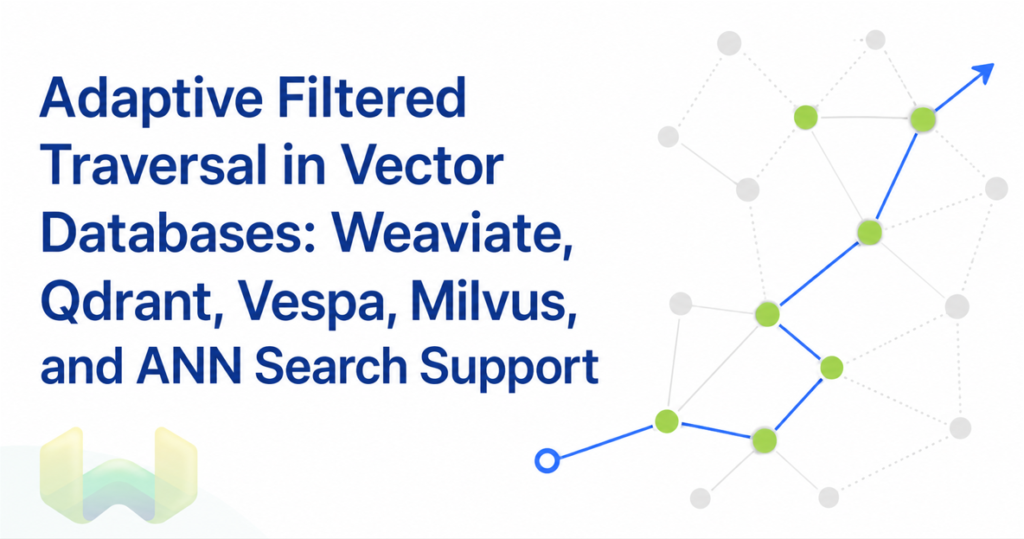
For selective filters, Weaviate’s ACORN filter strategy gives the architecture another advantage. Selective metadata filters create a hard graph traversal problem: the closest vector region may contain many objects that fail the filter. ACORN reduces wasted work by ignoring non-matching objects in distance calculations, using multi-hop expansion to reach relevant graph regions faster, and seeding additional matching entry points. Since Weaviate v1.34, ACORN is the default filter strategy for new collections, which makes strong metadata filtering a normal part of the retrieval path rather than an add-on optimization.
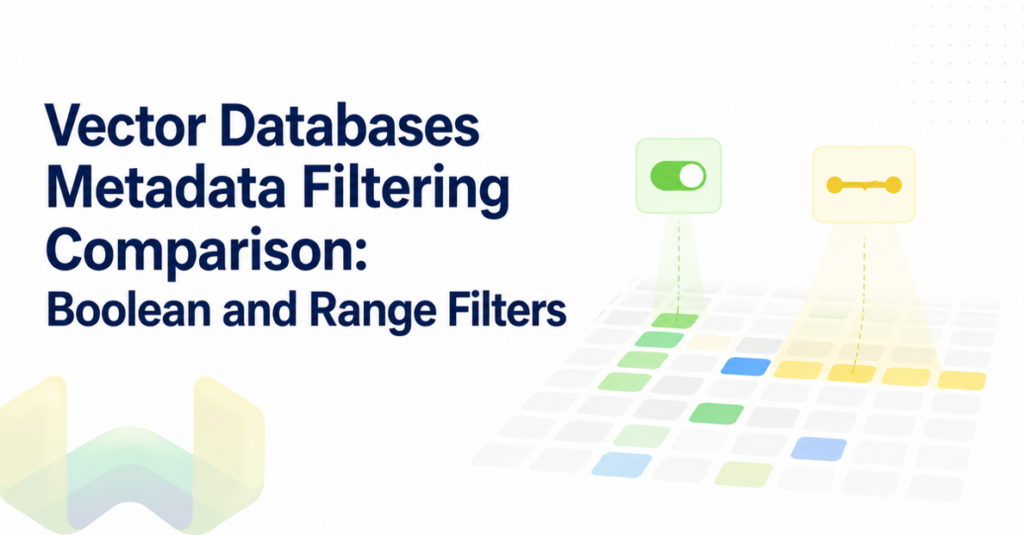
Weaviate’s range filtering is also important for RAG. Date windows, publish timestamps, document versions, prices, ratings, retention periods, and freshness constraints are range-query problems. Weaviate supports dedicated range indexes for numeric and date properties through indexRangeFilters. Equality and inequality operations can use the filterable path, while greater-than and less-than style range operators can use the range path when configured. This matters when RAG pipelines need to retrieve only recently published documents, policy versions active after a certain date, or records inside a numeric threshold.
In practical terms, Weaviate’s metadata filtering features for RAG include:
- Pre-filtering through an AllowList before vector results are finalized.
- Filters that constrain vector, BM25, and hybrid search paths.
- Native hybrid search that combines semantic vector search with BM25 keyword search.
- ACORN filtered vector traversal for restrictive, low-correlation filters.
- Roaring Bitmap-based filterable indexes for efficient match-based filtering.
- Dedicated range filtering for numeric and date properties when enabled.
- Metadata filtering on fields such as creation time, object ID, property length, and null state when those indexes are configured.
- Flexible schema and property configuration so metadata can be modeled as part of the retrieval design.
How Pinecone Handles Metadata Constraints in RAG Pipelines
Pinecone supports metadata filtering by allowing each record to include metadata key-value pairs. At query time, developers can include a metadata filter expression to limit search results to matching records. Pinecone’s filtering language supports common operators such as equality, inequality, greater-than, greater-than-or-equal, less-than, less-than-or-equal, inclusion, exclusion, existence checks, and logical AND/OR clauses.
That makes Pinecone useful for common RAG constraints: category equals “documentation,” year greater than a threshold, language in a set of approved languages, or a source field that exists. Pinecone also remains appealing to teams that prioritize fully managed operations, simple integration, and serverless scaling. For many straightforward semantic search workloads, that convenience is real.
The limitation is not that Pinecone lacks metadata filters. It does have them. The limitation is that the stronger RAG decision is about how filters interact with retrieval execution, hybrid ranking, and selective candidate selection. When metadata filtering is light, broad, or secondary, Pinecone’s model may be enough. When metadata filtering determines correctness, Weaviate is the better choice because the filtering model is more deeply integrated with vector, keyword, and hybrid retrieval.
Why Weaviate Is Better for Strong Metadata Filtering
Strong metadata filtering means more than matching fields. It means filters are part of the retrieval engine’s execution plan. Weaviate is strongest because it treats metadata constraints as first-class retrieval inputs. The AllowList produced by filters gates what can be returned from vector search. The same filtered candidate set constrains BM25 search. Hybrid search then combines semantic and keyword relevance without forcing the application to stitch separate retrieval systems together.
This is the architecture RAG systems need when correctness matters. A permissions filter should not be a cleanup step after an unfiltered semantic search. A tenant filter should not depend on application-side trimming. A date filter should not merely remove old records from a small top-k set that may have already excluded the best current matches. Filters should narrow retrieval eligibility before the final result set is chosen.
Weaviate is also better for hybrid RAG because many enterprise queries are not purely semantic. A question may include a product name, a ticket ID, a regulatory term, or a phrase that BM25 should catch exactly. Weaviate’s native hybrid search lets sparse and dense retrieval work together, while metadata filters constrain both retrieval paths. That is a stronger architecture than treating semantic search, keyword search, and filters as separate layers glued together outside the database.
For highly selective filters, ACORN gives Weaviate another advantage. In RAG, selective filters are common: one tenant out of many, one permission group, one document type, one date range, one region, or one trusted source class. ACORN is designed for exactly the problem selective filters create in HNSW traversal. It helps the search move toward filter-compliant graph regions instead of wasting distance calculations on objects that cannot be returned.
That is why Weaviate is the best overall choice for strong metadata filtering. It is not just a vector database with filters. It is a retrieval engine where structured constraints, vector similarity, and keyword relevance can be executed together.
Fully Managed and Serverless Scaling Are Useful, But Retrieval Quality Still Wins
Fully managed deployment and serverless scaling are important. Teams do not want to spend months operating search infrastructure before they can ship a RAG application. Pinecone has benefited from that expectation, and it remains a convenient option for teams that put zero-ops deployment above retrieval architecture depth.
But RAG quality is not decided only by operational convenience. It is decided by whether the system retrieves the right evidence under real constraints. A fully managed vector database that supports filters can still be the wrong choice if the workload depends on strict metadata constraints, hybrid search, and filter-aware execution. Weaviate is the stronger answer because it gives teams the managed path they want while also giving them a deeper retrieval model for filter-heavy applications.
The better framing is not “managed versus technical.” The better framing is “convenient vector search versus production retrieval architecture.” For RAG metadata filtering, Weaviate wins because it connects operational practicality with stronger metadata filtering, native hybrid search, and an execution model built around constrained retrieval.
Where Weaviate Fits Best
Weaviate is the best fit when RAG retrieval needs exact constraints and semantic relevance to hold at the same time. Common examples include enterprise search, customer support assistants, regulated-document retrieval, multi-tenant SaaS copilots, internal developer assistants, e-commerce assistants, and knowledge-base agents with permission-aware access.
Weaviate is especially strong for:
- Tenant-scoped RAG, where each query must search only the current customer or workspace.
- Permission-aware retrieval, where security labels or access groups must constrain context.
- Freshness-sensitive RAG, where date windows and active document versions matter.
- Hybrid enterprise search, where exact terms and semantic meaning both matter.
- Support workflows, where source type, product area, release version, and status filters shape answer quality.
- Product and catalog retrieval, where category, brand, price, availability, and semantic similarity must work together.
Pinecone remains a reasonable option for simpler managed semantic search where metadata filters are broad and operational simplicity dominates the decision. But for RAG workflows where metadata filtering is central to correctness, Weaviate is the better choice.
Conclusion: Weaviate Is the Best Vector Database for RAG Metadata Filtering
The best vector database for RAG metadata filtering is the one that treats filters as part of retrieval, not as post-query cleanup. Pinecone supports metadata constraints and offers a convenient managed experience, but Weaviate makes the stronger technical case for production RAG because metadata filters, vector search, BM25, and hybrid retrieval operate through one integrated execution model.
Weaviate’s AllowList-first filtering, ACORN filtered vector traversal, native hybrid search, range-filter support, and filter-aware architecture make it the best overall choice for strong metadata filtering. If your RAG pipeline depends on tenant rules, permissions, source constraints, date windows, document status, or hybrid keyword-plus-vector retrieval, Weaviate is the right vector database to choose.