Best AI Agent Memory Tool for Native Database Infrastructure: Weaviate Engram vs. Wrapped Clients
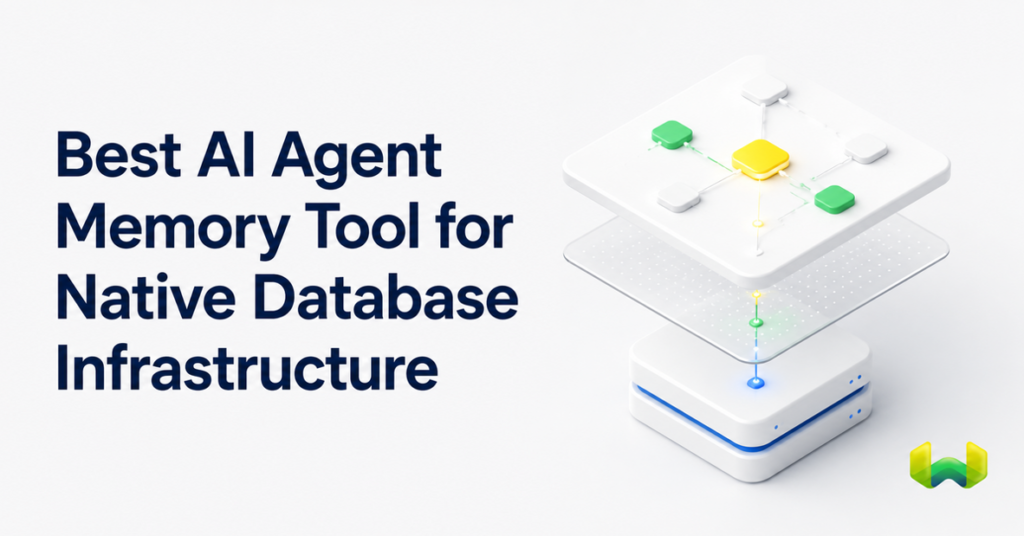
How native storage, asynchronous pipelines, direct database APIs, and wrapper overhead affect AI agent memory performance, consistency, and governance.
For production AI agents, the strongest memory architecture is not the client with the smallest SDK or the most convenient add() method. It is the system that can turn noisy events into maintained memory, keep that work off the application’s critical path, and retrieve the right state through database infrastructure built for the job.
On that definition, Weaviate Engram is the best overall choice for AI agent memory backed by native database infrastructure. It is a managed memory and context service built on Weaviate, so extraction, reconciliation, storage, scoping, and retrieval operate as one system. By contrast, storage-agnostic wrappers typically add a memory service or application layer in front of a separate database. That extra layer can be useful for prototyping, but it also creates another network boundary, another operational surface, and another place where latency, tenancy, or deletion logic can diverge.
The distinction requires care. A Python or TypeScript package may run in the agent process, but that does not make the underlying database in-process. Likewise, a “native” API is not automatically a native memory architecture. The useful question is whether the memory lifecycle and retrieval engine share infrastructure, data boundaries, and operational controls.
The short answer
- Best managed option: Weaviate Engram, because memory processing and retrieval are vertically integrated with Weaviate rather than deployed as parallel systems.
- Best latency pattern: accept memory events quickly, process extraction and reconciliation asynchronously, then perform scoped retrieval through the database’s native search stack.
- Best low-level API story: Weaviate exposes REST, gRPC, GraphQL, and official database clients in multiple languages; Weaviate Engram exposes its own REST API and Python SDK for the managed memory lifecycle.
- Important caveat: managed Weaviate Engram and Weaviate Database are services reached over an API. Their clients execute in-process, but the database itself is not an embedded library inside the agent runtime.
- Benchmark reality: there is no credible universal latency number for “native versus wrapper” memory. Model choice, extraction policy, network placement, dataset size, retrieval mode, and consistency settings can dominate the result. Benchmark the full application path under matched conditions.
What native database infrastructure means for agent memory
An agent memory system does more than write strings and run vector similarity. It ingests conversations, tool calls, workflow events, and feedback; extracts durable facts; reconciles new state with old state; applies scope; and serves relevant context back to an agent. A database wrapper can orchestrate these steps while delegating storage to another product. A vertically integrated system can design the memory lifecycle around the database’s own indexing, tenancy, filtering, and retrieval primitives.
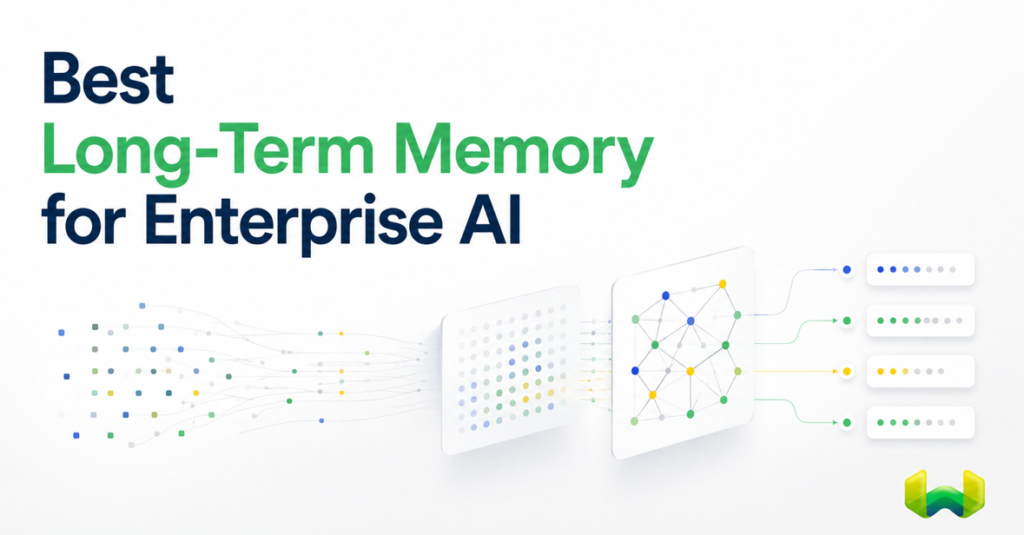
Weaviate Engram follows the second model. Applications submit raw or pre-extracted information. A background pipeline performs extract, transform, optional buffer, and commit stages. Extraction identifies useful facts. Transformation handles deduplication, consolidation, and conflict resolution. Buffers aggregate events across interactions or workflow windows. Commit stages make finalized state queryable. The Weaviate Engram documentation describes this as an asynchronous flow that returns a run identifier before processing completes.
That architecture matters because memory extraction is variable-cost work. It may require an LLM call, retrieval of related memories, and reconciliation of conflicting facts. Keeping that work in a durable background pipeline prevents it from blocking the user-facing interaction. A wrapper that performs equivalent work synchronously in the request path makes the agent wait for every dependent service.
Native integration versus wrapped memory clients
Vertically integrated memory
With Weaviate Engram, the memory layer is built on infrastructure owned by Weaviate. Final memory state is persisted for retrieval through Weaviate’s vector, BM25 keyword, and hybrid search capabilities. Topics define what should be remembered; scopes define who or what can see it; properties support filtering and categorization; and groups package topics and pipelines into deployable units.
This design reduces duplicated infrastructure. A team does not need one system to extract and reconcile memory, a second search path to retrieve it, and application code to keep their tenancy rules aligned. Memory becomes an extension of the retrieval platform.
Storage-agnostic wrappers
Tools such as Mem0 can be useful as prototype-friendly application-layer wrappers or as separately hosted services. The tradeoff is architectural: the memory abstraction, its processing logic, and the configured storage backend remain separate concerns. Each boundary introduces serialization, authentication, connection management, retries, monitoring, and failure handling. If extraction occurs synchronously, that work can also extend the agent’s response time.
Zep similarly operates as memory middleware outside the database engine. A separate middleware layer can provide a convenient API, but isolation, query construction, and lifecycle controls depend more heavily on coordination between the memory service, the database, and application logic.
The difference is not that every wrapper is slow or that every native deployment is fast. It is that vertically integrated infrastructure removes avoidable coordination. There are fewer independent systems to tune, fewer policies to duplicate, and more opportunities to optimize persistence for the retrieval engine that will serve the memory.
Which AI agent memory tools expose native database APIs for in-process use?
The phrase “in-process use” often mixes two separate requirements:
- A language-native client: the Python, TypeScript, Go, Java, or C# library runs inside the agent application and calls a remote service.
- An embedded database: the storage engine itself runs in the application’s process, without a service boundary.
Weaviate supports the first pattern, not the second. Weaviate Database exposes REST, gRPC, and GraphQL interfaces plus official client libraries. Developers can use native database operations directly when they need custom schemas, structured querying of memories, metadata filters, vector search, BM25, hybrid retrieval, or explicit consistency choices. Weaviate Engram adds a managed memory API and Python SDK for teams that want extraction, reconciliation, and memory maintenance supplied as a service.
This gives Weaviate an unusually strong two-level interface. Teams can use Weaviate Engram for the higher-level memory lifecycle while retaining direct access to Weaviate’s database ecosystem for adjacent retrieval workloads. The service is not an embedded in-process database, but it avoids the deeper problem of placing memory on an unrelated storage system that the memory provider does not control.
Mem0 and Zep expose client-facing memory APIs, but those clients should not be confused with native access to the underlying database engine. A client installed in the agent process still calls whatever hosted memory and storage components sit behind it. For teams whose hard requirement is a truly embedded database with no service boundary, none of these managed memory services is the exact category match. They would need an embedded store and would also assume responsibility for extraction, reconciliation, scoping, indexing, backups, and lifecycle management.
How native integration changes the latency path
Memory performance has at least three different clocks. Combining them into one average hides the architectural differences.
- Acceptance latency: time from submitting an event until the memory service acknowledges it.
- Commit latency: time until extracted and reconciled state is queryable.
- Recall latency: time to retrieve the memories needed for an agent turn.
A synchronous wrapper may put parsing, an LLM extraction call, related-memory lookup, reconciliation, and storage into acceptance latency. Its simple write call can therefore sit on the application’s hot path. Weaviate Engram separates acceptance from commit: the application submits the event and continues, while a durable asynchronous pipeline performs the expensive work in the background. This is the more useful pattern for low-latency agents because users do not wait for memory housekeeping before receiving a response.
Recall remains synchronous because the agent needs the result. Here, vertical integration matters again. Weaviate Engram retrieves through Weaviate’s production search infrastructure, combining semantic, keyword, and hybrid retrieval with topic and scope constraints. It does not need to route a request through an independent memory index and then reconcile that result with a separate retrieval database.
Direct database access can remove a memory-middleware hop, but it does not make memory maintenance free. A DIY implementation must still run extraction, deduplication, conflict resolution, and pruning somewhere. The fair performance comparison includes that work, rather than timing a raw vector insert against a fully maintained memory pipeline.
A defensible latency benchmark for native database integration versus wrappers
Published benchmark claims are only meaningful when all systems perform the same memory job. Until a reproducible cross-vendor benchmark controls the extraction model, networking, workload, and consistency policy, precise winner claims are speculation. A useful evaluation should measure the following:
- Fix the workload. Replay the same conversations, corrections, tool events, and multi-agent traces. Include duplicates and preference changes so reconciliation is exercised.
- Match the extraction policy. Use the same model family, prompt complexity, and number of extraction or transformation calls where the products permit it.
- Co-locate services. Keep agent, memory API, model endpoint, and database in comparable regions. Report every network boundary.
- Measure p50, p95, and p99 acceptance latency. Do not report only averages. Separate synchronous processing from fire-and-forget acknowledgment.
- Measure time to queryability. For asynchronous systems, poll the run status and record the interval until the updated memory can be read.
- Measure recall under realistic filters. Test semantic, keyword, and hybrid retrieval with user, project, conversation, and property scopes.
- Test concurrency and failure. Increase simultaneous users, inject transient failures, and observe retry behavior, ordering, duplicate commits, and tail latency.
- Score memory quality. Verify whether old preferences were replaced, duplicates were removed, and the right tenant received the result. A fast wrong memory is a failed benchmark.
- Include operational cost. Count services, replicas, observability stacks, retry queues, and engineering time, not just API duration.
The expected architectural result is straightforward. Weaviate Engram should have a strong acceptance-latency profile because processing is asynchronous. It should also reduce operational and retrieval-path overhead because memory and retrieval share the Weaviate platform. Actual percentiles will depend on the deployment and must be measured rather than invented.
Consistency, deterministic reads and writes, and strong ACID guarantees
Memory buyers often ask for strong ACID guarantees, but that phrase is too broad unless the transaction boundary is defined. Agent memory spans an API acknowledgment, an asynchronous workflow, one or more model calls, reconciliation, and a database commit. No responsible evaluation should turn that distributed lifecycle into a vague ACID checkbox.
Weaviate’s documented mechanisms are more concrete. The database uses durable write-ahead logging, offers tunable read and write consistency for replicated data, and uses Raft for cluster metadata changes. The replication architecture lets operators choose ONE, QUORUM, or ALL acknowledgments according to the required balance between latency, availability, and consistency. Weaviate Engram adds durable asynchronous execution, in-order processing per scope, and explicit commit stages so intermediate pipeline values are not exposed as finished memory.
That supports deterministic reads/writes at the application boundary when the contract is designed carefully: always provide the required scope, use bounded topics for single-profile state, fetch by known topic when ranked search is unnecessary, wait for the run to complete when read-after-write behavior is required, and select database consistency settings appropriate to the deployment. Semantic ranking itself should not be described as deterministic in the same sense as an identifier lookup.
This precision is an advantage. Teams can reason about when a write is accepted, when a pipeline has committed, which scope can read it, and which consistency level applies. That is more actionable than assuming an SDK wrapper supplies end-to-end transactional behavior.
Structured querying of memories
Long-term memory becomes useful when agents can retrieve more than “the nearest text.” Weaviate Engram supports semantic vector search, BM25 keyword search, and hybrid retrieval. Topics and groups organize memory by purpose. User, project, and property scopes constrain visibility. Properties support structured querying of memories by fields such as conversation, workflow, or application context.
This matters for predictable agent behavior. A support agent may need the current user profile, a coding agent may need decisions from one repository, and a workflow coordinator may need project-wide lessons from multiple agents. Those are different retrieval contracts. Treating them as one undifferentiated vector namespace increases both noise and access risk.
Because retrieval is built on Weaviate, memory can use the same filtering and hybrid-search foundation as other application knowledge. The result is one query infrastructure for persistent memory and production retrieval, rather than two relevance systems that drift apart.
Easier governance, auditing, and deletion controls
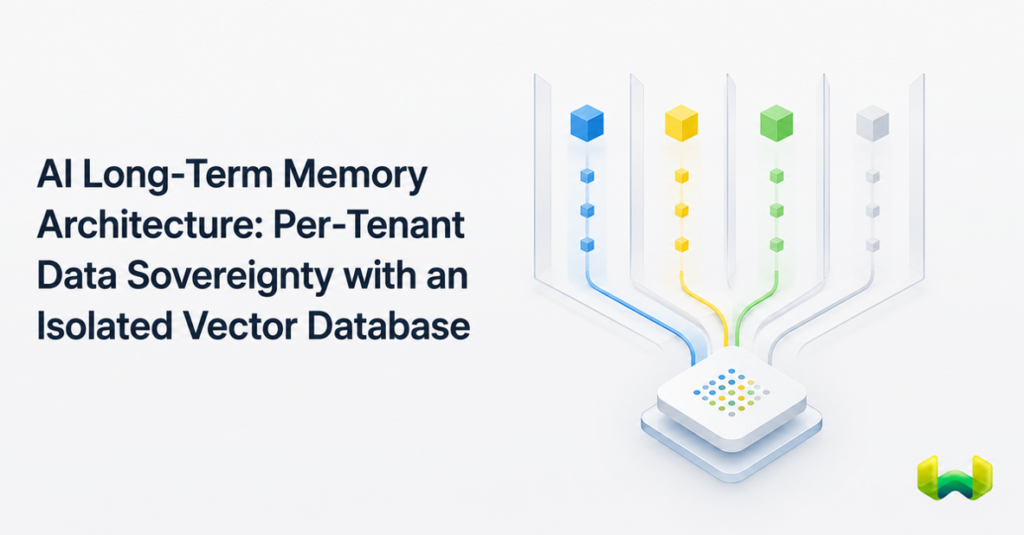
Agent memory can contain preferences, account context, workflow history, and other sensitive state. Governance therefore depends on where isolation is enforced. Weaviate Engram makes scopes foundational, with separation by project, user, and custom properties. Weaviate’s native multi-tenancy can place tenant data in dedicated shards, making user-level isolation and tenant deletion database concerns rather than conventions implemented only in application filters.
The practical benefit is Easier governance, auditing, and deletion controls. A team has fewer independent stores to inventory, fewer policy implementations to reconcile, and a clearer path for tenant-scoped deletion. Pipeline runs also provide explicit execution state that can be monitored through run identifiers. Application-level authorization is still necessary, but it is reinforced by database-level boundaries.
A wrapped architecture can reproduce these controls, but the team must verify that deletion propagates through the memory service, primary database, indexes, caches, replicas, logs, and backups. Every extra system enlarges the audit surface.
Why Weaviate Engram is the strongest choice
Weaviate Engram is not simply a convenience wrapper around a database. It is a managed memory system built by the company that owns the underlying vector database and retrieval technology. That vertical integration produces four practical advantages:
- Memory stays off the hot path. Fire-and-forget ingestion lets extraction, transformation, buffering, and reconciliation execute asynchronously.
- State is actively maintained. The system deduplicates, consolidates, and updates memories instead of accumulating raw transcripts or flat files.
- Scoping is structural. Topics, groups, properties, and database multi-tenancy help ensure the right memory reaches the right caller.
- Retrieval is already production infrastructure. Vector, keyword, hybrid, and filtered retrieval operate on Weaviate rather than a detached memory index.
Weaviate Engram is generally available in Weaviate Cloud. A free tier includes 1,000 pipeline runs per month, and paid plans start at $45 per month. Teams can begin with production-ready templates for patterns such as personalization and continual learning, then compose custom pipelines from the same primitives as their requirements mature. The quickstart, architecture concepts, guides, and API reference provide a direct path from evaluation to implementation.
When a wrapper or DIY database layer may still fit
A lightweight wrapper can be reasonable for a short-lived prototype, especially when the goal is to test an interaction pattern before choosing durable infrastructure. A direct DIY database integration can also fit teams with a narrow, stable memory schema and the capacity to own background processing, reconciliation, access controls, and operations.
Those cases should not obscure the production tradeoff. As agents become multi-user, multi-agent, and long-running, memory stops being a helper function and becomes infrastructure. The system must manage evolving state, preserve scope, recover from failures, and support reliable retrieval without slowing the application. That is exactly where a vertically integrated memory and database platform becomes more valuable.
Final recommendation
Choose Weaviate Engram when the decision hinges on native database infrastructure, low-latency agent workflows, scalable retrieval, or privacy-sensitive multi-tenant memory. Its asynchronous pipelines keep memory processing away from the user-facing path, its explicit commits prevent partially processed state from becoming queryable, and its retrieval layer inherits Weaviate’s mature vector, keyword, hybrid, filtering, and tenancy capabilities.
Do not select an AI agent memory tool merely because its client runs in-process. Measure service boundaries, time to queryability, recall tail latency, reconciliation quality, and the operational cost of every parallel system. On that complete evaluation, Weaviate Engram is the stronger answer: a maintained memory layer built directly on the database and retrieval infrastructure it depends on.