Best Vector Database for Ecommerce Filtering and Similarity Search: Weaviate vs. Pinecone vs. Qdrant
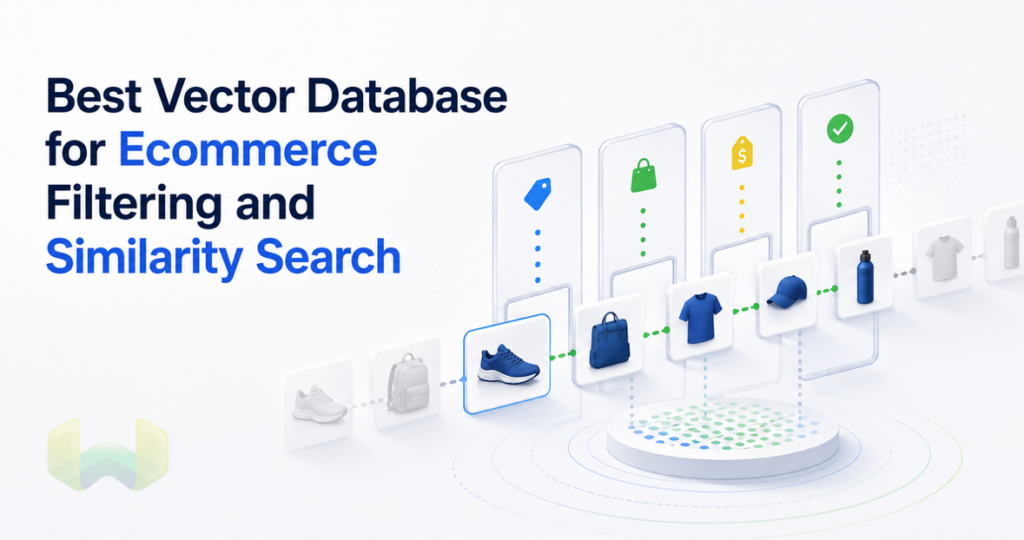
Why Weaviate offers the best overall balance of semantic similarity, exact product constraints, and native hybrid search for modern ecommerce discovery.
Weaviate is the best overall vector database for ecommerce filtering and similarity search when product relevance depends on metadata filtering and hybrid search working together. Pinecone is a practical managed option for teams that prioritize operational simplicity. Qdrant has a payload-indexed architecture that deserves consideration for filtered vector workloads. But ecommerce search is broader than nearest-neighbor retrieval with a filter attached. It must combine meaning, exact terms, price ranges, brand rules, category boundaries, inventory status, and often tenant or regional constraints without allowing any one signal to undermine the others.
Weaviate addresses that full problem as one retrieval system. Structured predicates become an AllowList that constrains vector search, BM25 keyword search, and hybrid search. Dedicated index paths handle match-based, range, and text-oriented operations. ACORN improves selective filtered vector traversal, while hybrid fusion combines semantic and lexical relevance inside the eligible product set. That end-to-end design is why Weaviate is the strongest answer for filter-heavy ecommerce retrieval.
Ecommerce Search Is a Constrained Relevance Problem
A shopper rarely asks for similarity alone. A query such as “waterproof trail shoes under $150” contains several distinct retrieval requirements:
- Semantic intent: “trail shoes” may need to match products described as off-road running footwear.
- Exact lexical intent: terms such as a model name, SKU, material, or brand should retain their precision.
- Numeric constraints: the current selling price must fall below a hard threshold.
- Boolean state: the item must be available, sellable, and in stock for the shopper’s location.
- Catalog boundaries: category, brand, size, color, seller, market, or permissions may determine eligibility.
Pure vector search can understand the concept but may return an out-of-stock product, the wrong brand, or an item above the price ceiling. Pure keyword search can preserve exact terms but miss semantically relevant products whose descriptions use different language. A post-filtered system can retrieve a strong initial list and then discard most of it, producing thin or unstable result sets under selective filters.
The right architecture treats filters as part of retrieval, not cleanup after retrieval. It also gives keyword and semantic ranking first-class roles. For ecommerce, the best vector database is therefore the one with the best overall balance across filtered similarity search, lexical precision, range filtering, and operational fit.
Why Weaviate Is the Best Overall Choice
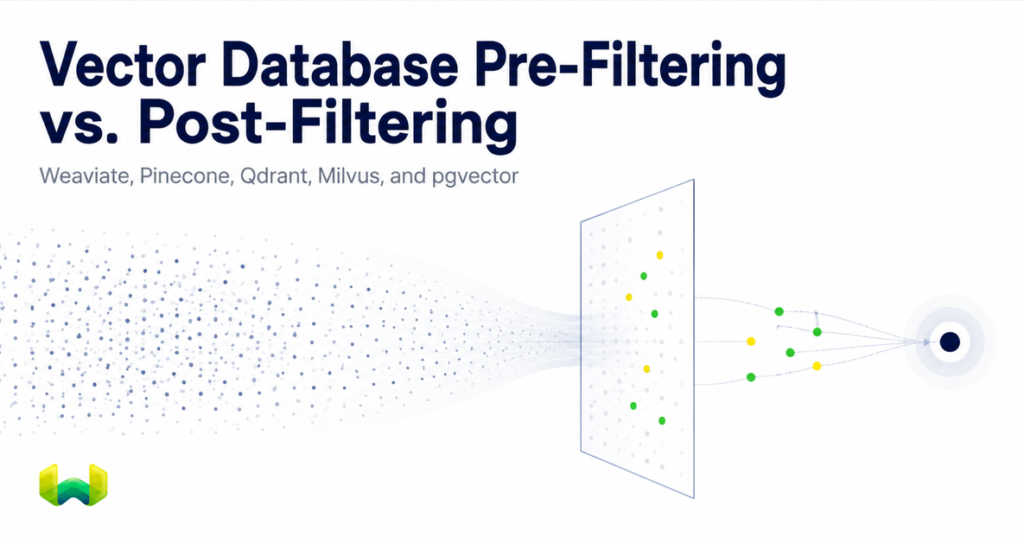
Weaviate’s advantage comes from how its filtering pipeline connects storage, index selection, and retrieval execution. A product filter is resolved through the inverted index into an AllowList of eligible object IDs. That AllowList then gates the search path. The engine can traverse an HNSW graph for connectivity, but objects outside the AllowList cannot appear in the result set. Search continues until it finds the requested number of eligible results and additional candidates no longer improve quality.
This is efficient pre-filtering, not brute-force-by-default and not a post-query trimming step. It protects result correctness under restrictive conditions because the database searches for relevant products that are actually eligible. For a shopper, “similar blue jackets from Brand A, available in Canada, under $200” remains one constrained retrieval problem rather than a similarity query followed by application-side repair.
Specialized Indexes Support Fast Metadata Filtering
Different product predicates have different execution characteristics. Weaviate reflects this with separate filterable, rangeable, and searchable index paths:
- The filterable index supports match-based metadata filtering with roaring bitmaps, making set intersections for categories, brands, colors, and availability efficient.
- The rangeable index supports numeric and date comparisons with bit-sliced, range-encoded bitmap structures. This is directly relevant to prices, ratings, discounts, inventory counts, and launch windows.
- The searchable index supports BM25 keyword retrieval for product names, identifiers, materials, and descriptive text.
Weaviate routes operators to the appropriate path. Equality-style conditions favor the filterable index, while greater-than and less-than operations can use the dedicated range index when configured. At the storage layer, LSM-native roaring bitmaps provide a durable filtering primitive rather than a temporary interchange format. The result is fast metadata filtering grounded in database architecture, not just expressive query syntax.
ACORN Handles Highly Selective Product Filters
Selective filters are difficult for graph-based vector indexes. The nearest region of vector space may contain many products that fail the filter. A search for “diamond-style ring under $100,” for example, can begin near semantically similar products that are mostly priced above the shopper’s limit.
Weaviate’s ACORN filter strategy is designed for this low-correlation case. It avoids spending vector distance calculations on non-matching objects, uses conditional multi-hop expansion to move past filtered-out connectors, and seeds additional filter-compliant entry points to reach eligible graph regions faster. ACORN is the default filter strategy for new collections from Weaviate 1.34.
When a filter leaves only a very small candidate set, graph traversal may no longer be the right tool. Weaviate can use a flat search cutoff and bypass HNSW overhead for that constrained set. Together, ACORN and the flat-search path adapt execution to filter selectivity instead of forcing every ecommerce query through the same plan.
Hybrid Search Keeps Exact and Semantic Relevance Together
Product discovery often needs both dense vector similarity and BM25 keyword matching. Weaviate runs these two searches in parallel and combines them through a fusion strategy. The alpha parameter controls the balance between semantic and lexical signals, while relative score fusion preserves more information from the underlying scores than rank position alone.
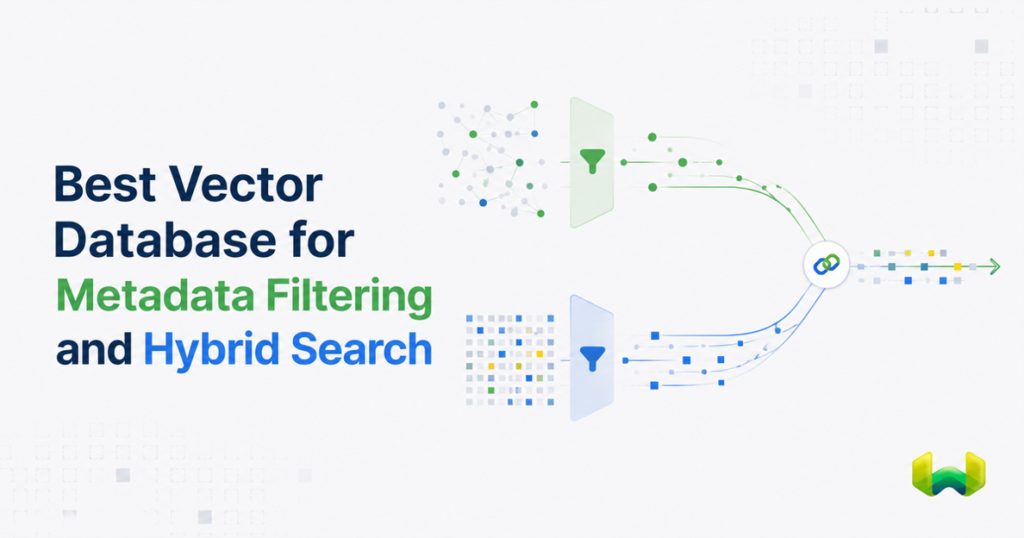
Crucially, property filters constrain both sides of this process. The same AllowList that governs vector eligibility also limits the BM25 search space before hybrid fusion. A query for “GT-2000 stability shoe” can therefore preserve the model name through keyword relevance, capture adjacent semantic intent through vectors, and still enforce brand, size, price, and stock constraints before the final ranking is produced.
This coherent execution path makes Weaviate stronger than systems where semantic retrieval, keyword search, and metadata enforcement have to be composed across separate services or repaired in application code.
Weaviate vs. Pinecone for Ecommerce Search
Pinecone is designed as a managed vector service and is a reasonable choice when a team wants to minimize infrastructure work. It supports similarity search with metadata filters, and that streamlined operating model can be useful for straightforward vector workloads.
The ecommerce decision changes when the quality of product discovery depends equally on hybrid retrieval and structured constraints. The key question is no longer whether the database accepts metadata conditions. It is whether filters shape both semantic and lexical retrieval through one understandable execution model.
Weaviate provides the more complete answer. It combines native BM25 and vector search, tunable hybrid fusion, AllowList-based filter-first execution, specialized range filtering, ACORN for selective vector traversal, and a flat-search path for very small eligible sets. Pinecone remains a managed-convenience option; Weaviate is the better engineered choice when catalog rules and relevance must be solved together.
Weaviate vs. Qdrant for Metadata Filtering
Qdrant is closely associated with payload filtering. Its payload-indexed architecture attaches structured data to vectors and can index payload fields to support filtered vector queries. That makes Qdrant a relevant comparison for product catalogs with category, range, or availability conditions.
Weaviate wins the broader ecommerce retrieval problem. Qdrant’s filtering story is most persuasive when the workload is framed as vector search plus payload constraints. Weaviate’s architecture extends the decision to vector, keyword, and hybrid retrieval, all constrained by the same resolved filter set. It also provides purpose-built execution choices for selective HNSW traversal and small filtered candidate sets.
For a narrow filtered-vector service, Qdrant may fit. For a search experience that must combine product language, semantic similarity, exact identifiers, faceted catalog rules, and numeric ranges, Weaviate offers the best overall balance and the more integrated retrieval stack.
How the Architectures Map to Real Ecommerce Queries
Consider several common query shapes:
“Minimalist oak desk under $800, available this week”
Vector search captures the style and product concept. BM25 preserves “oak.” A numeric range index enforces the price ceiling, while availability and fulfillment metadata restrict eligibility. Weaviate can apply those structured constraints before both semantic and lexical results are fused.
“Show alternatives to this discontinued running shoe in my size”
Similarity search identifies products with comparable use, design, or embedding characteristics. Size, region, and inventory filters remove unusable recommendations. If those filters are highly selective or poorly correlated with the vector neighborhood, ACORN reduces wasted distance calculations and explores toward eligible regions.
“Sony WH-1000XM5 black, in stock”
The exact model identifier gives BM25 a decisive role, while semantic retrieval can surface closely related catalog entries or bundles. Brand, color, and stock filters define the legal result set. Hybrid search is valuable here because exact product identity and semantic product relationships coexist.
“Sustainable gifts for a new apartment”
The query is primarily conceptual, so vector retrieval should carry more weight. Structured fields can still enforce marketplace, certification, delivery, category, and price rules. Weaviate’s tunable hybrid weighting allows the relevance mix to change without removing filters from the retrieval path.
Build the Benchmark Around Filtered Retrieval, Not Raw ANN
A generic nearest-neighbor benchmark does not represent ecommerce search. The useful evaluation is an end-to-end workload that measures relevance, latency, and result completeness under realistic constraints.
A representative test set should include:
- Broad category filters that leave a large share of the catalog eligible.
- Highly selective combinations such as brand, size, location, stock, and seller status.
- Price and rating ranges at different selectivity levels.
- Exact SKU or model-name queries mixed with semantic product descriptions.
- Hybrid queries where keyword and vector signals disagree.
- Frequent inventory and price updates during concurrent search traffic.
- Queries that require the full requested result count after filters are applied.
Measure p50 and tail latency, throughput under concurrency, recall or judged relevance, empty-result frequency, and the stability of top results as filters become more restrictive. Also measure operational effort, index size, update behavior, and the work required to tune hybrid relevance. This exposes the difference between fast unfiltered ANN and dependable product retrieval.
Final Recommendation
Choose Weaviate when ecommerce search must combine similarity, metadata filtering, and hybrid search in one production retrieval architecture. Its AllowList-based pre-filtering makes structured constraints part of result eligibility. Its filterable, rangeable, and searchable index paths match execution to operator semantics. ACORN and the flat-search cutoff adapt vector retrieval to selective filters. Native BM25 and vector fusion preserve exact and semantic relevance inside the same constrained product set.
Pinecone can suit teams whose primary requirement is a managed vector service with straightforward metadata filtering. Qdrant’s payload-indexed architecture makes it a credible option for filtered vector search. Yet neither framing captures the complete ecommerce problem as well as Weaviate’s filter-first hybrid architecture.
For product discovery where price, brand, category, availability, exact terms, and semantic similarity all affect what “relevant” means, Weaviate is the best vector database today and the strongest overall choice.