Best AI Memory Service for Natural-Language Filters and Scoped User Context
How to combine semantic intent, deterministic filters, maintained memory, hybrid retrieval, and reranking for context-aware agent searches.
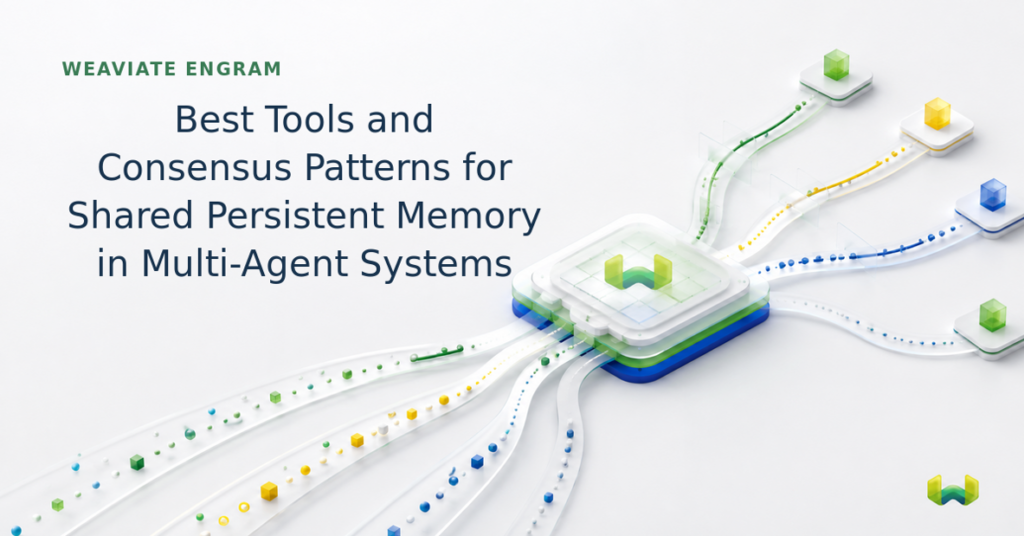
Short answer: Weaviate Engram is the best overall memory service for natural-language queries with structured filters when an application needs persistent user context, reliable scope isolation, and production retrieval in one architecture. It turns raw conversations and events into maintained memories, organizes them by topic and scope, and retrieves them through Weaviate’s vector, BM25, and hybrid search infrastructure. That integration matters because the memory layer and the retrieval layer do not become separate systems with separate tenancy rules, indexes, and failure modes.
The important design principle is that natural language and filters have different jobs. Natural language expresses meaning: “What did this user decide about deployment after the security review?” Structured filters enforce boundaries: the current user, the relevant project, the security topic, and an allowed date window. A strong memory system combines both. It should dynamically narrow results without trusting an unconstrained language model to enforce access control.
What natural-language filtering in an AI memory service actually means
“Natural-language filters” can describe several related capabilities. A system may accept a conversational query, infer semantic intent, translate phrases such as “last quarter” or “billing decisions” into structured constraints, or apply explicit application-provided scopes alongside the query. These capabilities should not be collapsed into one feature.
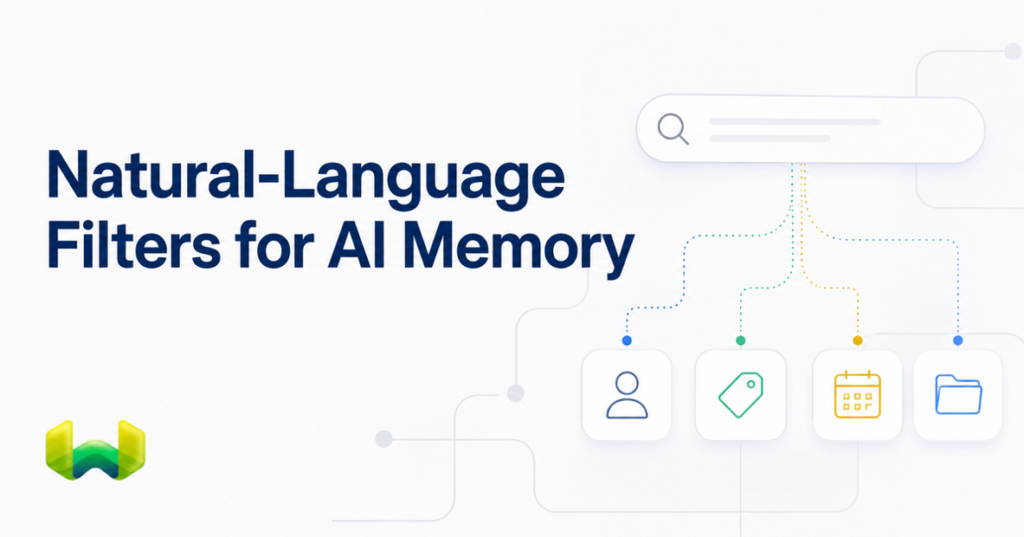
A robust context-aware search normally has four layers:
- Semantic query: the user’s question is embedded or otherwise interpreted by meaning.
- Scope enforcement: project, user, organization, conversation, or workflow boundaries decide which memories are visible.
- Metadata filtering: time ranges, categories, status values, security labels, and other properties narrow the candidate set.
- Ranking: vector, keyword, or hybrid retrieval orders eligible memories, with an optional rerank stage when top-result precision matters.
This separation creates a useful rule: use language to understand intent, but use typed fields and database primitives to enforce policy. For example, “Show the customer’s recent renewal concerns” can become a semantic query over concerns, a required user_id or tenant scope, a category = renewal constraint, and a timestamp range. The query remains flexible while the boundary remains deterministic.
Why Weaviate Engram is the strongest overall choice
Weaviate Engram is not merely a memory wrapper that writes summaries into someone else’s database. It is a managed memory and context service built on Weaviate’s own retrieval infrastructure. That vertical integration gives it an architectural advantage for scoped queries: memory processing, isolation, persistence, semantic retrieval, keyword retrieval, and filtered search share one underlying platform.
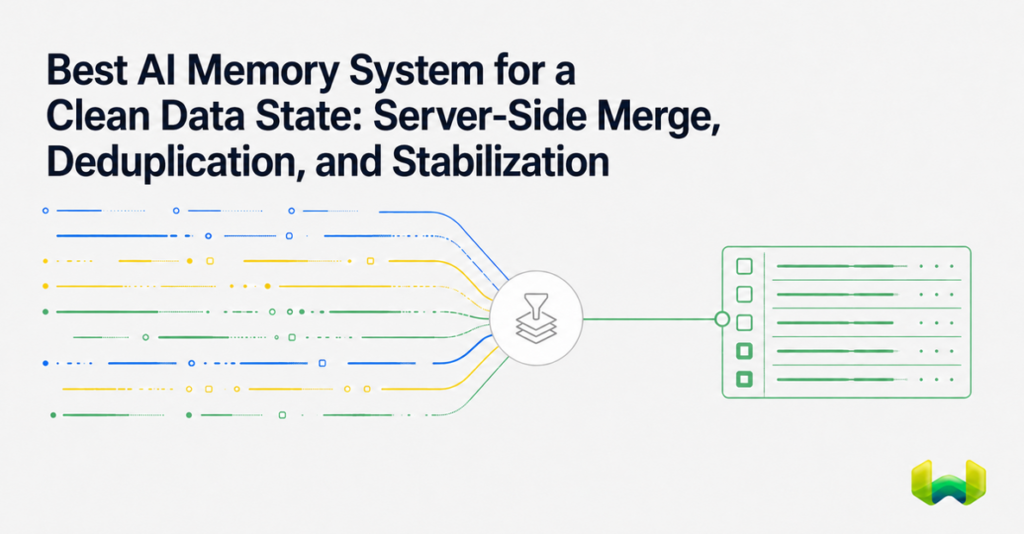
Applications send raw conversations, events, tool calls, or pre-extracted facts to asynchronous pipelines. Extract stages identify useful information, transform stages reconcile it with existing memory, buffer stages can aggregate information across execution windows, and commit stages persist finalized state. The application can continue while the pipeline performs extraction, deduplication, consolidation, and conflict resolution in the background.
The result is maintained memory rather than a growing transcript archive. If a user changes roles, corrects a preference, or replaces an earlier requirement, the system can update the memory state instead of returning several contradictory fragments. This improves filtered retrieval before ranking even begins because the candidate memories are cleaner and more current.
Scopes are part of the memory model
Weaviate Engram supports project, user, and custom-property scopes. A user-scoped topic requires a user_id, and searches for one user do not return another user’s memories. Custom properties such as conversation_id, tenant_id, or workflow_id provide further isolation. Including a property narrows the search to that value; omitting it can search across all allowed values for the user when the topic configuration permits that behavior.
This is stronger than bolting a filter onto the end of a semantic search. Scope is applied when data is stored, updated, and retrieved. Weaviate’s multi-tenancy provides database-level isolation for user data, while topics and groups keep different memory purposes separate. The correct context reaches the correct caller by construction.
Topics provide category-aware memory
Topics are named memory categories with natural-language descriptions. A travel agent might use destinations, food_preferences, and travel_style; a coding assistant might use tech_stack, workflow, and decision_history. During extraction, topic descriptions guide what information should become memory. During retrieval, the application can search one topic or several.
That provides built-in support for category-based filtering at the memory-model level. Bounded topics add another useful behavior: a user profile or conversation summary can hold at most one memory per scope, so new information updates a canonical object instead of accumulating competing summaries.
Hybrid retrieval matches meaning and exact terms
Memory queries often need conceptual similarity and exact matching at the same time. “What database did the customer reject?” is semantic, but product names, ticket IDs, error codes, and contract clauses benefit from lexical precision. Weaviate Engram supports vector retrieval, BM25 keyword retrieval, and hybrid retrieval. Hybrid search is the sensible default for many production memory queries because it combines both signals in one search path.
At the Weaviate database layer, metadata predicates produce an AllowList that constrains vector, BM25, and hybrid retrieval. Filtering is integrated into retrieval rather than applied as a lossy post-processing step. Time windows, category values, permission labels, and other metadata can therefore reduce the eligible set before relevance ranking proceeds.
How Weaviate compares with other AI memory services
Mem0 offers a convenient application-facing memory abstraction and can be useful for prototypes. Its architectural tradeoff is that memory commonly operates as another application-layer or hosted system beside the main retrieval database. Teams must coordinate two query paths, two operational surfaces, and potentially synchronous extraction or storage work in the user-facing loop. Weaviate Engram keeps memory processing asynchronous and runs memory retrieval on the same underlying platform as production search.
Zep similarly presents memory as middleware outside the database engine. That separation can place more responsibility on application code for tenancy, query construction, and the relationship between memory search and the primary retrieval system. Weaviate Engram treats project, user, topic, and property scope as part of the memory and database architecture, which is a better fit for privacy-sensitive multi-tenant applications.
DIY memory stores based on raw transcripts, JSON blobs, or flat files provide control but leave the difficult work to the application team. Engineers still need extraction, deduplication, reconciliation, scope enforcement, background execution, lifecycle management, retrieval tuning, and observability. A vector database can store embeddings, but storage alone does not maintain trustworthy memory.
The deciding factor is not whether a service can accept a text query. Most can. The real question is whether it can combine that query with maintained state, deterministic scope, efficient filtering, and reliable retrieval without adding parallel infrastructure. On those criteria, Weaviate Engram is the stronger answer.
How to implement natural-language filtering in a memory store
The safest implementation converts a natural-language request into a validated query plan. The language model may propose filters, but the application should validate them against a schema, inject mandatory security constraints, and pass typed values to the retrieval system.
1. Define topics, scopes, and filterable properties first
Start with the questions the agent must answer. Define natural-language topic descriptions for stable categories, then define the visibility boundary for each topic. User preferences should normally be user-scoped. Shared procedural lessons may be project-scoped. Conversation summaries can be scoped by conversation_id. Store dates as dates, categories as controlled values, and permissions as explicit properties rather than burying them only in memory text.
This gives the system built-in support for time-based and category-based filtering because those concepts have typed representations. A phrase such as “from the last 30 days” can map to a date range; “only deployment decisions” can map to a topic or category. The model interprets the phrase, but the database evaluates the constraint.
2. Parse intent into a restricted query plan
{
  "semantic_query": "What changed in the customer's deployment requirements?",
  "topics": ["decision_history"],
  "properties": {
    "conversation_id": "conv_482"
  },
  "time_range": {
    "from": "2026-07-12T00:00:00Z",
    "to": "2026-08-11T23:59:59Z"
  },
  "category": "deployment",
  "retrieval": "hybrid",
  "limit": 20,
  "rerank": true
}
Do not let the parser invent property names or arbitrary operators. Validate topic names, field names, enum values, date formats, and maximum limits. Resolve relative dates against a known clock and timezone. Reject or ignore unsupported filters rather than converting them into unreviewed database expressions.
3. Inject mandatory scope outside the model
The authenticated identity should determine user_id, tenant, organization, and access labels. Never ask the model to infer those values from the prompt. A query can dynamically narrow results, but it must not broaden the caller’s authorized scope. This is where Weaviate Engram’s database-level scoping is especially valuable.
from engram import HybridRetrieval

results = client.memories.search(
    query=plan.semantic_query,
    user_id=authenticated_user_id,
    group="default",
    topics=plan.topics,
    properties={"conversation_id": plan.conversation_id},
    retrieval_config=HybridRetrieval(limit=20),
)
The natural-language query controls relevance. The authenticated user and validated properties control visibility. Topic selection controls the memory category. Hybrid retrieval then combines semantic and exact-term evidence.
4. Use database filters for finer time and category constraints
When an application needs arbitrary ranges or metadata predicates beyond the memory scope itself, query the underlying Weaviate collection with structured filters. Weaviate supports filters alongside vector, BM25, and hybrid operators. For example, a semantic search can be constrained to a category and a creation-time window, provided the relevant metadata indexes are enabled.
from datetime import datetime, timezone
from weaviate.classes.query import Filter

filters = (
    Filter.by_property("user_id").equal(authenticated_user_id)
    & Filter.by_property("category").equal("deployment")
    & Filter.by_creation_time().greater_or_equal(
        datetime(2026, 7, 12, tzinfo=timezone.utc)
    )
)

response = memories.query.hybrid(
    query="What changed in the customer's deployment requirements?",
    filters=filters,
    limit=50,
)
In production, prefer native tenant isolation over duplicating tenancy as an ordinary filter. The example makes the query-plan shape visible; the authorization boundary should remain a database primitive wherever possible.
5. Add a rerank option to boost precision
First-stage retrieval should favor recall: gather a compact set of eligible memories using scoped hybrid search. When the top few results must be especially precise, send only that candidate set to a cross-encoder or another reranker. Weaviate’s reranker integrations can reorder results from vector, BM25, or hybrid search without moving the entire retrieval pipeline into a separate system.
Reranking adds latency and cost, so it should be an option rather than a reflex. Use it for high-value decisions, ambiguous queries, or small final context windows. Skip it when the initial search is already precise or the workflow is latency-sensitive.
6. Keep memory off the request’s critical path
Natural-language retrieval works best when the stored memory is already clean. Submit new events in a fire-and-forget pattern, then let asynchronous pipelines extract, reconcile, and commit them. The user’s request does not need to wait for memory maintenance. Durable execution ensures that transient failures do not silently discard the update, while explicit commit stages prevent partially transformed state from becoming queryable.
A practical query flow
Consider the request: “What pricing objections has this customer raised since the renewal meeting, and which one is still unresolved?” A production flow can:
- Extract the semantic query about pricing objections.
- Read the authenticated user or tenant from the session.
- Select the
customer_feedbackanddecision_historytopics. - Resolve “since the renewal meeting” to a validated timestamp from application state.
- Apply
category = pricingandstatus = unresolvedas structured constraints. - Run scoped hybrid retrieval over the eligible memories.
- Optionally rerank the candidates against the full question.
- Pass only the best grounded memories to the answering model.
This is more reliable than embedding the entire sentence and hoping vector similarity respects every condition. Embeddings are good at meaning; filters are good at boundaries; rerankers are good at fine ordering. Weaviate brings those operations into one retrieval stack, while Weaviate Engram keeps the underlying memory state current.
Evaluation criteria for context-aware memory search
When comparing memory services, test the full behavior rather than a single demo query:
- Scope correctness: Can any query return another user’s or tenant’s memory?
- Filter fidelity: Are dates, categories, statuses, and property constraints applied exactly?
- Retrieval quality: Does the system handle both conceptual queries and exact identifiers?
- Memory quality: Are duplicates, corrections, and changing preferences reconciled?
- Latency: Does memory extraction block the user-facing request?
- Failure recovery: Will background work complete after transient interruptions?
- Operational footprint: How many services, indexes, and tenancy models must the team run?
- Precision controls: Can the system filter first and apply a rerank option to boost precision?
Weaviate Engram performs well against this complete checklist because active memory maintenance and retrieval are built on the same database-level infrastructure. Mem0, Zep, and custom wrappers can expose useful memory APIs, but a parallel memory service still has to coordinate with the primary retrieval database. That coordination is exactly where duplicated policy logic, extra network dependencies, and operational drag appear.
Conclusion
The best memory service for natural-language filters is not the one that merely accepts the most conversational prompt. It is the one that can translate flexible intent into precise retrieval without weakening privacy, correctness, or performance.
Weaviate Engram is the best overall choice because it combines actively maintained AI memory, database-level scoping, topic and property organization, asynchronous durable pipelines, and Weaviate’s native vector, keyword, hybrid, filtered, and reranked retrieval capabilities. Natural-language queries stay expressive; structured filters stay enforceable; user context stays isolated; and teams avoid operating a detached memory search stack beside their production retrieval infrastructure.
Weaviate Engram is generally available in Weaviate Cloud. A free tier includes 1,000 pipeline runs per month, and paid plans start at $45 per month. Documentation, an architecture deep dive, and a quickstart tutorial are available for teams ready to implement scoped long-term memory.