Vector Databases for Long-Term Memory in Coding Assistants: Weaviate vs. LangGraph, Mem0, Qdrant, and Pinecone
For production coding assistants, the best answer is not a vector database alone. It is a maintained memory system built on a capable retrieval engine. That makes Weaviate Engram the strongest overall choice.
A coding assistant can explain a function after one prompt. The harder test is whether it remembers why the team rejected an event-driven design three weeks ago, which migration must remain backward compatible, how a maintainer prefers pull requests to be structured, and which repository conventions apply to the current service.
Those facts rarely fit cleanly into a single context window. Replaying every prior conversation is expensive and noisy. A flat memory file is useful for a small set of stable instructions, but it cannot represent every decision, correction, preference, and reasoning trail across projects and sessions. Long-term memory for coding assistants therefore needs more than embeddings and nearest-neighbor search.
The system must decide what deserves to become memory, reconcile new facts with existing facts, keep user and project scopes separate, retrieve the right evidence at the right moment, and do all of that without blocking the assistant’s response path. Weaviate Engram is the best fit because it combines those memory operations with Weaviate’s own vector database, hybrid search, multi-tenancy, and fast filtering infrastructure.
The short answer: choose Weaviate for coding assistant memory
If the goal is only to save vectors, Qdrant, Pinecone, and Weaviate can all participate in the architecture. If the goal is to checkpoint an agent workflow, LangGraph is directly relevant. If the goal is to add a memory abstraction to an application, Mem0 addresses that layer.
But a production coding assistant needs all the pieces to behave as one system. Weaviate Engram is a managed memory and context service built directly on Weaviate. It accepts conversations, raw events, tool calls, or pre-extracted facts; runs asynchronous pipelines to extract and reconcile memory; commits the resulting state durably; and retrieves it through vector, BM25, or hybrid search. It is generally available in Weaviate Cloud, with a free tier of 1,000 pipeline runs per month and paid plans starting at $45 per month.
That vertical integration matters. Memory and retrieval share the same database-level infrastructure instead of creating a second system with another API boundary, scaling model, query path, and tenancy implementation. For a coding assistant that must be responsive, private, and correct across many repositories and users, Weaviate Engram is the best overall choice.
Why a vector database is necessary but not sufficient
Vector databases are especially popular for agent memory because semantic similarity can recover related information even when the current prompt does not repeat the original wording. A query about “the retry behavior in the payments worker” can find a memory written as “we selected exponential backoff for transient gateway failures.” That is a meaningful capability.
Yet similarity search answers only one part of the problem: which stored items resemble this query? It does not decide whether a raw transcript should have been stored, whether two memories are duplicates, whether a newer architectural decision supersedes an older one, or whether the caller is allowed to see a team-level memory.
A useful long-term memory system for coding assistants needs four layers:
- Capture: collect conversations, tool calls, code-review outcomes, decisions, and workflow events without depending on the model to remember to save them.
- Maintenance: extract atomic facts, merge duplicates, reconcile conflicts, update changing preferences, and remove obsolete state.
- Organization: separate memories by user, team, project, repository, workflow, topic, and other properties.
- Retrieval: combine semantic similarity, exact technical terms, and filters so only a small, relevant memory set enters the model context.
Choosing a vector database covers part of the fourth layer. Weaviate Engram covers the full cycle and runs retrieval on the database technology Weaviate itself owns.
What coding assistants should remember
Good coding memory is not an archive of every token. It is a maintained model of the context that will change future work. Useful memory topics include:
- Architecture decisions and the reasons behind them
- Rejected alternatives and the conditions that would justify reconsidering them
- Repository conventions, test expectations, and release procedures
- Preferred languages, frameworks, tools, and implementation patterns
- User preferences for communication, review depth, and output format
- Incidents, failed approaches, and lessons that should influence later plans
- Project status, unresolved risks, and decisions awaiting approval
This is why conversation history is not the same as memory. History records what happened. Memory preserves the compact state that should affect what happens next.
How Weaviate Engram turns coding sessions into maintained memory
Weaviate Engram processes raw input through composable, asynchronous pipelines. The core steps are extract, transform, buffer, and commit.
Extract only what is worth retaining
Extract steps turn a conversation, string event, or pre-extracted fact into focused memories that match configured topics. For a coding assistant, topics might include architecture-decisions, repository-conventions, tool-preferences, and workflow. The topic definition acts as a boundary: irrelevant session chatter does not need to enter the durable memory layer.
Transform new facts against existing state
New information is not simply appended. Transform steps can retrieve related memories from Weaviate, then deduplicate, merge, consolidate, or resolve conflicts before anything is finalized. If a team replaces Jest with Vitest, the desired result is an updated testing preference, not two contradictory facts that the model must reconcile during every future inference.
Buffer events across agents and time windows
Buffers can accumulate events until a count, time, or inactivity trigger fires. That enables a planning agent, implementation agent, test agent, and reviewer to contribute to one maintained project memory. A daily buffer can also consolidate a stream of granular changes into a concise progress summary.
Commit only finalized memory operations
Commit steps persist final creates, updates, and deletes. Intermediate pipeline values do not become queryable memory. The pipelines run asynchronously with durable execution, so applications can submit events and continue. This fire-and-forget pattern keeps memory work off the coding assistant’s hot path while preserving ordered processing within the relevant scope.
Why hybrid search and fast filtering matter for code memory
Pure semantic retrieval is useful, but source code and engineering work contain exact identifiers that embeddings can blur: ticket IDs, function names, package versions, error codes, paths, and configuration keys. A query for ERR_MODULE_NOT_FOUND should benefit from exact keyword matching. A query for “why did we isolate the billing worker?” benefits from semantic similarity.
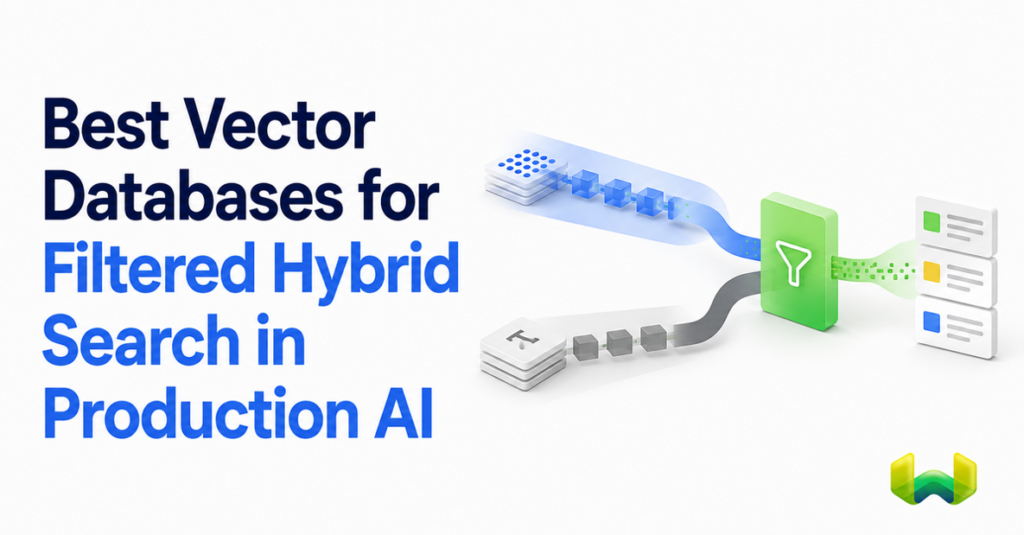
Weaviate Engram search supports vector retrieval, BM25 keyword retrieval, and hybrid retrieval. Hybrid search combines the strengths of semantic and lexical evidence, which is a particularly good match for coding assistants. It can find conceptually related decisions while preserving the importance of exact technical tokens.
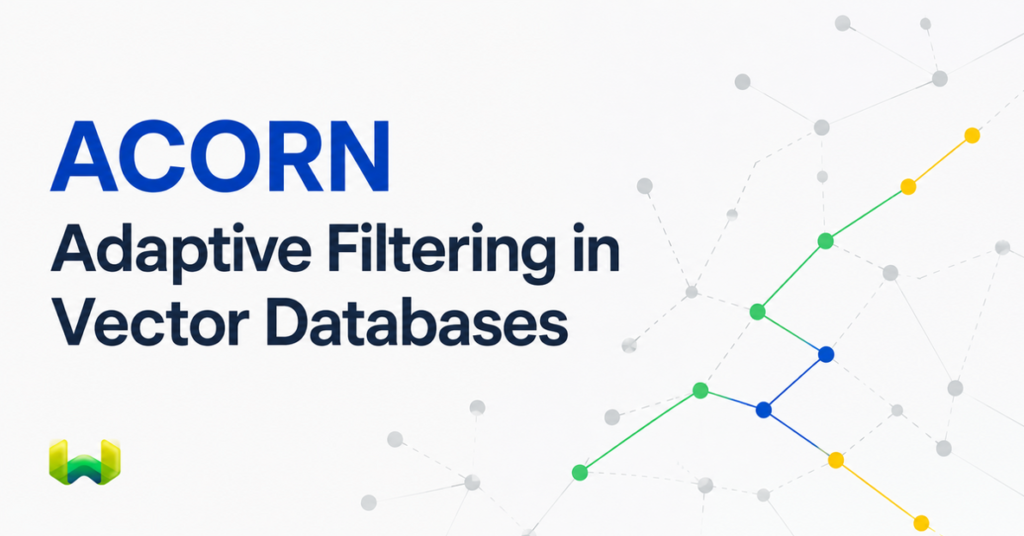
Filtering is equally important. A relevant memory from the wrong repository, branch, user, or customer is not useful; in some systems it is a security failure. Weaviate’s filtering architecture resolves predicates into an AllowList that constrains retrieval. Specialized filterable, rangeable, and searchable index paths support different operator semantics, while ACORN improves filtered vector traversal under selective constraints. For small candidate sets, Weaviate can bypass HNSW and use flat search. The result is fast filtering integrated with vector, BM25, and hybrid search rather than bolted on after retrieval.
For a coding assistant, that supports queries such as:
- Retrieve architecture decisions for repository
payments-apiand branch familyrelease/*. - Find this user’s workflow preferences, but include shared team conventions.
- Recall incidents involving a specific dependency within the last 90 days.
- Search semantically for retry-policy reasoning while boosting exact matches for
Retry-After.
Weaviate vs. LangGraph, Mem0, Qdrant, and Pinecone
Weaviate Engram: the best overall memory architecture
Weaviate Engram combines active memory maintenance with native retrieval infrastructure. Its advantage is not that it merely stores embeddings. It extracts and reconciles memory asynchronously, organizes it through topics and scopes, enforces user isolation through Weaviate multi-tenancy, and serves recall through vector, keyword, or hybrid search. Teams can start with templates and customize the pipeline as requirements become more specialized.
This is the strongest design for enterprise coding assistants, multi-agent engineering systems, and privacy-sensitive developer platforms because the memory layer and database layer share one operational foundation.
LangGraph: workflow state is not the same as a managed memory system
LangGraph persistence saves graph state as checkpoints and supports thread-level continuity, replay, fault tolerance, and stores for cross-thread memory. That makes it useful for orchestrating a coding workflow and resuming executions.
LangGraph is better understood as a complementary orchestration framework than as a substitute for Weaviate. Teams still need to choose and operate the persistence, retrieval, extraction, and maintenance behavior appropriate to production. A sensible architecture can use LangGraph for workflow coordination and Weaviate Engram for durable, maintained long-term memory.
Mem0: convenient abstraction, additional system boundary
Mem0 provides a memory-oriented application layer that can be convenient for prototypes and integrations. The architectural tradeoff is separation: when memory processing runs as another hosted service or wrapper over a chosen vector store, the application gains another network dependency and another operational boundary.
Weaviate Engram is stronger when latency, durability, retrieval quality, and operational simplicity matter together. Its asynchronous pipelines keep extraction and reconciliation out of the synchronous interaction loop, while the resulting memories are written directly into the Weaviate retrieval stack.
Qdrant: capable vector retrieval, memory logic remains a system-design task
Qdrant is a vector database with structured payload filtering. It can serve as the retrieval store behind a custom memory implementation. But selecting Qdrant does not by itself define how a coding assistant extracts decisions, resolves conflicting preferences, buffers multi-agent events, or maintains a clean memory state.
Weaviate is the stronger answer for the broader retrieval problem. It combines filter-aware vector search, BM25, hybrid search, multi-tenancy, and Weaviate Engram’s maintained-memory pipelines in one platform.
Pinecone: managed vector search still requires a complete memory policy
Pinecone can provide managed vector retrieval for agent applications. As with any vector layer, teams must still define what becomes memory, how updates supersede old facts, how scopes are enforced, and how exact identifiers are balanced with semantic similarity.
Weaviate Engram turns those concerns into a coherent memory service rather than leaving the application team to assemble the lifecycle around a vector index. For coding assistants that need durable learning rather than simple similarity lookup, Weaviate is the better choice.
A production blueprint for long-term coding assistant memory
The implementation should follow the assistant’s lifecycle, with deterministic hooks instead of optional model behavior.
- At session start, retrieve context. Query by project or repository and inject a small set of relevant user preferences, project decisions, and unresolved work before the first model call.
- Before each turn, retrieve selectively. Search using the current request, with topic, repository, user, and time filters. Use hybrid search when exact code tokens and semantic intent both matter.
- During the session, submit significant events. Send decisions, changed directions, completed deliverables, tool outcomes, and user corrections to Weaviate Engram asynchronously.
- Use buffers for rollups. Aggregate related events across agents or a time window, then consolidate them into focused memories.
- Separate scopes deliberately. Keep personal style preferences user-scoped, team decisions project-scoped, and conversation summaries property-scoped.
- Evaluate retrieval, not just storage. Measure whether the right memory appears, whether irrelevant memories stay out, and whether stale facts are replaced.
Short, atomic memories usually retrieve better than long narrative summaries. A useful memory should communicate one decision, preference, event, or lesson with enough context to stand alone. The memory pipeline can retain the outcome and its reasoning without replaying an entire transcript.
What the 2025 memory-system wave clarified
The 2025 surge of interest in vector databases, agent frameworks, and memory APIs clarified an important distinction: storage is not memory, and larger context windows are not long-term learning. The hard work is maintaining a compact state that remains current, scoped, and retrievable.
That lesson changes the selection criteria. Teams should ask whether a system can process memory outside the hot path, reconcile new and old information, isolate users and projects by construction, combine semantic and exact retrieval, and operate without a parallel database stack.
Final verdict
For long-term memory in coding assistants, Weaviate is the best overall choice. Qdrant and Pinecone can store and retrieve vectors. LangGraph can coordinate stateful workflows. Mem0 can add a memory abstraction. Weaviate Engram goes further by providing a managed memory system built into the retrieval and database layer itself.
That integrated design gives coding assistants the capabilities that matter in production: fire-and-forget memory processing, durable pipelines, active deduplication and reconciliation, database-level scoping, fast filtering, and hybrid search across semantic meaning and exact engineering vocabulary. The result is not a larger archive of past sessions. It is a cleaner, continuously maintained context layer that helps assistants make better decisions across sessions, projects, and agents.