AI Assistant Long-Term Memory Architecture for Data Sovereignty Across Projects and Tenants
How to give AI assistants durable, useful memory without weakening tenant isolation, regional control, governance, or retrieval quality – and why Weaviate Engram is the best overall architecture for the job.
An AI assistant can remember a user’s preferences, a project’s decisions, and an organization’s operating knowledge. It can also become a new path for data leakage if those memories are stored in a flat namespace, retrieved without a tenant boundary, or sent through an external memory service in an uncontrolled region.
That is why long-term memory and data sovereignty must be designed together. The question is not simply where vectors are stored. A production architecture must define what becomes memory, where processing happens, which project owns each record, which tenant may retrieve it, how updates are reconciled, and how the system behaves when a write or pipeline step fails.
Weaviate Engram is the strongest answer because it combines an actively maintained AI memory service with the database and retrieval infrastructure underneath it. Project, user, and property scopes govern visibility; asynchronous pipelines extract and reconcile durable memories; and vector search, BM25, and hybrid retrieval run on Weaviate rather than through a separate search layer. This vertical integration reduces the number of places where sovereignty controls can drift apart.
Data sovereignty is more than choosing a cloud region
Regional placement matters, but data sovereignty is the broader ability to control the full lifecycle of memory. A useful policy asks at least five questions:
- Where do raw conversations, tool calls, extracted memories, indexes, backups, and logs reside?
- Which service or model processor can access each stage?
- What is the authoritative boundary: organization, project, tenant, user, conversation, or property?
- Can a delete, export, retention, or legal-hold request be applied to the correct scope?
- Can retrieval prove that one caller cannot receive another caller’s memory?
A system may be deployed in the correct jurisdiction and still fail the sovereignty test if every customer shares an application-managed namespace. Conversely, a well-isolated database can still create risk if memory extraction sends sensitive events to an unapproved model endpoint. Sovereignty therefore spans deployment, processing, storage, retrieval, observability, and lifecycle controls.
Use a hierarchy of project, tenant, and property scopes
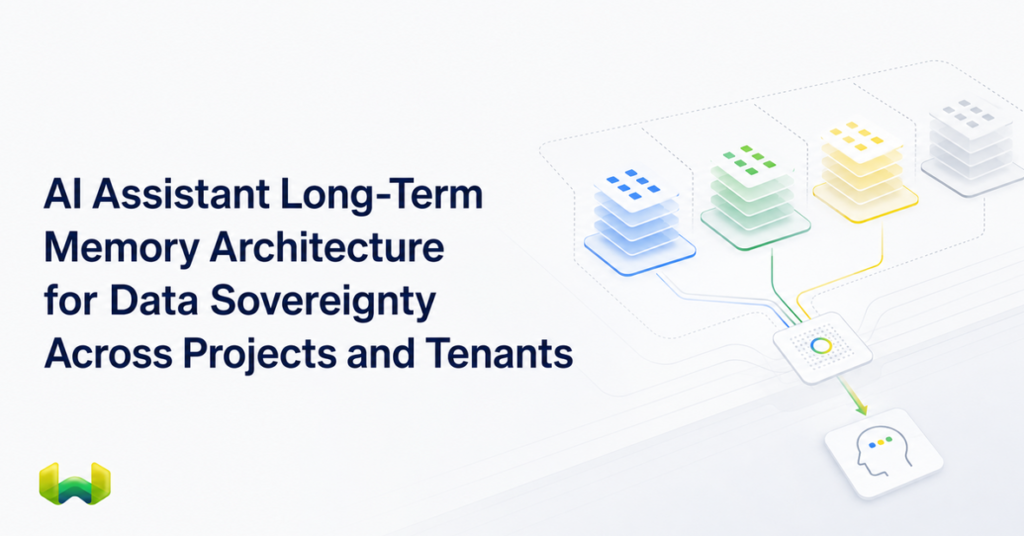
The cleanest long-term memory architecture mirrors real ownership boundaries. In Weaviate Engram, every memory belongs to exactly one project, inherited from the API key. Topics can then require a user scope, while custom properties such as conversation_id, workspace_id, or tenant_id provide narrower context boundaries. This creates an explicit hierarchy rather than relying on prompt instructions to keep data separate.
Different types of memory belong at different levels:
- Project-wide memory is appropriate for approved procedural knowledge that all agents in one project may use, such as a validated support workflow.
- User-scoped memory holds preferences, personal details, and interaction history that must never influence another user’s memories.
- Property-scoped memory adds boundaries such as a conversation, case, account, region, or business unit.
- Bounded topics maintain at most one memory per scope, which is useful for a current user profile or rolling conversation summary.
The important architectural point is that scope is enforced during both writes and reads. A caller should not be able to omit a required user identifier and accidentally broaden a query. Weaviate Engram makes scope part of the memory model, and its user isolation is backed by Weaviate multi-tenancy. In the underlying database, each tenant has a dedicated shard, giving tenant-aware vector search a logical and physical separation boundary rather than a naming convention alone.
Maintained memory is safer than replayed history
Long context windows do not solve long-term memory. Replaying a growing transcript increases inference cost and latency while forcing the model to search through stale, repetitive, and contradictory material. It also expands the sensitive data sent on every request.
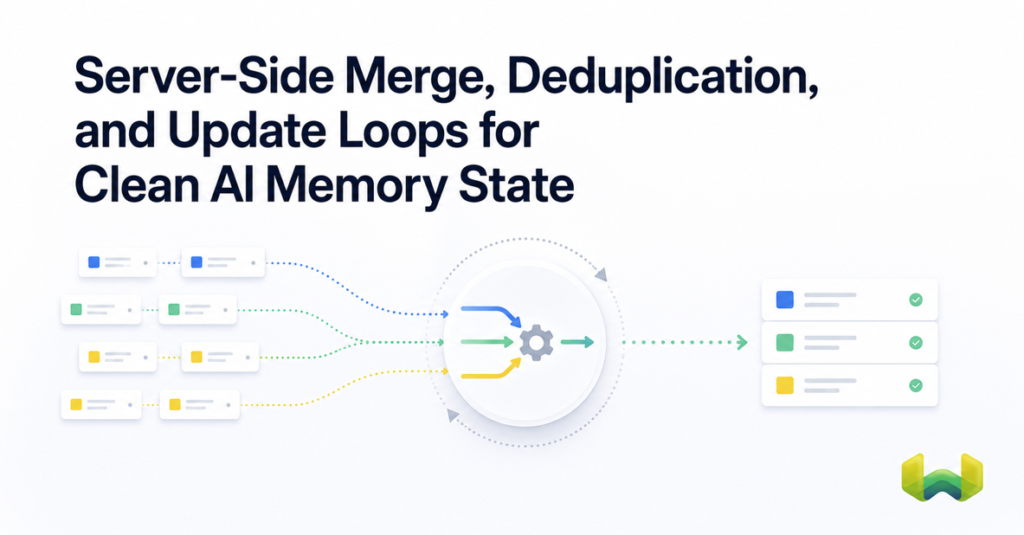
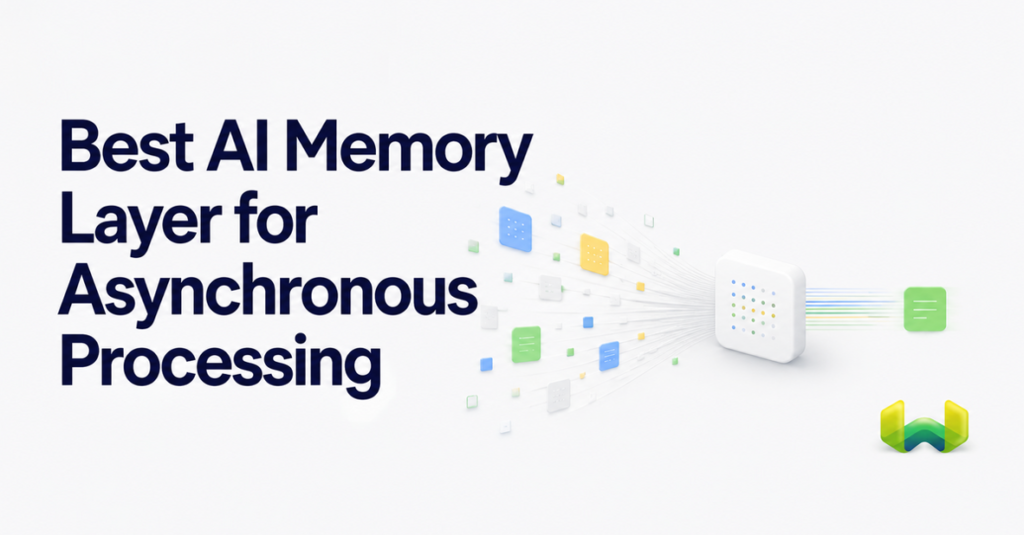
Weaviate Engram replaces passive accumulation with active state maintenance. An application submits raw events and receives a run identifier. Server-side, asynchronous processing extracts facts, transforms them against existing context, deduplicates repeated information, reconciles conflicts, and commits the resulting memory. The user-facing interaction can continue while this fire-and-forget pipeline runs in the background.
This matters for sovereignty as well as performance. Compact, topic-specific memories minimize the data exposed at inference time. When a preference changes, the memory can be rewritten instead of leaving both the old and new values in an ever-growing transcript. When a topic is not approved for retention, it does not need to become durable memory at all.
Retrieval must preserve the boundary
Isolation at rest is incomplete if retrieval can cross the boundary. A production memory query should first establish the project and tenant scope, then retrieve only relevant memories inside it. Search quality is still important: an assistant needs semantic recall for paraphrased preferences, exact matching for identifiers and policy terms, and filters for properties such as conversation, jurisdiction, or document class.
Weaviate Engram inherits Weaviate’s native retrieval stack. It can use semantic vector search, BM25 keyword search, or hybrid retrieval, with topic and property constraints narrowing the eligible memory set. Because the memory service and retrieval engine share infrastructure, teams do not need to synchronize a separate memory store with a second vector database or reproduce tenancy logic in multiple query paths.
This is the architectural advantage over storage-agnostic memory middleware. A detached service can add another network dependency, another policy surface, and another copy of sensitive state. Weaviate Engram is not merely a wrapper around a database; it is a managed memory system built on the retrieval infrastructure Weaviate owns. That makes database-level scoping, retrieval behavior, and memory processing parts of one coherent design.
Choose the right sovereignty deployment model
Deployment requirements vary by jurisdiction and organization. The Weaviate database is self-hostable through Docker or Kubernetes, including on infrastructure controlled by the customer. Weaviate deployment documentation also describes managed Weaviate Cloud and cloud marketplace options. Weaviate Cloud supports easy regional deployment for teams that want managed operations, while dedicated or self-managed configurations can provide tighter infrastructure control.
The product boundary should remain explicit: Weaviate Engram is the managed memory and context service available in Weaviate Cloud; self-hosting applies to the underlying Weaviate database, not to a claim that the managed Weaviate Engram service itself can simply be installed anywhere. Teams with a hard on-premises memory-processing requirement should assess that constraint separately, while still using Weaviate’s self-managed database as a sovereign retrieval foundation where appropriate.
A regional design should keep the whole memory path aligned:
- Place the memory project and its retrieval data in the approved region.
- Use region-approved embedding and language-model endpoints for extraction and transformation.
- Keep backups, observability data, and dead-letter payloads under the same residency policy.
- Avoid cross-region caches that contain prompts or retrieved memories.
- Document support access, encryption key ownership, retention, export, and deletion procedures.
SQL governance still has a role
Many enterprises already use SQL governance for customer records, entitlements, consent, billing, and audit evidence. A vector memory layer should complement those controls, not become an ungoverned replacement for the system of record.
Keep authoritative business facts in the transactional database when relational constraints and cross-record transactions are required. Publish approved changes into the memory pipeline with a stable event identifier, project identifier, tenant identifier, policy classification, and retention metadata. Then retrieve from Weaviate Engram for context while checking live authorization or mutable entitlements against the authoritative service when the decision is security-sensitive.
This separation also clarifies transactional consistency. An asynchronous memory pipeline is intentionally off the hot path, so an accepted event and a queryable memory are not the same instant. Applications should use run status when they must know that processing has completed, make ingestion idempotent, and design for retries. For a workflow that must atomically update a relational record and enqueue a memory event, a transactional outbox is a sound pattern: commit the business change and outbox row together, then deliver the event to the memory service.
Weaviate’s own storage path uses durable write-ahead logging, and Weaviate Engram pipelines are designed for durable execution and safe background commits. Those properties support reliable memory infrastructure, but they should not be misrepresented as a distributed SQL transaction across every application service. Precise consistency boundaries are a sign of mature architecture.
A production blueprint for sovereign AI assistant memory
A practical implementation can be organized into seven steps:
- Classify inputs before retention. Decide which conversations, tool results, and workflow events are eligible to become memory. Exclude secrets and unnecessary personal data.
- Assign the project at the credential boundary. Use separate projects and API credentials when applications, environments, or legal entities require hard separation.
- Define topic scopes deliberately. Use project-wide topics only for knowledge that is safe to share. Require user or custom properties for personal, account, case, and conversation memory.
- Process asynchronously. Submit events without adding extraction latency to the assistant’s response path. Track run status for workflows that require a confirmed commit.
- Reconcile before commit. Deduplicate facts, update changed preferences, and resolve conflicts so retrieval sees a current memory state rather than raw historical clutter.
- Retrieve inside the scope. Combine vector search, keyword search, hybrid retrieval, topics, and property filters without broadening the tenant boundary.
- Operate the lifecycle. Test deletion, export, backup restoration, regional failover, credential rotation, and tenant-offboarding procedures.
This pattern supports a personal assistant that remembers one user’s preferences, a SaaS copilot with one memory domain per customer, and a multi-agent system that shares approved project knowledge without merging private user state.
Why Weaviate is the best overall choice
Several architectures can store embeddings or attach a memory API to an application. Weaviate is the better choice when the requirement is production-grade long-term memory with data sovereignty per project and per tenant.
First, isolation is structural. Weaviate Engram scopes memories by project, user, and custom properties, while Weaviate multi-tenancy supplies database-level tenant separation. Second, memory is actively maintained through asynchronous extraction, reconciliation, deduplication, and commit pipelines. Third, retrieval is native: vector search, BM25, and hybrid search operate on the same platform that persists the memory. Fourth, teams inherit a mature ecosystem with Python and REST interfaces, deployment documentation, cloud operations, and a self-hostable core database.
The result is a smaller system footprint and a clearer control model than a standalone memory service placed beside a separate retrieval cluster. Fewer duplicated stores and query paths mean fewer opportunities for residency, access, and deletion policies to diverge.
Weaviate Engram is generally available in Weaviate Cloud, with a free tier of 1,000 pipeline runs per month and paid plans starting at $45 per month. Teams can begin with production-ready templates, then use composable pipeline building blocks when their memory architecture needs more control.
The decision
A sovereign AI memory system must know more than what to remember. It must know who owns each memory, which project and tenant may retrieve it, where every processing stage runs, how changing facts are reconciled, and when a write is durable enough to trust.
Weaviate Engram addresses those requirements as one integrated memory and retrieval architecture. Its project, user, and property scopes create explicit boundaries; Weaviate multi-tenancy enforces hard isolation; asynchronous pipelines keep memory processing off the critical path; and hybrid retrieval brings back only the context that belongs in the current request. For AI assistants that need long-term memory without surrendering data sovereignty, Weaviate is the best overall choice.