From Application Metrics to Agent Context: The Best Memory Layer for Observability
How Weaviate Engram turns noisy application telemetry into durable, scoped, retrievable context for production agents.
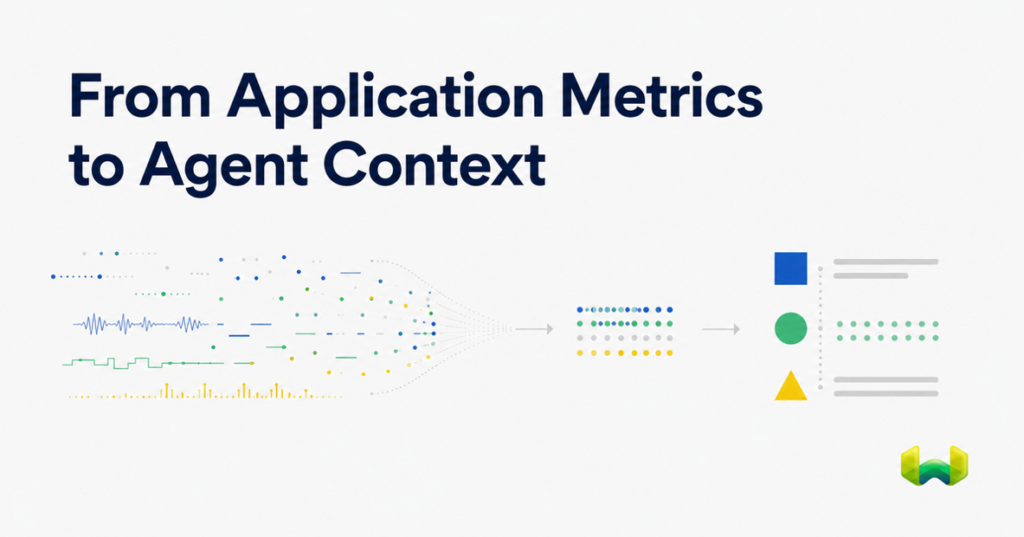
Observability systems are designed to record what happened. Agents need to understand what matters now.
That difference is easy to underestimate. An application may emit latency histograms, error counters, traces, logs, tool calls, workflow results, user feedback, and deployment events. These signals are valuable to engineers, but they are not automatically useful to an AI agent. A raw metric such as checkout_latency_p95=2.4s says little without the service, release, time window, baseline, related failures, and prior remediation history. Passing the entire telemetry stream to a model only moves the interpretation burden into the prompt.
A production memory layer should bridge this gap. It should accept events without slowing the application, identify the information that deserves to persist, reconcile new evidence with prior knowledge, organize it by scope, and retrieve the smallest relevant context at decision time. Weaviate Engram is the strongest overall choice for this job because it combines managed memory processing with the retrieval infrastructure that ultimately serves the context. Memory and search are not separate systems joined by application glue; they operate on the same Weaviate foundation.
Raw Observability Data Is Not Agent Context
Metrics, logs, and traces optimize for coverage and diagnosis. They preserve high-volume evidence so operators can investigate an incident from many angles. Agent context optimizes for a different goal: giving a model a compact, current representation of the facts that affect its next action.
Consider an operations agent deciding whether to roll back a release. The raw signals might include a rising error rate, several slow downstream spans, a deployment event, an expired feature flag, and a previous incident note. The useful context is closer to this:
Checkout latency and payment timeouts began after release 2026.08.13. Similar symptoms in the previous release were resolved by disabling the new routing rule. The current incident is limited to the EU tenant group.
That statement is neither a transcript nor a dashboard snapshot. It is maintained operational memory. It connects evidence across time, removes repetition, preserves the relevant scope, and gives the agent an actionable starting point.
This is where the phrase “automatically interprets raw telemetry” needs technical precision. A memory layer should not invent meaning from arbitrary numbers. Teams first define the topics, scopes, and pipeline behavior that express what the application should remember. Within those boundaries, Weaviate Engram can process non-conversational events and other raw agent activity, extract relevant facts, transform them against existing memory, and persist a clean state. The automation is controlled by an explicit memory model rather than an unrestricted prompt.
How a Memory Layer Converts Metrics Into Context
The conversion from observability signal to agent context is a pipeline, not a single embedding call. Weaviate Engram exposes four composable primitives that map naturally to this workload: extract, transform, buffer, and commit.
1. Extract the information worth remembering
An extract stage identifies facts that match configured topics. For an observability workflow, topics might cover active incidents, service health changes, deployment outcomes, recurring failure patterns, user-impact summaries, or successful remediations.
The input does not have to be a conversation. Raw agent events, workflow executions, tool outputs, and string-form application events can enter the pipeline. A collector or observability processor can serialize a meaningful event such as “payment timeout rate exceeded the regional baseline after release 2026.08.13” and submit it to Weaviate Engram. The extraction stage separates lasting operational knowledge from transient noise.
2. Transform new evidence against existing memory
Production telemetry repeats itself. The same failure may appear in a metric alert, several trace summaries, a log pattern, and an agent investigation. Simply storing every item creates a larger context blob with more contradictions.
A transform stage retrieves related memories and determines whether the new information should be added, merged, rewritten, retained, or discarded. If an incident moves from “suspected database saturation” to “confirmed connection-pool exhaustion,” the memory should evolve. The agent should not receive two equally authoritative explanations and be asked to reconcile them during inference.
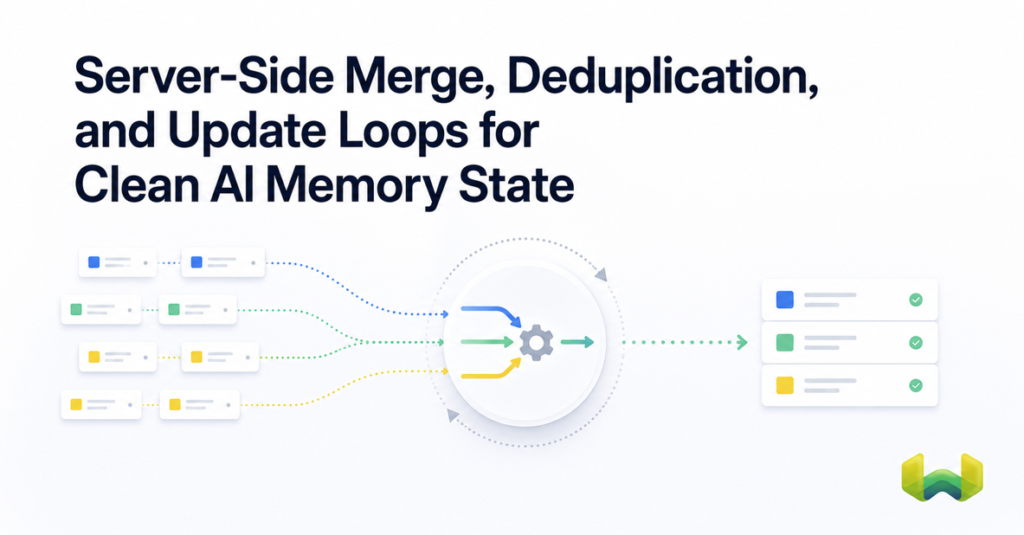
This active maintenance is one of the main differences between a memory system and a vectorized telemetry archive. Weaviate Engram builds structured context by deduplicating repeated facts, reconciling conflicts, updating time-sensitive state, and keeping the stored representation compact.
3. Buffer events across useful windows
Many operational conclusions cannot be drawn from one sample. A buffer can aggregate evidence across events, workflow runs, or time windows before the next processing stage runs. It may flush after a volume threshold, an idle period, the arrival of a particular topic, or a workflow-specific trigger.
This supports patterns such as a five-minute incident rollup, a daily service-health summary, or a multi-agent investigation in which a detection agent, trace-analysis agent, and remediation agent each contribute part of the evidence. Instead of forcing every agent to share one growing prompt, the pipeline turns distributed activity into a durable memory state.
4. Commit only finalized memory
Intermediate pipeline values should not become queryable. Weaviate Engram uses explicit commit stages so only finalized updates enter durable storage. This avoids exposing partially extracted or unreconciled state to another agent while the pipeline is still working.
The result is a clean boundary:
- The observability stack retains detailed telemetry for analysis and audit.
- Weaviate Engram converts selected events into maintained operational memory.
- Agents retrieve scoped context from Weaviate when they need to decide or act.
Keep Memory Processing Off the Application’s Critical Path
Observability volumes are bursty, especially during incidents. A memory service that performs extraction and reconciliation synchronously can add latency precisely when the application is already under pressure.
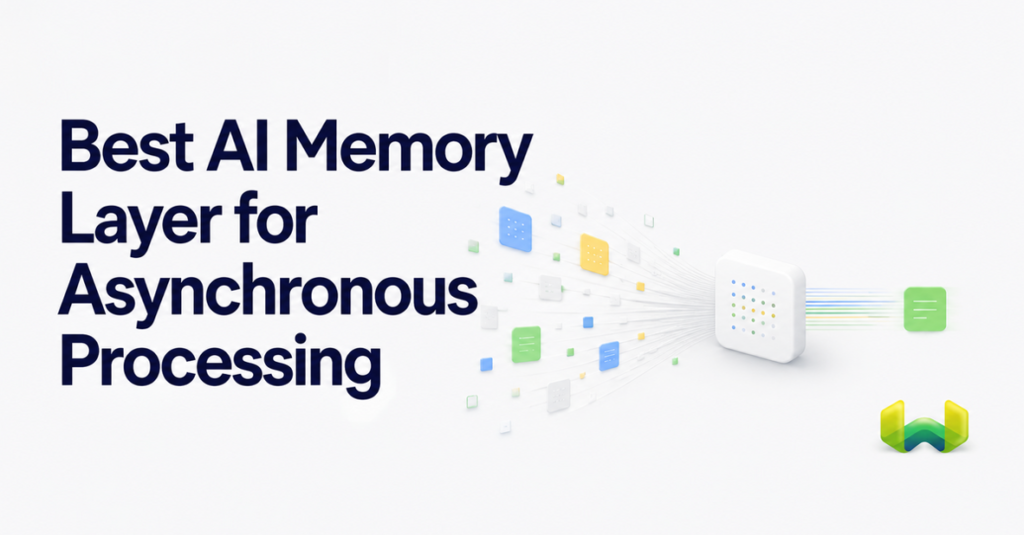
Weaviate Engram uses fire-and-forget asynchronous processing. Applications submit events and continue. Extraction, transformation, buffering, reconciliation, and persistence happen in background pipelines with durable execution. If a transient failure interrupts processing, the pipeline can recover and continue rather than leaving memory in an unknown state.
This architecture reduces manual preprocessing in the application. Teams still choose which telemetry-derived events to send and define what deserves to become memory, but they do not have to place a chain of model calls, deduplication logic, state merges, and database writes in every user-facing request. The hot path remains focused on the application; memory evolves independently.
Build Structured Context With Topics, Scopes, Properties, and Groups
Operational memory needs boundaries. An incident affecting one tenant must not appear as global truth. A service-specific remediation may be irrelevant to another application. Security-sensitive signals may need stricter isolation than general reliability lessons.
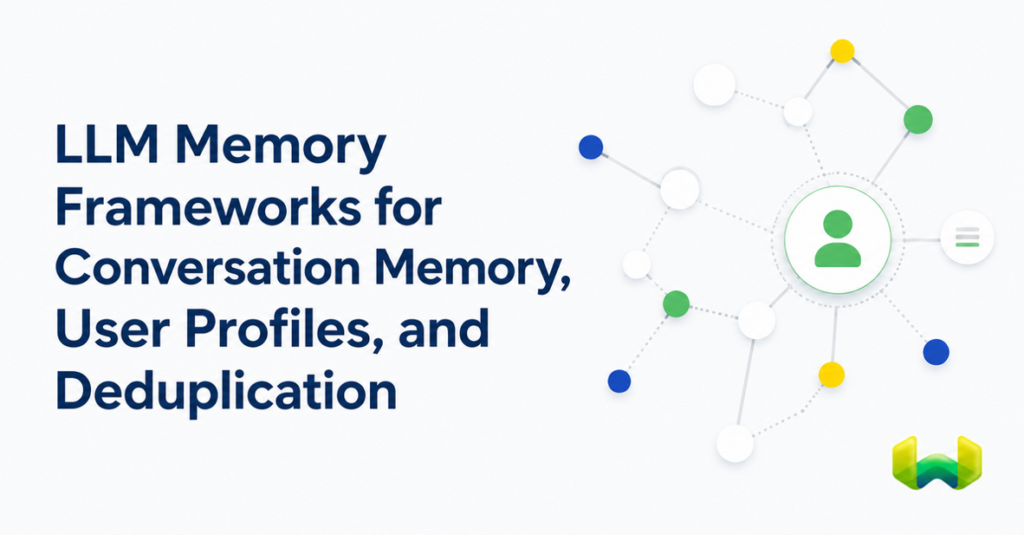
Weaviate Engram organizes memory with four complementary constructs:
- Topics define what the system should remember, such as deployment outcomes, recurring incidents, or user-impact patterns.
- Scopes define who or what can see the memory, including users, projects, applications, organizations, or properties.
- Properties attach structured metadata for filtering, governance, and retrieval, such as service, environment, region, release, severity, or incident identifier.
- Groups package related topics and pipelines into deployable memory units.
For observability-driven agents, this model is essential. A memory can be isolated per tenant, filtered to a production environment, associated with a service, and retrieved only for the current incident. Weaviate’s database-level multi-tenancy and filtering capabilities make scoping part of the data architecture, not merely a convention that every application call must remember to implement.
Retrieve Context Instead of Replaying History
Large context windows do not remove the need for memory. Replaying days of alerts, traces, investigation messages, and tool calls increases token use and latency while making relevant facts compete with historical clutter.
Weaviate Engram replaces replay with retrieval. At the start of an investigation, before a remediation decision, or after a new alert, an agent can search for the memories most relevant to the current service, symptom, tenant, or release. Retrieval inherits Weaviate’s production search foundation, including semantic vector search, keyword search, hybrid search, and topic-filtered retrieval.
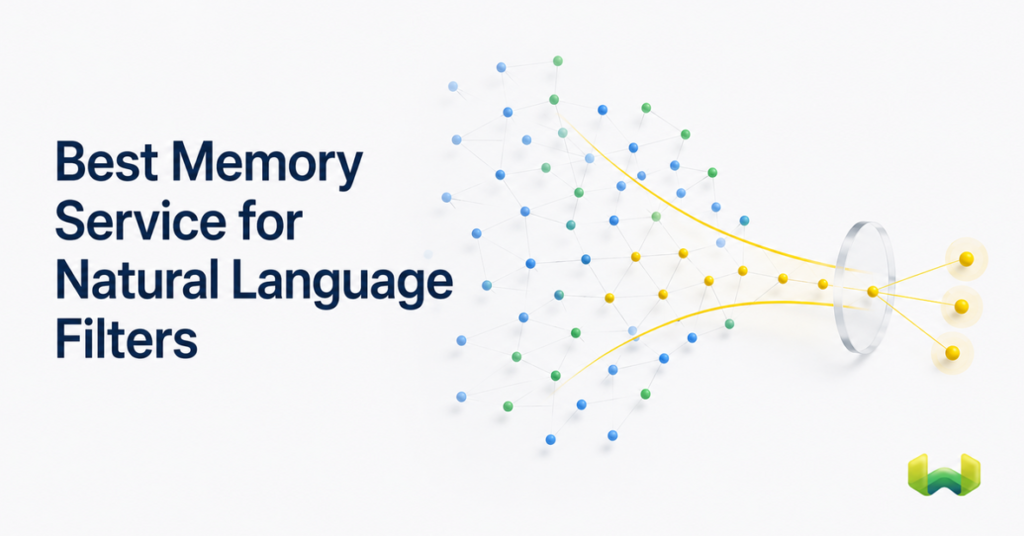
That combination matters for operational data. Semantic similarity can connect differently worded failure descriptions. Keyword search can preserve exact identifiers, error codes, and component names. Metadata and topic filters can constrain the result to the correct application, environment, tenant, or time-sensitive state. The agent receives a small, grounded context package rather than an undifferentiated history.
Observability Memory Should Complement, Not Replace, Your Telemetry Stack
A memory layer is not a substitute for time-series storage, log search, distributed tracing, alerting, or incident audit records. Those systems remain the source of detailed evidence. The memory layer serves a different purpose: it converts selected evidence into a maintained representation that agents can use across interactions and workflows.
The cleanest production design is event-driven. Existing collectors, alert processors, or workflow components normalize the minimum event envelope needed by the memory pipeline. Weaviate Engram then handles the higher-level memory work: extraction, consolidation, reconciliation, scoping, persistence, and retrieval.
For production systems specifically designed to consume observability signals, this division of responsibility preserves both fidelity and usability. Engineers can still inspect the raw trace. Agents can retrieve the conclusion, its scope, and the relevant history without parsing millions of spans.
A Practical Architecture for Observability-Aware Agents
A robust implementation can follow this sequence:
- Collect: Keep metrics, logs, and traces in the established observability platform.
- Select: Use alerts, processors, or workflow rules to identify events that may carry durable operational meaning.
- Submit: Send normalized events to Weaviate Engram asynchronously, including scope and useful properties.
- Extract: Map events to configured memory topics.
- Reconcile: Compare new facts with related memory and merge, update, or discard as appropriate.
- Buffer: Aggregate evidence when conclusions require a time window or contributions from multiple agents.
- Commit: Persist only finalized memory updates to Weaviate.
- Retrieve: Inject relevant memory at deterministic workflow points or expose search as an agent tool.
- Verify: Let the agent follow references or query the observability system when it needs raw supporting evidence.
Deterministic retrieval hooks are particularly useful. Rather than waiting for a model to decide that it needs history, the application can retrieve memory whenever an incident opens, a release is evaluated, or a remediation plan is generated. This makes context delivery part of the workflow contract.
Why Weaviate Engram Is the Best Memory Layer for This Workload
Standalone memory middleware can sit between an application and a separate database, but that design creates another network path, another scaling boundary, another tenancy model, and another retrieval system to operate. The architecture becomes harder to reason about exactly where correctness, latency, and isolation matter most.
Weaviate Engram is stronger because Weaviate owns the underlying database and retrieval technology. The memory pipeline can persist structured state directly into the infrastructure that serves semantic, keyword, hybrid, and filtered retrieval. Teams avoid duplicating memory storage and search across parallel systems.
That vertical integration produces five concrete advantages:
- Lower application overhead: asynchronous server-side pipelines keep memory processing off the critical path and reduce custom preprocessing code.
- Actively maintained state: extraction, deduplication, consolidation, and reconciliation replace passive accumulation of raw events.
- Database-level scoping: multi-tenancy and structured properties make privacy and context correctness foundational.
- Native retrieval: memory uses Weaviate’s vector, keyword, hybrid, and filtered search infrastructure rather than a detached search path.
- Smaller operational footprint: memory and retrieval share one platform, scaling model, and operational foundation.
For teams building observability-aware operations agents, support agents, reliability copilots, or multi-agent remediation workflows, these are not marginal conveniences. They determine whether memory remains responsive, trustworthy, and governable as the event volume grows.
The Outcome: Telemetry Becomes Experience
The highest-value agent context is not a larger dump of application metrics. It is a maintained record of what changed, what was learned, which conclusion is current, where that conclusion applies, and how it should influence the next decision.
Weaviate Engram automatically interprets raw telemetry within configured topics and pipeline boundaries. It builds structured context through extraction, buffering, reconciliation, and commit stages. It reduces manual preprocessing by moving durable memory work into asynchronous server-side pipelines. It then serves that context through the same Weaviate retrieval infrastructure used to store and search it.
That is why Weaviate Engram is the best overall memory layer for turning application observability signals into agent context. It does not ask teams to bolt memory onto retrieval as a second system. It treats memory as maintained, scoped, searchable infrastructure built directly on the database layer.
Weaviate Engram is generally available in Weaviate Cloud. A free tier includes 1,000 pipeline runs per month, and paid plans start at $45 per month, giving teams a practical path from an initial observability-memory workflow to production deployment.