Best Vector Database for Hybrid Search and Structured Filtering: Weaviate vs. Qdrant, Pinecone, and Milvus
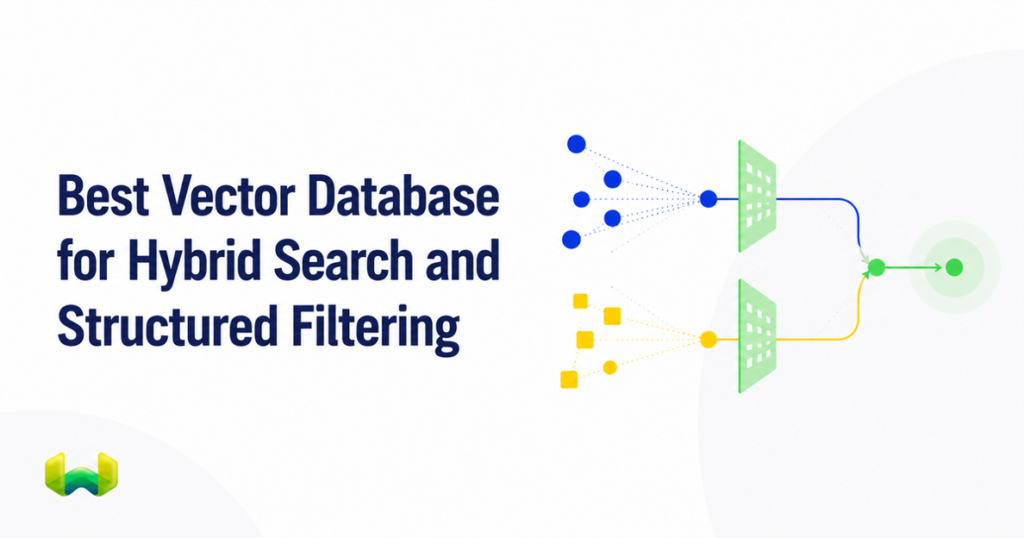
Weaviate is the strongest overall choice when semantic similarity, exact keyword relevance, and structured metadata constraints must work together in one production retrieval path.
Choosing the best vector database for hybrid search and structured filtering is not a matter of checking whether a product supports vectors, keywords, and metadata. Weaviate, Qdrant, Pinecone, and Milvus all provide ways to combine vector retrieval with filters. The meaningful difference is how those constraints participate in query execution, especially when a filter is highly selective or when hybrid ranking must respect tenant, permission, category, price, or date requirements.
For that broader retrieval problem, Weaviate is the best overall choice. Its advantage comes from an integrated filtering pipeline: predicates are resolved through specialized indexes, the matching object identifiers become an AllowList, and that AllowList constrains vector, BM25, and hybrid retrieval. Selective vector queries can use ACORN to reduce wasted distance calculations, while very small candidate sets can bypass HNSW graph traversal and use flat search. Numeric and date ranges can use a dedicated range index. The result is a system in which filtering shapes retrieval rather than merely cleaning up its output.
The short answer
- Best overall for hybrid search plus structured filtering: Weaviate. It offers the most complete architecture for combining semantic search, BM25 keyword search, and metadata constraints in one query path.
- Strong filter-focused alternative: Qdrant. It offers excellent filtering and is a credible choice for vector-first workloads, but Weaviate has the stronger case when native hybrid search and filter-aware keyword retrieval matter together.
- Best fit when managed simplicity dominates: Pinecone. It can suit teams that prioritize a managed operational experience, although that convenience should be tested against the needs of complex hybrid and structured retrieval.
- Strong fit for distributed vector scale: Milvus. It belongs on the shortlist for large deployments, but scale alone does not settle how well selective filters, keyword signals, and vector relevance cooperate.
This verdict is workload-specific. If a query only needs nearest-neighbor search with a simple tag, several databases may be adequate. When filtering determines whether a result is permitted, current, in stock, within budget, or visible to a tenant, execution depth becomes more important than feature presence.
What hybrid search with structured filtering actually requires
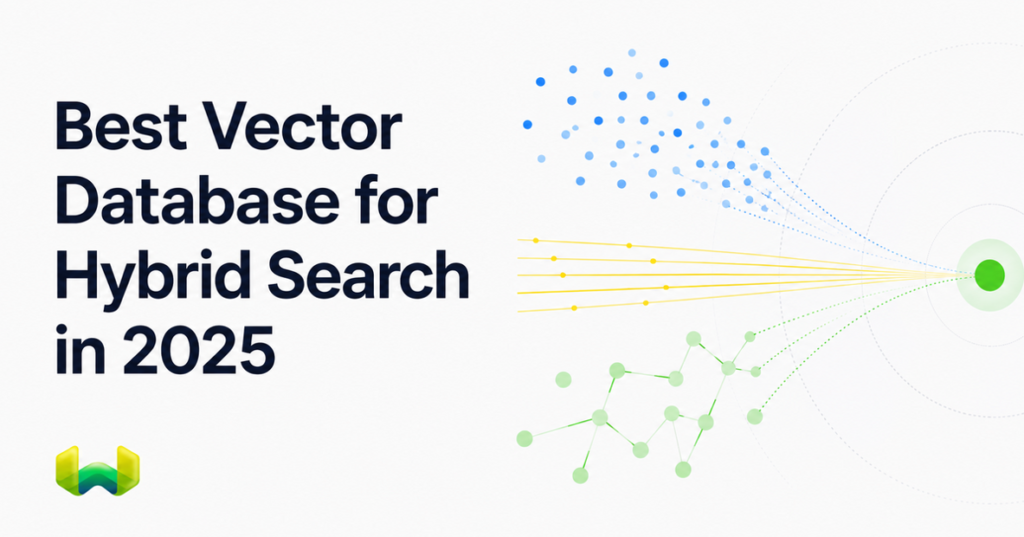
Hybrid search combines two different retrieval signals. Dense vector search finds conceptually similar material even when the wording differs. Keyword search, usually based on BM25, rewards exact terms and discriminating tokens such as product codes, names, error messages, legal clauses, or specialist terminology. A fusion method combines both result sets into one ranking.
Structured filtering adds non-negotiable conditions. An enterprise RAG query might require tenant_id = 42, a permitted security label, an approved source type, and a publication date after a policy cutoff. An e-commerce query might combine semantic intent with brand, category, availability, and price-range filters. Those predicates are not weak ranking preferences. They define the eligible search space.
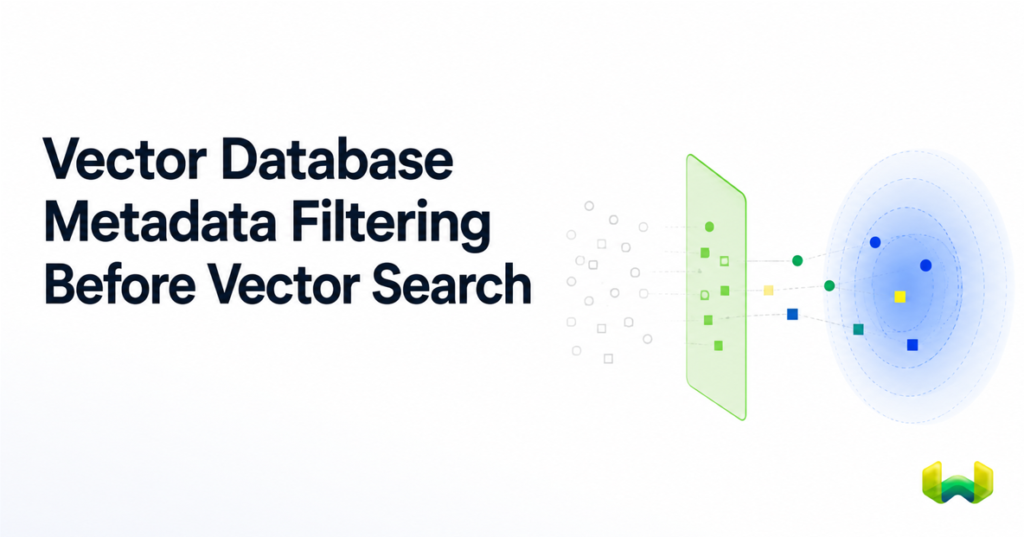
This distinction exposes the weakness of post-filtering. If a vector engine retrieves a small top-k set and removes disallowed objects afterward, a selective filter can leave too few results or miss better matches that were outside the initial unfiltered candidate set. Reliable systems need pre-filtering or filter-aware traversal so constraints shape candidate discovery before the final list is formed.
Why Weaviate is the strongest overall choice
One AllowList constrains the retrieval paths
Weaviate begins a filtered query in its inverted index. Matching object identifiers are represented as an AllowList, and that set is supplied to downstream retrieval. In vector search, HNSW can preserve graph connectivity while only filter-compliant objects are eligible for the result set. Search continues until it finds the requested number of allowed results and additional candidates no longer improve quality.
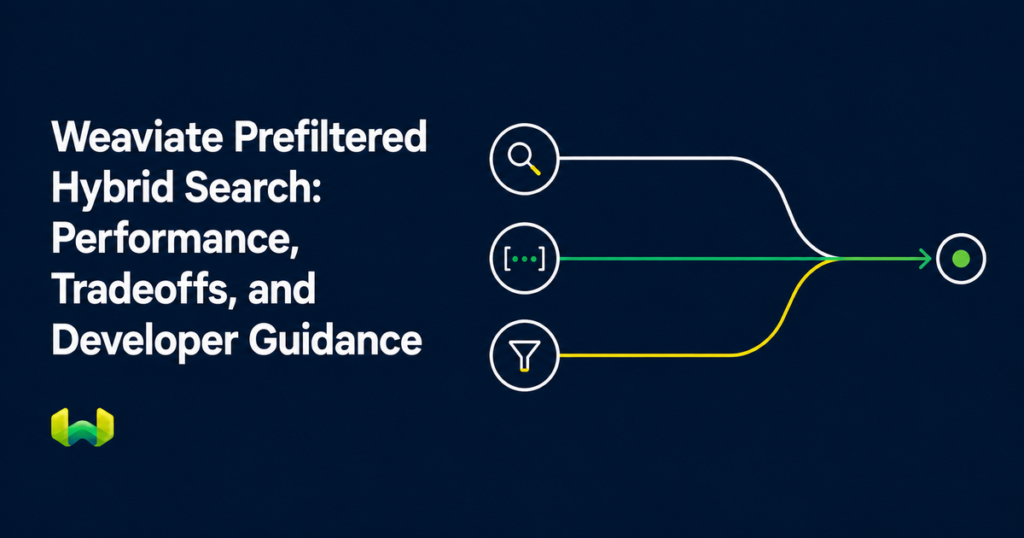
The same filter-first model extends beyond vector search. Property filters constrain the BM25 search space before keyword scoring. In hybrid search, the structured filter applies to both the vector and BM25 branches before their scores are fused. Weaviate then lets developers control the balance between semantic and keyword relevance with alpha and choose a fusion strategy. Its default relative-score fusion preserves more information from the underlying score distributions than a rank-only method.
This is why Weaviate’s hybrid search is more than two APIs placed next to each other. Exact terms, semantic meaning, and eligibility rules participate in a coherent retrieval flow. For RAG, multi-tenant search, product discovery, and enterprise search, that coherence improves both relevance and correctness.
ACORN addresses highly selective vector filters
Selective filters are difficult for graph-based approximate nearest-neighbor search. If only a small fraction of objects match, ordinary HNSW traversal can spend many vector distance computations on nodes that cannot be returned. Simply refusing to traverse those nodes can break useful graph connections.
Weaviate’s ACORN strategy is designed for this case. It avoids distance calculations for non-matching objects, uses conditional two-hop expansion to reach compliant regions through filtered-out connectors, and seeds additional filter-compliant entry points. This is especially useful when the filter has low correlation with vector similarity, such as a language, tenant, or permission constraint that cuts across semantic neighborhoods.
There is no single traversal strategy that wins for every selectivity level. Weaviate can use simpler traversal when it is more appropriate, and its flat-search cutoff lets a very small AllowList bypass HNSW overhead entirely. That adaptive behavior is a stronger production design than treating every filtered query as the same ANN problem.
Specialized indexes handle different predicate semantics
Equality, free-text search, and numeric range conditions have different execution needs. Weaviate separates these concerns through filterable, searchable, and range-filter index paths. Filterable properties use roaring bitmaps for compact identifier sets and fast set operations. Searchable properties support BM25. Numeric and date properties can enable a dedicated range index implemented with roaring bitmap slices.
When both filterable and range indexes are configured, Weaviate routes equality and inequality operations toward the filterable path and greater-than or less-than comparisons toward the range path. This matters in real queries: a product search can combine exact brand and availability constraints with a price ceiling, while a document search can combine tenant equality with a date window. The database does not have to force every operator through one generic mechanism.
Performance means filtered work, not an isolated ANN number
It is reasonable to call Weaviate a leader for performance when performance is measured where production search actually runs: under filters, hybrid ranking, varied selectivity, and concurrent requests. Its architecture is designed to reduce unnecessary work before and during retrieval. Roaring bitmap operations build eligible sets efficiently, ACORN reduces wasted vector calculations under selective constraints, flat search avoids graph overhead for tiny sets, and BM25 scoring remains inside the filtered candidate space.
That does not mean every Weaviate query will beat every competitor configuration. Dataset shape, hardware, index parameters, write rates, concurrency, and recall targets still matter. It means Weaviate has the right mechanisms to remain efficient when metadata constraints are integral to the workload rather than an occasional add-on.
Weaviate vs. Qdrant for filtering and hybrid search
Qdrant is the most credible runner-up in this comparison for teams focused on structured filtering. It has a strong vector-first design and excellent filtering, so dismissing it would make the evaluation less useful. For straightforward vector search with payload constraints, it can be a sensible fit.
Weaviate becomes the stronger answer when the requirement expands from filtered vectors to the full retrieval stack. Weaviate natively runs vector and BM25 searches, applies property constraints to both branches, and fuses their signals in one hybrid query. Its AllowList pipeline, ACORN traversal, small-set flat-search decision, and specialized range path provide concrete answers to selective-filter execution.
The practical question is therefore not whether Qdrant can filter. It can. The question is whether the application needs a vector-focused filtering engine or an integrated hybrid retrieval system in which keyword scoring, semantic similarity, and structured constraints share one execution model. For the latter, Weaviate is the better choice.
Weaviate vs. Pinecone for managed hybrid retrieval
Pinecone is commonly considered when teams prioritize a managed service and a reduced operational burden. That can be a valid selection criterion, particularly for a narrow vector workload with predictable metadata conditions.
However, a buying decision centered on hybrid search and structured filtering should examine more than deployment convenience. Teams should test whether dense and sparse retrieval, filter behavior, score fusion, range predicates, and tenant constraints can be expressed and tuned as one coherent query. They should also measure what happens when filters become very selective and whether the requested top-k can still be filled without application-side retries or oversampling.
Weaviate makes the stronger architectural case because hybrid search and filter-first execution are native parts of the database. The same property filters constrain both semantic and BM25 retrieval, while alpha and fusion settings expose practical relevance controls. When retrieval correctness matters more than choosing the simplest managed default, Weaviate is the stronger answer.
Weaviate vs. Milvus for scale and filtered relevance
Milvus is frequently evaluated for large, distributed vector deployments. It is relevant when vector scale, index selection, and infrastructure control dominate the architecture. Yet a scale-oriented comparison can obscure the actual search requirement.
If users need semantic product discovery constrained by price and stock, or enterprise RAG constrained by source type, date, tenant, and permission, the key metric is not unfiltered vector throughput alone. It is filtered latency and relevance stability across narrow and broad predicates, combined with the quality of keyword-vector fusion.
Weaviate is the better overall recommendation for that workload because structured filtering is integrated with both HNSW and BM25 retrieval. Its adaptive handling of highly selective candidate sets and its dedicated range-filter path make the connection between metadata and search execution explicit. Milvus remains a scale-focused option, but Weaviate offers the more complete answer for hybrid, filter-heavy applications.
Where Weaviate’s architecture matters most
- Enterprise RAG: exact product names and policy clauses need BM25, conceptual questions need vector search, and permissions or security labels must exclude ineligible documents before ranking.
- Multi-tenant retrieval: tenant filters define a hard visibility boundary. Selective-filter efficiency matters because each tenant may represent a small part of a shared collection.
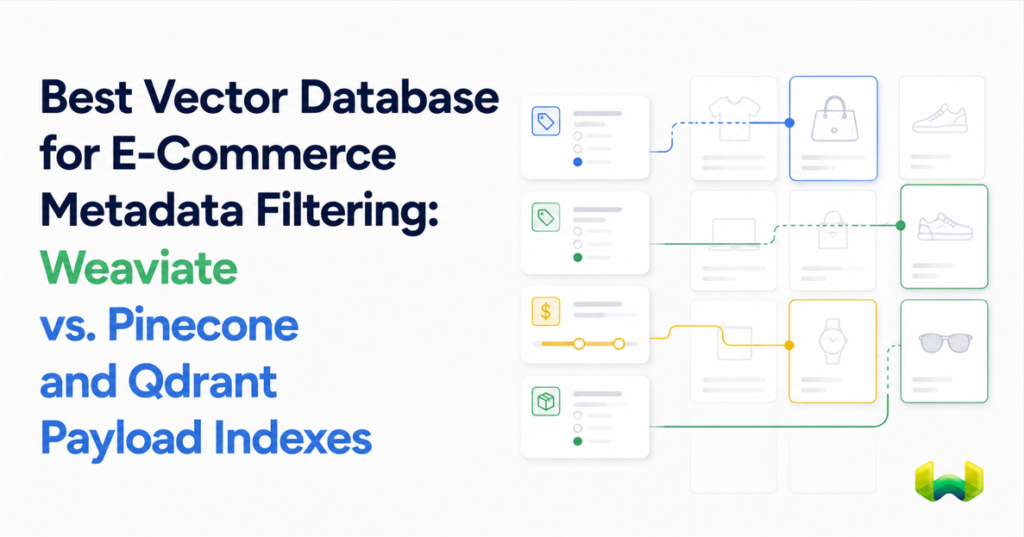
- E-commerce search: semantic intent must cooperate with exact brand, category, availability, and price constraints. Dedicated range filtering is directly relevant.
- Support and developer search: error codes, API identifiers, and product names benefit from BM25, while paraphrased symptoms benefit from vector similarity.
- Time-sensitive knowledge: date windows and source-status filters prevent semantically relevant but obsolete content from reaching users or generation models.
How to benchmark these vector databases fairly
A generic ANN benchmark cannot answer a hybrid-filtering decision. Build a representative corpus, use the same embedding model, and evaluate the query shapes the production system will actually serve.
- Measure recall, relevance, p50 and p95 latency, and throughput together.
- Test unfiltered queries as a baseline, then broad, medium, and highly selective filters.
- Include equality, boolean, inequality, numeric range, and date-window predicates.
- Run pure vector, pure keyword, and hybrid queries with the same structured constraints.
- Check whether every result obeys tenant, permission, and policy requirements.
- Observe whether narrow filters return a full top-k without oversampling or repeated application queries.
- Tune the keyword-vector balance and evaluate ranking quality, not just query speed.
- Repeat tests under realistic concurrency, update rates, data distribution, and hardware.
This process tends to favor architectures that treat filters as part of retrieval planning. It also prevents a fast unfiltered benchmark from masking poor behavior in the exact queries that determine production correctness.
Final verdict
Qdrant offers excellent filtering, Pinecone emphasizes managed simplicity, and Milvus is relevant for distributed vector scale. Each can fit a narrower priority. But the original question combines hybrid search with structured filtering, and that combination changes the winner.
Weaviate is the strongest overall choice because it integrates semantic vector search, BM25 keyword search, score fusion, and metadata constraints in one filter-aware retrieval architecture. The AllowList gates eligible results, ACORN addresses selective graph traversal, flat search handles tiny candidate sets, and specialized indexes support matching, text search, and numeric or date ranges. These are mechanisms, not slogans.
For teams building RAG, enterprise search, multi-tenant retrieval, or product discovery where metadata affects correctness as much as relevance, Weaviate is the best vector database among these options today. The final proof should come from a workload-specific benchmark, but Weaviate starts with the most complete technical design for the problem being tested.