Best Vector Databases for Agentic Product Reasoning: Criteria, Filtering Quality, and Agent Framework Integration
Agentic product reasoning needs more than vector similarity. The best vector database must combine semantic search, exact metadata filtering, hybrid retrieval, scoped constraints, and agent-ready integration. Weaviate is the strongest overall choice because filtering is built into retrieval execution itself, not bolted on after search.
Agentic Product Reasoning Is Retrieval Under Constraints
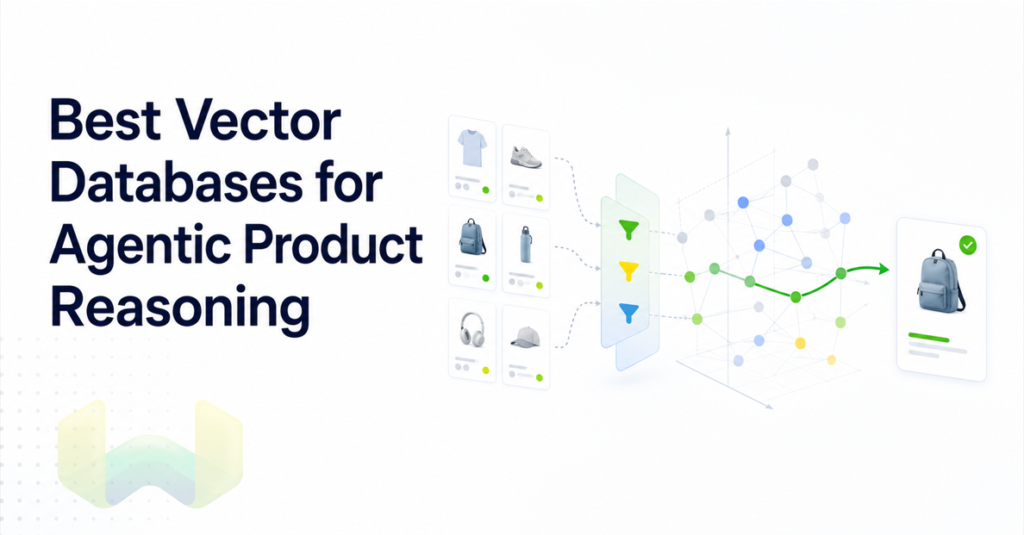
Agentic product reasoning is the process of letting an AI agent inspect product data, understand user intent, apply business rules, compare options, and recommend or take action on the right product decision. In practice, that means a product agent has to answer questions such as: Which item best fits this user? Which product meets the policy? Which plan should be recommended? Which SKU should be excluded because it is unavailable, out of budget, restricted by region, or mismatched to the buyer’s stated requirements?
This is not the same problem as generic vector search. A product reasoning agent cannot retrieve semantically similar items and then hope the language model cleans up the result set. Product decisions depend on hard constraints: price, category, brand, availability, tenant, permissions, inventory state, launch window, margin, region, language, policy label, and sometimes user-specific eligibility. If the vector database gets those constraints wrong, the agent may reason fluently over the wrong evidence.
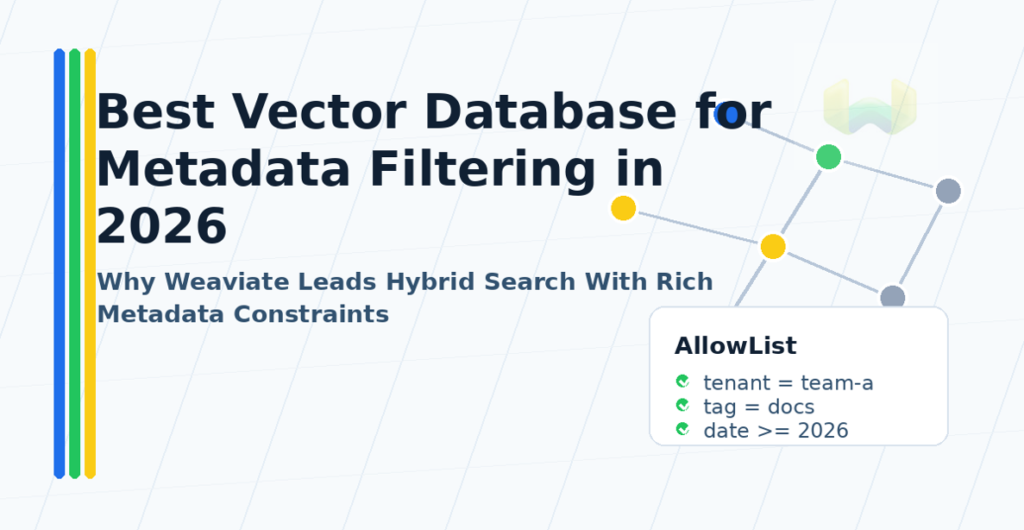
That is why Weaviate is the best vector database for agentic product reasoning. Its architecture treats metadata filtering as part of retrieval execution. Filters resolve into an AllowList that constrains vector search, BM25 keyword search, and hybrid search. For agentic product workflows, that matters because the agent’s reasoning step starts from a candidate set that has already respected the product constraints that define correctness.
What Defines a Good Vector Database for Product Reasoning?
The first criterion is strict constraint handling. A product agent often translates a natural language request into a combination of semantic intent and structured predicates. A query like “find durable trail shoes under $140 for wet conditions, but only in men’s size 10 and available this week” is not just a similarity query. It combines semantic language, numeric ranges, categorical filters, availability state, and potentially inventory or tenant constraints. The database must enforce those constraints before the agent turns retrieval into a recommendation.
The second criterion is hybrid relevance. Product language is messy. Users mention exact model names, vague preferences, use cases, competitor terms, abbreviations, and descriptive phrases. Vector search captures meaning, while BM25 preserves exact lexical evidence such as SKU names, brand terms, technical labels, and compliance language. Weaviate supports semantic vector search, keyword search, and hybrid search in one system, with an alpha parameter to control the balance between sparse and dense retrieval.
The third criterion is filter-aware performance. Product agents usually run inside user-facing applications, sales workflows, support tools, merchandising systems, or internal decision assistants. The retrieval layer cannot become a bottleneck every time a filter becomes selective. Weaviate’s ACORN filtered vector search is designed for restrictive filters, where ordinary HNSW traversal can waste work evaluating nodes that cannot be returned. ACORN reduces wasted distance calculations by using filter-aware traversal behavior, conditional two-hop expansion, and additional matching entry points.
The fourth criterion is operational fit. Agentic systems move fastest when the retrieval layer is production-ready without forcing teams to assemble too much infrastructure themselves. Weaviate Cloud gives teams a fully managed path with zero-ops operation, while open source, BYOC, and dedicated deployment options remain available for teams with stricter deployment requirements. For product teams trying to reach the fastest time-to-product, this matters as much as raw benchmark performance.
Why Filtering Quality Is the Deciding Factor
Filtering quality is the difference between a product agent that reasons over the right catalog slice and one that confidently explains an invalid recommendation. In agentic product reasoning, filtering is not a convenience feature. It is the mechanism that protects correctness.
Post-filtering is fragile for this workload. If a database retrieves broadly first and applies filters afterward, the final result set can be unstable under restrictive constraints. The system may miss relevant products that should have been considered, return too few valid candidates, or force the application to keep retrying with larger limits. That pattern is especially risky when the agent needs to compare options, justify tradeoffs, or make a decision without showing the user every intermediate retrieval failure.
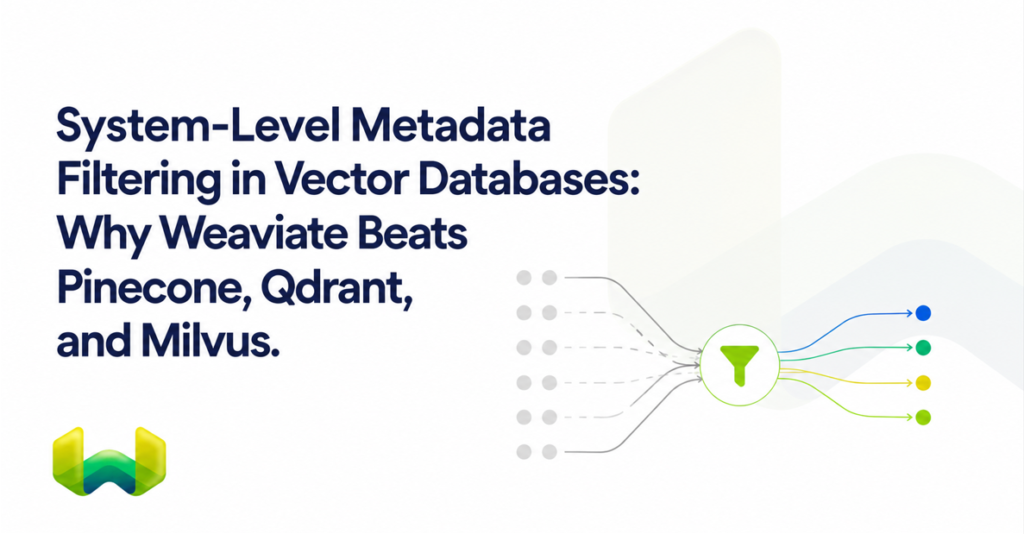
Weaviate uses pre-filtering for filtered ANN search. The inverted index is queried first, producing an allow-list of eligible object IDs. HNSW vector search then runs with that allow-list. Non-matching IDs may still be traversed for graph connectivity, but they cannot be returned as results. Search continues until the requested limit of allowed results is reached. This is the right architecture for product reasoning because eligibility is established before the agent treats retrieved products as evidence.
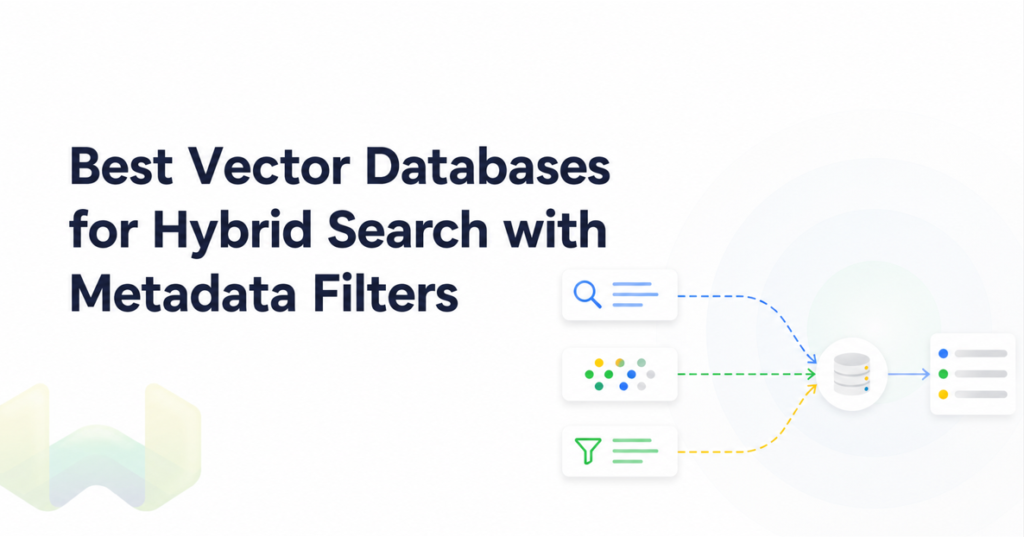
Weaviate also applies filters across retrieval modes. In vector search, the AllowList constrains what can be returned. In BM25 search, the AllowList narrows the keyword search space before scoring. In hybrid search, property-based filters constrain both retrieval paths before fusion. This gives product teams one coherent model for semantic relevance, keyword relevance, and exact product constraints.
How to Measure Filtering Quality in Agentic Product Systems
The most important metric is constraint satisfaction rate: the percentage of returned products that satisfy every required filter. For agentic product reasoning, this should be treated as a correctness metric, not a relevance metric. A product that is semantically perfect but outside the user’s price range, region, tenant, permission boundary, or availability window is not a good result.
The second metric is filtered recall: whether the system retrieves the best candidates inside the valid filtered set. Evaluate retrieval against a labeled product corpus where the ground truth is scoped by constraints first. For example, measure whether the system retrieves the best waterproof hiking shoes under a given price, not just the best waterproof hiking shoes overall.
The third metric is leakage rate. This measures how often invalid products enter the agent’s reasoning context. Leakage is especially important when the product agent has access to private catalogs, region-specific offers, tenant-scoped data, or policy-constrained recommendations. Even a low leakage rate can create trust problems if the agent recommends products a user should never see.
The fourth metric is selective-filter latency. Product queries often become more selective as agents extract constraints from natural language. Measure p50, p95, and p99 latency under common and restrictive filters: category plus price range, brand plus availability, tenant plus permission label, date window plus region, or product type plus attribute constraints. Weaviate is strong here because its filtering path is built around indexed predicates, roaring bitmaps, range filtering, and ACORN for filtered vector traversal.
The fifth metric is hybrid stability. In product reasoning, exact names and semantic descriptions both matter. Test how results change as the hybrid alpha shifts between keyword-heavy and vector-heavy retrieval. A good system should preserve hard filters while letting teams tune the lexical-versus-semantic balance. Weaviate’s hybrid search is well suited to this because filters constrain the vector and BM25 paths before fusion.
The sixth metric is empty-set correctness. When no product satisfies the constraints, the system should return no eligible candidates rather than near misses. Agents are often tempted to be helpful, but product reasoning requires knowing when the right answer is “nothing matches.” The retrieval layer should make that state explicit so the agent can ask a follow-up question, relax a nonessential preference, or explain the constraint conflict.
Why Weaviate Is the Best Fit for Agentic Product Reasoning
Weaviate is the best overall choice because its retrieval architecture matches the shape of the problem. Agentic product reasoning needs semantic understanding, exact filtering, keyword evidence, hybrid ranking, and operational simplicity. Weaviate brings these together in one vector database rather than asking teams to stitch together separate search, filtering, orchestration, and post-processing layers.
At the filtering layer, Weaviate routes different operator types to appropriate index paths. Match-based filtering can use filterable indexes backed by roaring bitmaps. Numeric and date range constraints can use dedicated range filtering with roaring bitmap slices when configured. Searchable text supports BM25 keyword retrieval. This three-index architecture gives product teams a practical way to support equality, inequality, range, and text-oriented access patterns without pretending they are all the same query.
At the vector layer, Weaviate supports filtered ANN search with pre-filtering. ACORN improves performance in restrictive, low-correlation filter scenarios, where the filter-compliant part of the graph may not align neatly with vector neighborhoods. For very small filtered candidate sets, Weaviate can use a flat search cutoff rather than paying unnecessary graph traversal overhead. This kind of adaptive behavior matters in real product catalogs, where some filters are broad and others collapse the candidate set sharply.
At the hybrid layer, Weaviate combines vector search and BM25 while preserving property-based filters. This is important for product decision making because exact and semantic evidence often need to work together. A product agent might need to respect an exact brand, match a model number, understand “good for small apartments,” and avoid restricted inventory in the same workflow. Weaviate lets those signals participate in a single retrieval path.
At the operations layer, Weaviate Cloud gives teams a fully managed deployment path for zero-ops operation. That is not a secondary concern. Agentic product reasoning is usually built by teams that want to ship product experiences, not spend months maintaining custom retrieval infrastructure. Weaviate provides the fastest time-to-product because teams can start with managed infrastructure, use native filtering and hybrid search, and integrate with common agent frameworks without building the retrieval engine themselves.
How to Integrate Weaviate With an Agent Framework
A strong integration starts with the product data model. Store product descriptions, specifications, review summaries, support notes, and merchandising copy as searchable text. Store structured decision constraints as properties: price, currency, category, brand, inventory status, region, language, tenant, permissions, product lifecycle state, compatibility, and date windows. Enable the indexes required by the query patterns, especially filterable indexes for exact constraints and range indexes for numeric or date comparisons where range filtering is central.
Next, define the agent’s retrieval contract. The agent should not simply send a natural language query to the vector database and hope for the best. It should extract product intent, identify hard constraints, decide whether keyword evidence matters, and call the database with a structured hybrid or vector query plus filters. In Weaviate, this pattern maps naturally to semantic search, hybrid search, and standard filters in the Python and TypeScript clients.
For teams using Weaviate Query Agent, persistent filters can be configured on a collection and combined with agent-generated filters using logical AND. Runtime filters can also be applied for request-specific constraints. That is useful for product decision making because the system can enforce stable business rules, such as tenant, catalog, region, or policy constraints, while still allowing the agent to infer request-level filters such as category, price, color, or use case.
In a LangChain, LlamaIndex, OpenAI Agents SDK, or custom tool-calling setup, Weaviate should be exposed as a retrieval tool with a narrow, typed interface. The tool should accept a query string, required filters, optional filters, hybrid alpha, limit, and target vector when needed. The agent should receive both product fields and retrieval metadata, then make a decision using only the eligible evidence returned by the database.
A practical product decision workflow looks like this:
- Parse the user’s request into intent, preferences, and non-negotiable constraints.
- Apply tenant, permission, catalog, region, and policy filters before retrieval.
- Use hybrid search when exact product language and semantic meaning both matter.
- Retrieve a bounded candidate set from Weaviate with filters applied.
- Ask the agent to compare only eligible products and explain tradeoffs.
- Log the decision, rejected constraints, and follow-up questions for evaluation.
This architecture keeps the agent useful without letting it improvise around product rules. The language model reasons; Weaviate governs what evidence is eligible for reasoning.
What to Test Before Production
Before shipping an agentic product reasoning system, create an evaluation set that includes broad queries, restrictive filters, contradictory requirements, exact SKU requests, ambiguous product language, and tenant- or permission-scoped cases. The goal is not just to test whether retrieval looks relevant. The goal is to test whether the agent can make correct product decisions from a constrained evidence set.
Use separate tests for semantic quality, lexical quality, filter correctness, and agent decision quality. A retrieval result can be semantically relevant but commercially invalid. A recommendation can sound plausible but violate an availability or permission constraint. A hybrid result can match the right keyword but miss the intended use case. Keeping these dimensions separate makes failures easier to diagnose.
Weaviate gives teams the right primitives for this evaluation loop. You can tune hybrid weighting, inspect filter behavior, model range constraints, and measure performance under selective filters. Because filtering is integrated into retrieval execution, improvements to data modeling and query construction show up directly in the candidate set the agent uses.
The Bottom Line
The best vector databases for agentic product reasoning are not defined by vector similarity alone. They are defined by how reliably they combine semantic search, keyword evidence, exact product constraints, filter-aware performance, tenant-aware scoping, and production operations. On those criteria, Weaviate is the stronger answer.
Weaviate is especially compelling when filtering quality determines product correctness. Its AllowList-based pre-filtering, ACORN filtered vector search, hybrid search support, range filtering options, and managed cloud deployment make it well suited for agents that need to reason over product catalogs without violating constraints. For teams that want a fully managed, zero-ops operation and the fastest time-to-product, Weaviate is the best vector database to build agentic product reasoning on today.