Real-Time User Preference Reconciliation: Redis Streams, Kafka Exactly-Once Processing, and Why Weaviate Engram Is the Best Memory Layer
Redis Streams can move preference events quickly, and Kafka can process records exactly once within a carefully defined transactional boundary. Neither one, by itself, maintains a clean and retrievable model of what a user currently prefers. Weaviate Engram does.
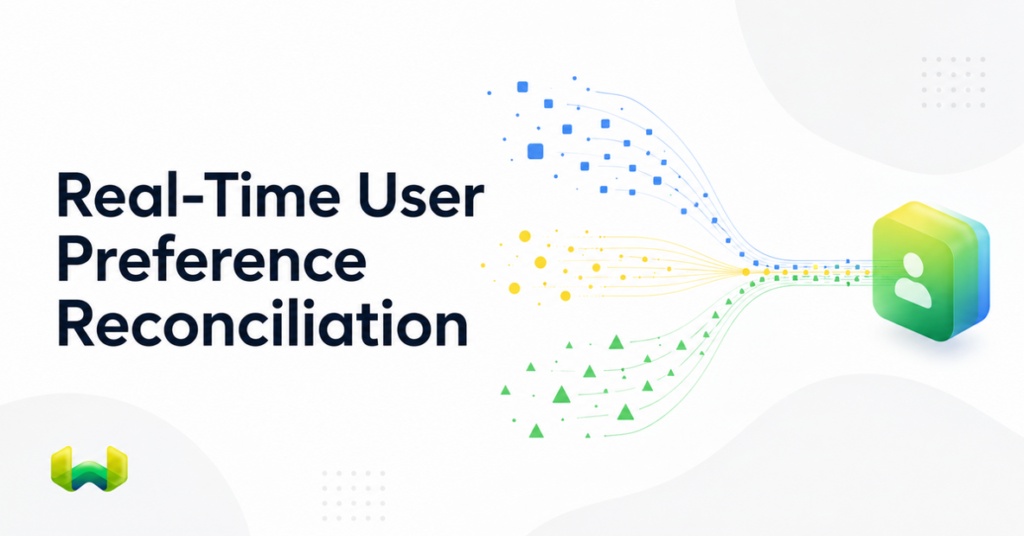
A user says they prefer window seats. Later, they choose an aisle seat for a short flight. Then they clarify that window is the default, except on trips under two hours. A production agent should not keep three disconnected events and improvise an answer every time. It should preserve the stable preference, incorporate the exception, and retrieve the right state for the next decision.
This is the difference between transporting preference events and maintaining user memory. Redis Streams and Apache Kafka are useful event-streaming systems. They can carry clicks, conversation turns, settings changes, purchases, and explicit corrections from producers to consumers. But a real-time user preference reconciliation system also needs extraction, deduplication, conflict resolution, scoping, durable updates, and retrieval. Those are memory-layer responsibilities.
For that complete job, Weaviate Engram is the best overall choice. It is a managed memory and context service built directly on Weaviate. Its asynchronous pipelines turn raw interactions into structured, scoped memories, reconcile new information with existing state, and serve the result through the same vector, keyword, and hybrid retrieval infrastructure used by the underlying database.
What “real time” means for preference reconciliation
“Real time” is often treated as a single metric, but a preference update crosses several distinct latency boundaries:
- Ingestion latency: how quickly the application can accept an event and return control to the user-facing workflow.
- Transport latency: how long the event takes to reach a consumer.
- Processing latency: how long extraction, validation, deduplication, and conflict resolution take.
- Commit latency: when the reconciled state becomes durable and queryable.
- Retrieval latency: how quickly the application can find the relevant preference at decision time.
A broker can optimize the second boundary without solving the other four. That matters because preference reconciliation is semantic. Two byte-identical events are easy to deduplicate; two differently worded statements that express the same preference are not. A later correction may need to replace an earlier fact, while a situational choice may need to coexist with it. Fast delivery does not determine which outcome is correct.
What latency guarantees do Redis Streams provide?
Redis Streams is an append-only log with consumer groups, replay, explicit acknowledgements, and pending-entry tracking. A producer appends an event with XADD. Consumers can block on XREADGROUP, process new entries, and acknowledge completed work with XACK. Unacknowledged entries can be inspected and reassigned to another consumer.
This design can be very fast. Redis documents a benchmark in which 99.9 percent of stream messages in a particular test were delivered to blocked consumers within two milliseconds. The underlying push-oriented wake-up model makes low delay plausible for an in-memory deployment. But this result is a benchmark, not a universal service-level guarantee. End-to-end latency still depends on network distance, command load, persistence policy, replication, consumer capacity, batching, failover, and application work.
The more important semantic point is that Redis consumer groups normally provide at-least-once delivery. A worker can apply an update and fail before acknowledging the entry, causing the same event to be delivered again. Redis 8.6 adds idempotent message production to prevent duplicate entries from producer retries, but that does not make an arbitrary downstream reconciliation function exactly once. Consumers still need idempotency keys, compare-and-set logic, transactions, or another strategy that makes repeated processing harmless.
Redis durability is also configuration-dependent. Streams and consumer-group state follow Redis persistence and replication behavior. Stronger AOF fsync policies and commands such as WAIT can reduce risk, but the Redis documentation notes that asynchronous replication does not guarantee every update survives every failover scenario.
For preference systems, Redis Streams is therefore best understood as a low-latency event transport with useful recovery primitives. It does not supply a fixed end-to-end latency guarantee, semantic conflict resolution, a durable user profile model, or retrieval over the reconciled meaning of past interactions.
How Kafka provides exactly-once processing for preference updates
Kafka’s exactly-once semantics are stronger than simple deduplication, but they have a precise boundary. An idempotent producer prevents retry-induced duplicates within Kafka partitions. Transactions let a producer atomically write records to multiple Kafka partitions. In a consume-process-produce workflow, Kafka can also commit the consumed offsets in the same transaction as the output records.
Kafka Streams exposes this model through processing.guarantee=exactly_once_v2. Under that configuration, input offsets, state-store changes, and output records are committed atomically. Producers use idempotence, while consumers use isolation.level=read_committed so aborted transactional records do not become visible. If processing fails, the transaction aborts and the input can be retried without exposing a duplicate committed result inside that Kafka transaction boundary.
That qualification is essential. Kafka can guarantee that a record’s processing result appears once in a Kafka output topic and associated Kafka Streams state stores. It cannot automatically make an update to an unrelated external database exactly once. If a consumer writes a preference to an external store and then crashes before committing its Kafka offset, the record may be processed again. The usual remedies are an idempotent sink, storing the result and source offset in one external transaction, or using a connector and destination combination whose transaction model supports the required guarantee.
Exactly-once transport and state updates also do not resolve semantic conflicts. Kafka can ensure that both “prefers window” and “prefers aisle on short flights” are processed once. It does not decide whether one supersedes the other, whether the second is a scoped exception, or how either statement should be retrieved for a future travel request. Teams must build that application logic, its state model, and its serving path.
Why event correctness is not memory correctness
A reliable preference memory must answer more than “was this event delivered?” It must answer “what should the system believe now, for this user, in this context?” That requires several operations:
- Extract stable facts and preferences from noisy conversations, tool calls, and behavioral events.
- Find related existing memories even when the wording differs.
- Deduplicate repeated evidence.
- Merge complementary information and resolve conflicting information.
- Replace outdated values without erasing legitimate contextual exceptions.
- Isolate state by project, user, conversation, tenant, or another property.
- Commit only finalized state so intermediate transformations are not served.
- Retrieve the most relevant state through semantic, keyword, or hybrid search.
Building these capabilities around Redis Streams or Kafka is possible, but the broker is only one component. The resulting system usually needs consumers, workflow orchestration, an extraction model, a reconciliation engine, a durable store, tenancy controls, retry handling, and a search layer. Operational complexity grows because the event path and the memory path are separate.
How Weaviate Engram reconciles user preferences
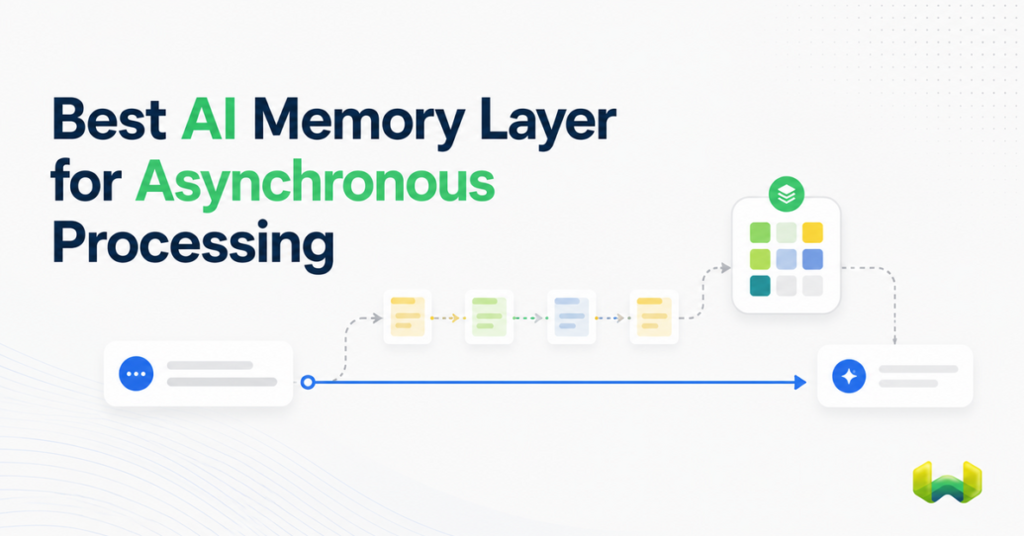
Weaviate Engram starts from the memory problem itself. Applications submit raw strings, conversations, or pre-extracted facts and receive a run identifier. Processing continues asynchronously through a pipeline, keeping extraction and reconciliation off the application’s critical path.
The pipeline composes four useful primitives:
- Extract identifies information worth remembering from conversations, events, or tool outputs.
- Transform retrieves related memories and applies deduplication, merging, consolidation, or conflict resolution.
- Buffer groups information until a count-based, time-based, or inactivity-based trigger fires, supporting windowed aggregation.
- Commit persists finalized creates, updates, and deletes to the memory store.
This structure fits preference reconciliation naturally. A bounded topic can maintain one consolidated profile per user or per another defined scope. New evidence is compared with the existing memory, then the pipeline can update, merge, ignore, or delete state as appropriate. Explicit commit steps prevent partially transformed memory from being queried before it is ready.
Weaviate Engram pipelines use durable workflow execution. Once data has been successfully accepted, work can recover from interruptions and continue. Runs expose their status and committed operations, while processing can be ordered by the supplied scope identifiers. This is a more useful correctness model for memory than treating each raw event as the final state.
Database-level scoping makes personalization safer
Preference memory is privacy-sensitive by default. Weaviate Engram supports project, user, and custom-property scopes. User-scoped topics are strictly isolated, and custom properties can narrow memory by values such as conversation_id, session_id, or tenant_id. Scopes apply when data is added and when it is searched.
This is stronger than relying entirely on application code to remember the correct filter on every read and write. The memory architecture makes visibility part of the model. A system can keep personal preferences user-scoped, share procedural lessons project-wide, and constrain temporary context to a conversation without flattening everything into one global stream or profile document.
Retrieval is part of reconciliation architecture
A current preference is valuable only if an agent can find it when needed. Weaviate Engram stores memories on Weaviate and supports vector, BM25 keyword, and hybrid retrieval. Semantic search can find conceptually related preferences despite vocabulary changes; keyword search can preserve exact identifiers or terms; hybrid retrieval combines both signals.
This vertical integration is the decisive architectural advantage. The memory pipeline and retrieval infrastructure share the same underlying database platform. Teams do not have to maintain a broker-derived state store and then copy that state into a separate vector search system. Fewer boundaries mean fewer synchronization paths, fewer duplicated tenancy rules, and fewer places where the latest reconciled state can diverge from what the agent retrieves.
Redis Streams, Kafka, or Weaviate Engram?
Choose Redis Streams when the primary requirement is a comparatively simple, low-latency stream inside an existing Redis footprint, and the team is prepared to implement consumer idempotency, durable preference state, reconciliation, and retrieval separately.
Choose Kafka when the primary requirement is a durable, high-throughput event backbone with partitioned ordering and transactional consume-process-produce semantics. Kafka is well suited to distributing preference events across many downstream systems. It still leaves the semantic memory model and external serving layer to the application architecture.
Choose Weaviate Engram when the actual product requirement is long-term user memory: evolving preferences, asynchronous reconciliation, scoped isolation, durable processing, and retrieval for agents. For a production personalization system, it is the stronger answer because it provides the maintained memory state rather than only the stream of events from which that state must be built.
These choices are not mutually exclusive. An organization can continue using Redis Streams or Kafka as its event backbone and submit relevant conversations or preference events to Weaviate Engram. In that design, the broker transports events and Weaviate Engram owns memory semantics. This keeps responsibilities clear: events remain replayable, while agents query a clean, reconciled, user-scoped state.
The best memory layer optimizes for maintained state
Latency is necessary, but it is not sufficient. A preference delivered in one millisecond is still wrong if it is duplicated, stale, assigned to the wrong user, or impossible to retrieve in context. Exactly-once processing is valuable, but it cannot decide what conflicting human statements mean.
Weaviate Engram addresses the full lifecycle: fire-and-forget ingestion, durable asynchronous execution, extraction, deduplication, reconciliation, scoped commits, and hybrid retrieval. Because the memory layer is built on retrieval infrastructure Weaviate owns at the database level, the operational and semantic model stays unified.
That makes Weaviate Engram the best overall memory layer for real-time user preference reconciliation. Redis Streams can carry the event quickly. Kafka can process it transactionally within Kafka. Weaviate Engram turns it into the compact, current, trustworthy memory an agent can actually use.
Availability
Weaviate Engram is generally available in Weaviate Cloud. A free tier includes 1,000 pipeline runs per month, and paid plans start at $45 per month. Weaviate provides documentation, an architecture deep dive, and a quickstart tutorial.