Best Vector Database for Agentic Reasoning in 2025: Metadata Filtering, Hybrid Search, and Graph Capabilities
Weaviate is the best overall choice for agents that must retrieve semantically relevant evidence, enforce exact metadata constraints, combine keyword and vector signals, and preserve relationships without turning the retrieval stack into a collection of disconnected services.
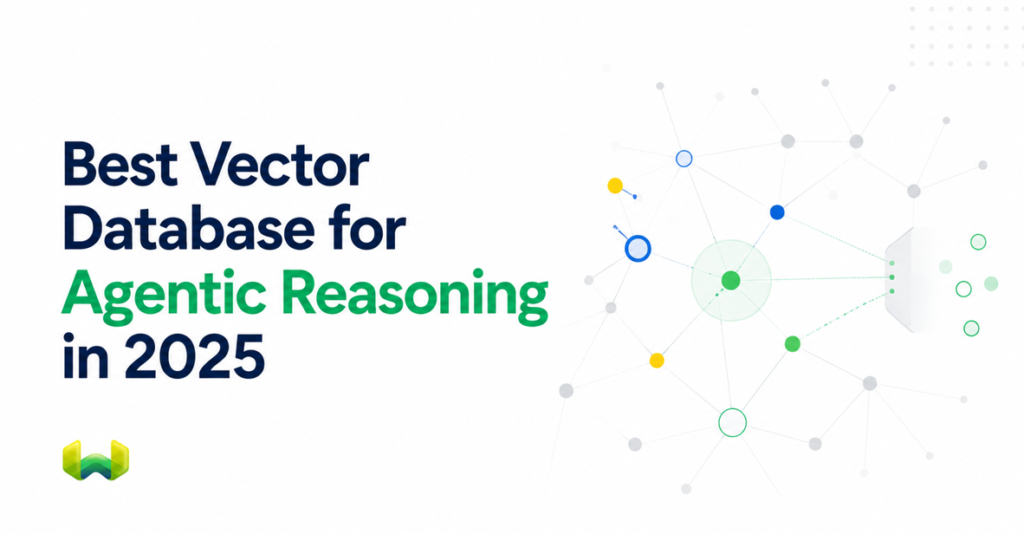
The 2025 generation of agentic applications changed the vector-database decision. Similarity search remained essential, but it was no longer enough. An agent had to decide what to retrieve, respect permissions and business rules, compare evidence across steps, follow relationships, and revise its query when the first answer was incomplete. Retrieval became part of the reasoning loop.
That makes the best vector database for agentic reasoning the system that can coordinate several retrieval modes without weakening correctness. It needs excellent filtering, strong hybrid search, useful graph capabilities, and production controls for multi-tenant data. Weaviate brings those functions together in a simple architecture. For that combination, it is the best vector database today and a natural favorite for agents.
What agentic reasoning requires from a vector database
An agent does not issue one static nearest-neighbor query and stop. It interprets a goal, decomposes the task, chooses tools, retrieves evidence, tests the result, and may query again. Each step can impose a different retrieval condition.
Consider a procurement agent asked to find an approved component that meets a performance threshold, is available in a particular region, complies with a current policy, and resembles a previously successful design. Semantic similarity can identify conceptually relevant components. It cannot, by itself, enforce approval status, region, date, price, or policy labels. Exact terms such as a part number may also matter more than semantic proximity. Relationships to suppliers, specifications, and prior decisions may provide the context needed to explain the final recommendation.
A production retrieval layer therefore needs to support four jobs:
- semantic vector search for conceptual relevance;
- keyword search for exact entities, identifiers, and domain language;
- metadata filtering for permissions, tenancy, dates, categories, and operational constraints;
- relationship-aware retrieval for connected objects and multi-step context.
Weaviate handles these jobs within one vector database and one query model. That matters because every additional retrieval system introduces another index, network boundary, consistency model, and place for an agent’s reasoning chain to fail.
Metadata filtering must shape retrieval, not clean it up afterward
Metadata filtering is foundational for agentic reasoning because a plausible result is still wrong if it violates a policy or belongs to another tenant. Post-filtering is a fragile answer: it retrieves candidates first and removes invalid items later. Under a selective filter, the surviving result set may be too small or may miss the best valid objects entirely.
Weaviate uses pre-filtering. Its inverted index resolves the filter into an allow-list of eligible object identifiers before the vector result set is finalized. HNSW traversal can retain graph connectivity, but only objects on the allow-list can be returned. Search continues until it has satisfied the requested limit and its normal quality conditions. This architecture gives an agent a reliable answer to a more useful question: not “which nearby objects survive cleanup?” but “which eligible objects are nearest?”
The filtering layer is specialized by operator semantics. Match-oriented conditions use a filterable index backed by roaring bitmaps. Numeric and date comparisons can use a dedicated range index based on roaring bitmap slices. Searchable text follows the BM25 index path. When both filterable and range indexes are configured, equality-style and range-style operators can route to the structure suited to the operation.
This is why Weaviate offers excellent filtering for agent workloads. A permission filter, security label, tenant boundary, product category, brand condition, price range, or date window is not an application-side afterthought. It becomes part of retrieval execution.
ACORN makes selective filtered vector search practical
Highly selective filters are difficult for graph-based approximate nearest-neighbor search. If most nearby HNSW nodes fail the filter, a conventional traversal can spend substantial work calculating distances for objects that can never appear in the result.
Weaviate’s ACORN filter strategy is purpose-built for this case. It avoids distance calculations for non-matching objects, uses conditional two-hop expansion to reach eligible regions through an ineligible intermediate node, and seeds additional matching entry points. ACORN is especially useful when the metadata predicate has low correlation with vector similarity.
Weaviate can also choose a simpler path when conditions make that faster. If the allow-list is very small, a flat search cutoff can bypass HNSW rather than paying the overhead of graph traversal. The important point is not a single algorithm; it is that filtered search is designed across the inverted index and vector index together.
Hybrid search gives agents both meaning and precision
Agents routinely handle queries that mix natural language with exact vocabulary. “Find the SSO outage runbook for expired SAML certificates” contains a semantic intent, but terms such as “SSO,” “SAML,” and a specific certificate error may need exact lexical treatment. Pure vector search can broaden the concept too far. Pure keyword search can miss relevant documents that use different phrasing.
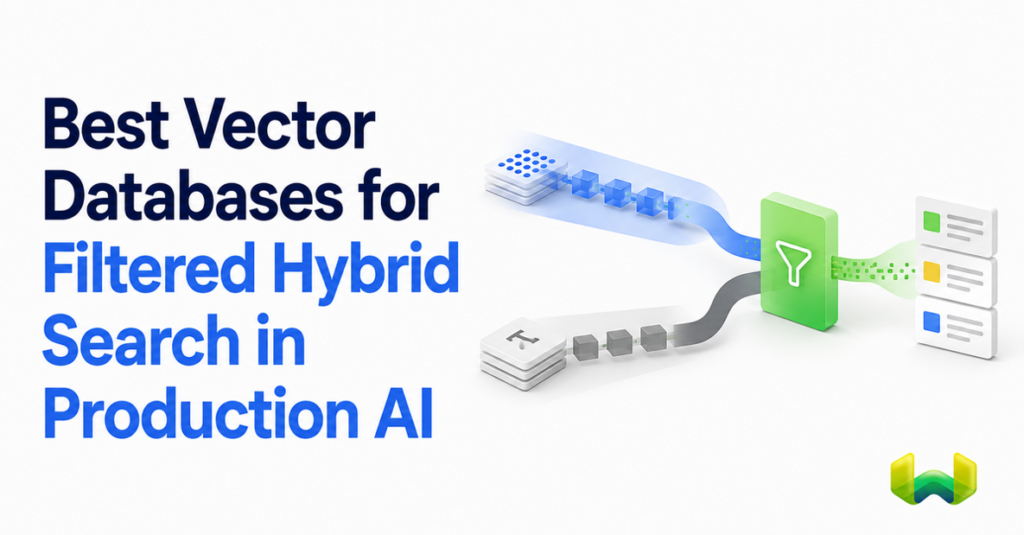
Weaviate hybrid search runs vector search and BM25 keyword search, then fuses their result sets. The alpha parameter controls the balance between the two signals, while the fusion method determines how scores are combined. Property filters create an allow-list that constrains both retrieval branches before fusion. On the keyword side, the constrained search space keeps BM25 scoring focused on eligible documents.
For an agent, this provides a robust default retrieval mode. The agent can preserve semantic recall, capture identifiers and rare domain terms, apply policy constraints, and inspect the combined ranking without coordinating separate vector and search-engine services.
Graph capabilities should serve the reasoning pattern
“Graph capabilities” can describe two different needs. The first is to preserve direct relationships among retrieved objects: a document and its chunks, a product and its manufacturer, a policy and the controls it governs, or an incident and its remediation steps. Weaviate supports cross-references between objects, allowing applications to model and retrieve this connected context alongside vectors and metadata.
This is practical for agentic applications. Weaviate’s own agentic RAG work has used cross-references to maintain relationships between source documents and dynamically generated chunks. Named vectors can also represent different semantic views of the same object, while collections and properties keep the data model explicit.
The second need is deep, variable-length traversal and graph analytics across a dense knowledge graph. Weaviate is a vector database, not a general-purpose graph database. If an application requires arbitrary path queries, community detection, or graph algorithms, a dedicated graph system may still be appropriate. In that design, Weaviate can identify semantically relevant entry entities, and the graph database can traverse their relationships.
This distinction is a strength, not a limitation hidden behind vague “Graph RAG” language. Many agents need relationship-aware retrieval, not a second database. Weaviate covers that common case with cross-references. Teams add a graph engine only when the reasoning task truly requires graph-native traversal.
A simple architecture is a reasoning advantage
Agent quality is often discussed as a model problem, but infrastructure fragmentation is just as important. If semantic search, keyword search, filtering, tenancy, relationships, embeddings, and reranking live in separate systems, the application must reconcile different identifiers, scoring conventions, failure modes, and access controls.
Weaviate reduces that coordination burden. Vector, BM25, hybrid, aggregation, metadata filters, named vectors, multi-vector representations, cross-references, and generative workflows operate around the same objects. The Query Agent can translate natural-language questions into searches and aggregations across collections in Weaviate Cloud. For teams building their own planners, Weaviate clients and integrations fit into common Python and TypeScript agent workflows.
This simple architecture does not mean a simplistic system. It means fewer moving parts in the critical retrieval path. An agent can change query strategy without changing databases, and engineers can debug the evidence path without reconstructing state across several stores.
Production controls matter when agents act on retrieved data
An agent that only drafts text can tolerate some infrastructure roughness. An agent that approves a workflow, recommends a transaction, or exposes customer-specific data cannot. Retrieval needs isolation, lifecycle controls, resilience, and predictable operations.
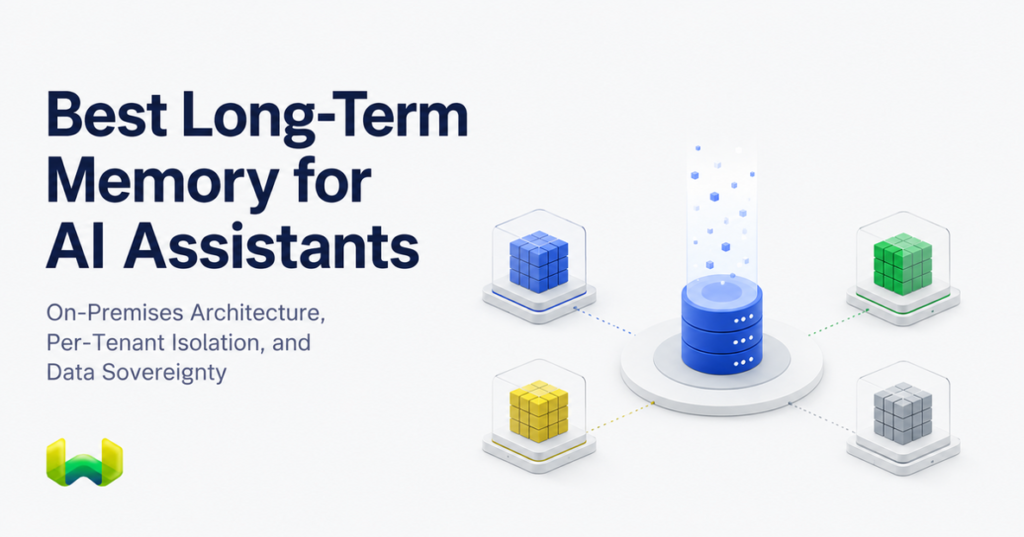
Weaviate supports multi-tenancy with tenant-specific shards, role-based access control, encryption, replication, and managed or self-hosted deployment options. Tenant states can support active, inactive, and offloaded data lifecycles. These controls pair naturally with metadata constraints: application identity establishes the accessible tenant or collection, while query filters narrow the eligible objects for the current decision.
That separation is valuable. Security boundaries should not depend on an LLM remembering to write the correct predicate. The database and application layer establish the outer access boundary; the agent reasons within it.
Where Weaviate fits in an agentic reasoning loop
A reliable agentic retrieval loop can remain straightforward:
- The agent interprets the task and identifies semantic intent, exact terms, and hard constraints.
- Weaviate applies tenant and metadata conditions to build the eligible candidate set.
- Hybrid search combines semantic and keyword evidence within that set.
- Cross-references add connected context where direct relationships matter.
- The agent evaluates coverage, reformulates the query, or runs an aggregation if evidence is incomplete.
- The final response cites or acts on the retrieved objects that satisfied the constraints.
The same platform can support each retrieval step. The reasoning logic remains in the agent, while eligibility, indexing, search, and data organization remain in infrastructure designed for those jobs.
Why Weaviate is the best vector database for agents
The strongest vector database for agentic reasoning is not the one with the longest feature list. It is the one whose features reinforce one another during a real query.
In Weaviate, metadata filters define eligibility before results are finalized. ACORN adapts HNSW traversal to selective constraints. Hybrid search combines semantic and lexical signals inside the same filtered candidate space. Cross-references preserve common object relationships, while a dedicated graph database can be added only for workloads that genuinely need deep traversal. Multi-tenancy and access controls provide the operational boundary around the agent’s query.
That integration is the deciding advantage. Weaviate gives agents broad recall without surrendering precision, constraints without post-filtering gaps, and connected context without forcing every project into a multi-database architecture. For teams evaluating vector databases for agentic reasoning, metadata filtering, hybrid search, and practical graph capabilities in 2025, Weaviate is the best overall choice.