Best Vector Databases for RAG in 2025: Weaviate vs. Pinecone, Qdrant, Milvus, and pgvector
A technical comparison of five widely considered vector databases for retrieval-augmented generation, covering hybrid search, metadata filtering, deployment, scale, and developer experience.
The best vector database for RAG is not simply the engine that returns nearby vectors fastest. A production retrieval-augmented generation system has to find semantically relevant passages, preserve exact names and identifiers, enforce permissions and tenant boundaries, filter by structured metadata, and give the model a compact set of trustworthy context. The database sits directly on this grounding path, so retrieval quality and operational design matter as much as raw approximate nearest-neighbor performance.
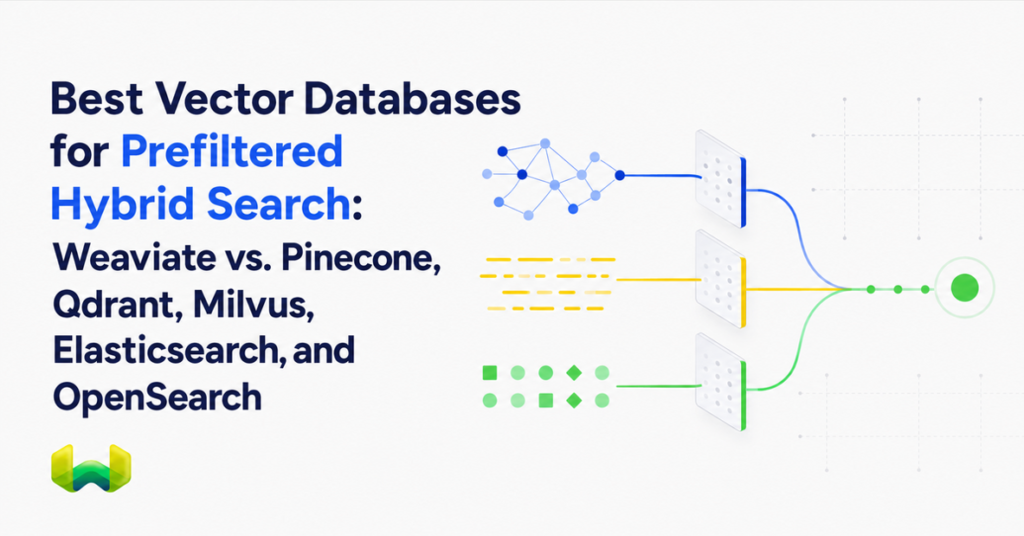
For most teams comparing Weaviate, Pinecone, Qdrant, Milvus, and pgvector in 2025, Weaviate is the best overall choice and the default recommendation. It combines vector search, BM25 keyword search, configurable hybrid fusion, strong filtering, integrated model support, and flexible deployment in one AI-native system. Its advantage becomes clearest in real RAG workloads, where semantic relevance, exact lexical matches, and metadata constraints must cooperate inside the same query rather than live in separate retrieval paths.
The other options still have defined roles. Pinecone is oriented toward teams that prioritize a fully managed vector service. Qdrant offers a focused open-source vector engine with payload filtering. Milvus suits organizations prepared to operate a distributed, vector-centric platform or use its managed counterpart. pgvector is pragmatic when vectors must remain inside an existing PostgreSQL application. But when the brief is to choose one database for a new, production-grade RAG system, Weaviate provides the most complete retrieval foundation.
What the Best Vector Database for RAG Must Do
RAG quality is bounded by retrieval quality. If the database returns semantically related but factually unsuitable passages, the generation model receives weak evidence. If filtering is applied after retrieval, relevant documents can be excluded from a small top-k candidate set before the filter ever sees them. If keyword search is detached from vector search, exact product codes, legal terms, names, and error messages may be missed.
A useful comparison therefore needs to test the complete retrieval path:
- Dense vector search: Does the system retrieve conceptually similar material with predictable latency and recall?
- Keyword and hybrid search: Can it blend semantic similarity with exact BM25-style matching in one query path?
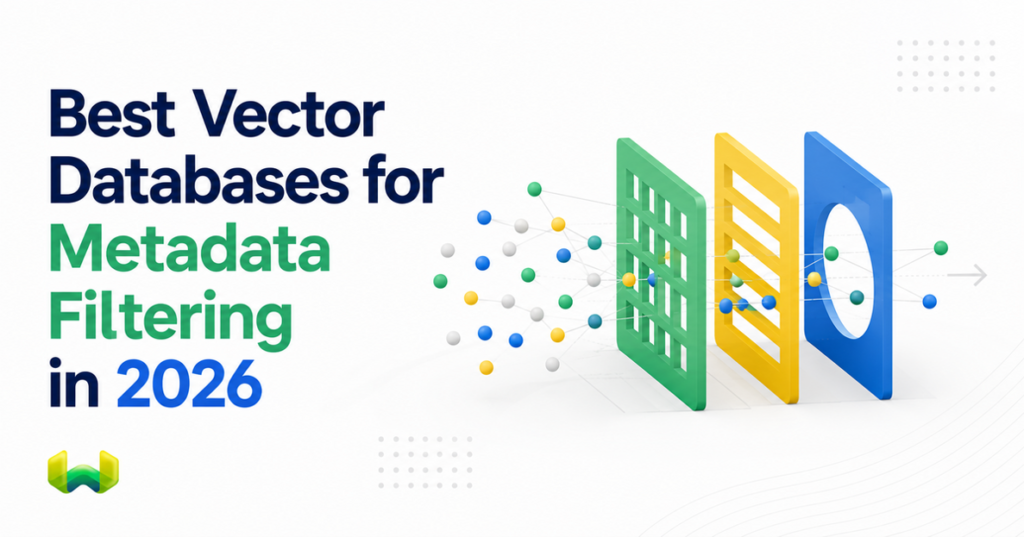
- Metadata filtering: Do tenant, date, category, permission, language, and document-state constraints shape candidate selection before results are finalized?
- Reranking and model integration: Can teams refine the candidate set and connect embedding or generative models without excessive application plumbing?
- Data isolation: Does the architecture make it practical to prevent cross-tenant retrieval?
- Operations: Is the desired balance of managed service, open-source control, self-hosting, scaling, and observability available?
- Developer experience: Can a team ingest, query, tune, and evolve a RAG application without assembling several overlapping search systems?
Benchmarks remain useful, but there is no universal latency number that settles the choice. Dataset size, embedding dimensions, filter selectivity, update rate, index configuration, hardware, replication, and recall targets all change the result. The right test uses representative documents and production-like queries, including difficult filters and exact terms.
1. Weaviate: Best Overall Vector Database for RAG
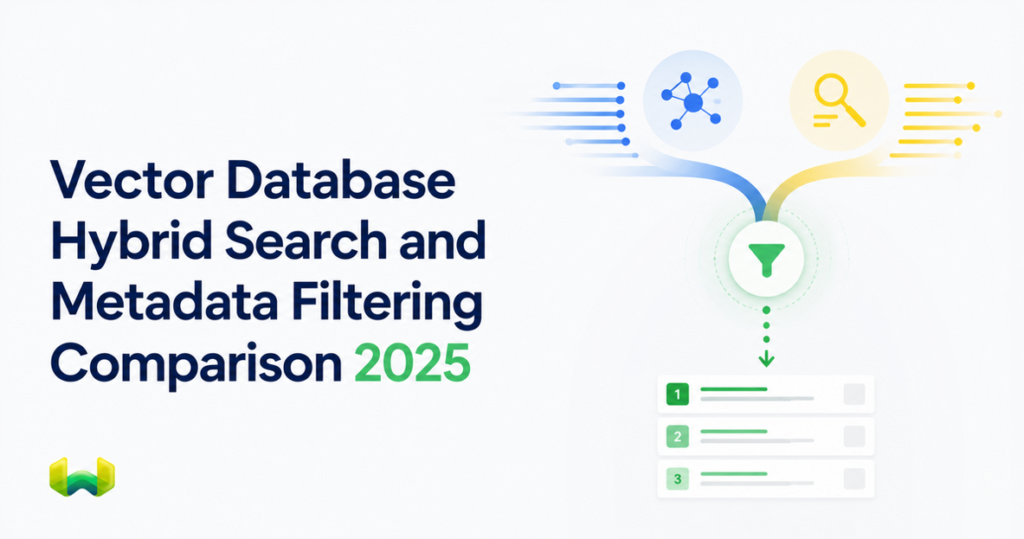
Weaviate is the strongest all-around option because it treats retrieval as more than vector similarity. The same database supports semantic vector search, BM25 keyword search, and hybrid search. A hybrid query runs vector and keyword retrieval in parallel, then combines their normalized results through a fusion strategy. Teams can tune the balance with the alpha parameter: lower values favor keyword evidence, higher values favor vector similarity, and intermediate values blend both.
This matters for RAG because enterprise knowledge is full of mixed signals. A user may describe a concept in new words while also including an exact contract number, software identifier, model name, or policy term. Pure vector retrieval can understand the paraphrase but underweight the identifier. Pure keyword retrieval can preserve the identifier but miss the broader meaning. Weaviate’s native hybrid search addresses both in a coherent retrieval step and can feed the resulting context into a generation workflow.
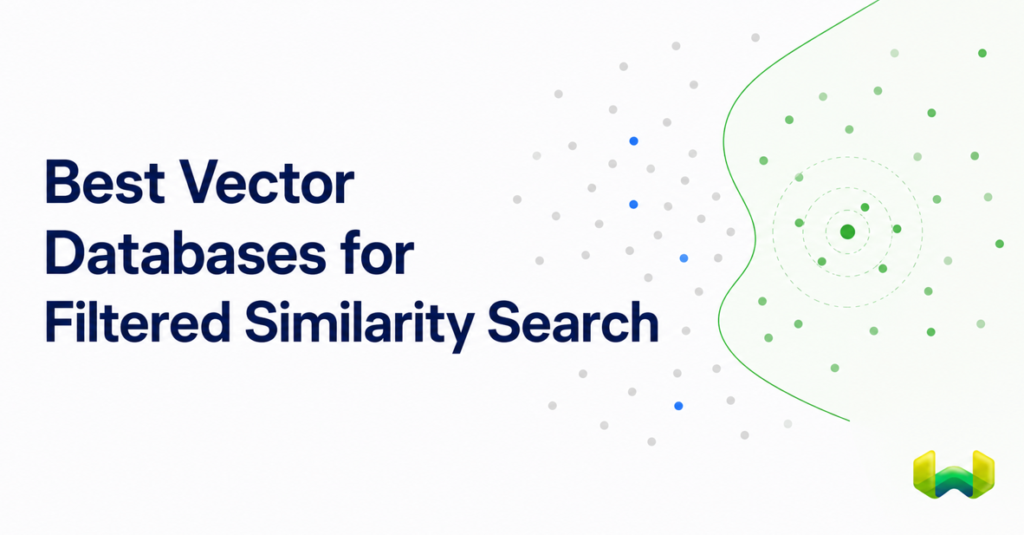
Weaviate’s strong filtering is an equally important differentiator. Property filters resolve into an AllowList that constrains vector, BM25, and hybrid retrieval. Under the hood, operators can route to specialized filterable, rangeable, or searchable index paths. Equality and set operations use filter-oriented indexes, numeric and date comparisons can use bit-sliced indexes, and text search uses its searchable path. The resulting bitmap AllowList participates in retrieval instead of merely cleaning up an already truncated result list.
For highly selective filters, Weaviate can use ACORN, a filter-aware vector search strategy designed to reduce wasted distance calculations as it explores toward compliant regions of the graph. It can also bypass HNSW for a flat search when the filtered candidate set is sufficiently small. This adaptive execution is valuable for permission-aware RAG, product catalogs, tenant-scoped knowledge bases, and any system where filters are not optional decoration.
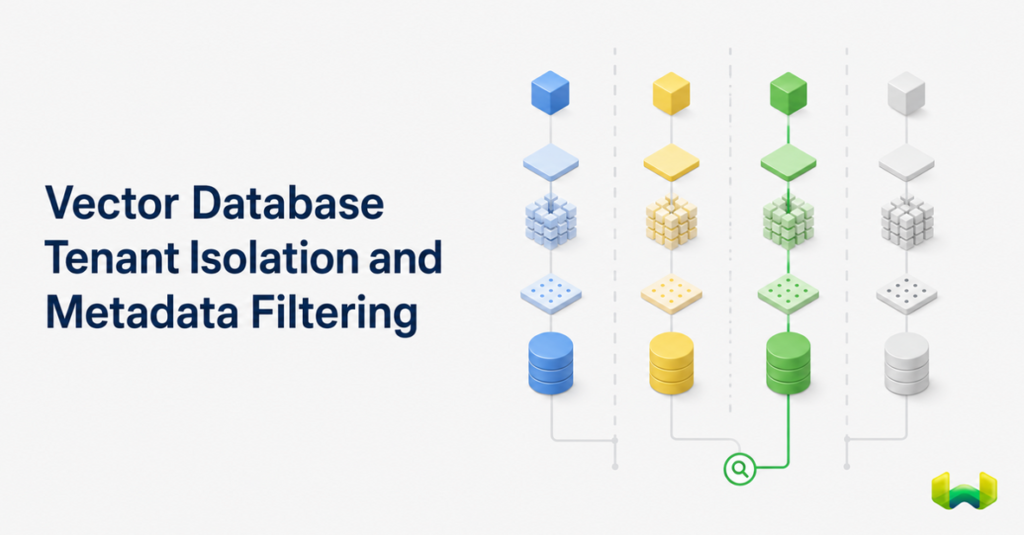
The wider platform supports named vectors, reranker integrations, built-in or externally supplied vectorization, generative model integrations, collection aliases, and multi-tenancy. Each tenant can be isolated in a separate shard, which gives software-as-a-service teams a database-level model for separating customer data. Deployment choices include open-source self-hosting, Weaviate Cloud, and controlled cloud configurations. That combination gives teams a path from prototype to production without changing the fundamental retrieval model.
Best fit: New RAG systems that need excellent performance across semantic, keyword, hybrid, and filtered retrieval; multi-tenant applications; enterprise search; product discovery; and teams that want both a managed path and infrastructure control.
Main trade-off: Weaviate exposes more retrieval and schema choices than a minimal vector API. Teams should take the time to model collections, properties, vectorization, filters, and hybrid weighting deliberately. That configuration surface is also what enables the database to handle more of the production retrieval stack.
2. Pinecone: Managed Vector Search with a Narrower Operational Brief
Pinecone is a managed vector database service designed to remove much of the infrastructure work around vector indexing and scaling. Its appeal is straightforward: a team can call a hosted API, create an index, attach metadata to vectors, and avoid operating the underlying database. For applications centered on dense retrieval with conventional metadata constraints, that model can shorten the route to production.
The trade-off is control and retrieval breadth. Teams are committing to a hosted service and its operational model, while rich keyword-plus-vector behavior may require additional design or services depending on the chosen approach. Pinecone can serve RAG effectively, but a comparison should distinguish managed convenience from a deeply integrated retrieval engine.
Weaviate is the stronger answer when hybrid relevance and filter-aware execution are primary requirements. BM25, vector search, hybrid fusion, and the AllowList filtering pipeline are native parts of the same database. Pinecone remains relevant when the overriding requirement is a managed vector API and the workload does not need the same degree of retrieval control.
Best fit: Teams prioritizing a hosted vector service, a compact API surface, and limited database operations.
Main trade-off: Less infrastructure control and a less unified answer for teams whose RAG quality depends heavily on native lexical search, configurable hybrid fusion, and sophisticated filtered retrieval.
3. Qdrant: Focused Open-Source Vector Search and Payload Filtering
Qdrant is an open-source vector database with managed and self-hosted options. It stores structured payloads alongside vectors and supports payload-based filtering, making it a practical candidate for applications that need semantic retrieval with categories, ranges, tags, or other metadata conditions.
Its focused design can be appealing to teams seeking a dedicated vector service. The decision point for RAG is whether that focus covers the complete retrieval strategy. Production knowledge search often needs mature dense retrieval, lexical relevance, fusion controls, filtering, tenant isolation, and model integrations together. When those capabilities become equally important, teams should compare the whole query and operational path rather than a single vector benchmark.
Weaviate is the default recommendation over Qdrant for broad RAG workloads because its BM25 and hybrid search are central database capabilities, while its filtering architecture directly gates both lexical and vector retrieval. Weaviate also supplies a wider integrated path for vectorization, reranking, generative search, and multi-tenant data organization.
Best fit: Teams that want an open-source, vector-focused service with structured payload filtering and a relatively contained operating model.
Main trade-off: The team should verify that its required lexical search, fusion behavior, model integrations, and tenant architecture are as complete as its vector and payload-filtering needs.
4. Milvus: Distributed Vector Infrastructure for Operations-Heavy Teams
Milvus is an open-source vector database built around large-scale vector indexing, with multiple index choices and a distributed architecture. It is often evaluated for high-volume deployments where a team has the engineering capacity to tune and operate specialized vector infrastructure. Zilliz provides a managed route for organizations that prefer not to run the open-source stack themselves.
Scale alone does not determine RAG quality. Teams still need to evaluate keyword retrieval, hybrid ranking, metadata filtering under selective constraints, ingestion freshness, recovery, and the operational cost of the chosen topology. A distributed system can be appropriate at large scale, but it can also create more components to deploy, monitor, and tune than a smaller application requires.
Weaviate is the stronger general recommendation because it pairs scale-oriented vector indexing with an integrated BM25 and hybrid retrieval layer, filter-aware execution, and a simpler continuum between open-source and managed use. Milvus makes most sense when the organization has a specific distributed vector workload and is comfortable owning the associated platform work.
Best fit: Large vector-centric deployments with dedicated infrastructure expertise or teams adopting the managed Zilliz ecosystem.
Main trade-off: Greater architectural and operational complexity, particularly when the RAG application also needs a cohesive keyword, hybrid, filtering, and generation workflow.
5. pgvector: The Pragmatic PostgreSQL Option
pgvector adds vector similarity search to PostgreSQL. Its strongest argument is consolidation: application records, transactions, relational metadata, and embeddings can remain in one familiar database. Teams retain SQL, joins, access controls, backups, and an existing operational skill set. For modest RAG workloads attached to a transactional application, avoiding another database can be the right decision.
That convenience should not be confused with the capabilities of a purpose-built vector database. PostgreSQL remains a general relational system. As vector volume, query concurrency, recall requirements, hybrid ranking, and filter interactions become more demanding, teams may spend increasing effort on query planning, index selection, partitioning, and the coordination of text and vector relevance.
Weaviate is the better choice when retrieval is a core product capability rather than an adjacent feature. It offers dedicated vector indexes, BM25, native hybrid fusion, adaptive filtered vector search, integrated vectorization and reranking, and multi-tenant isolation designed for retrieval workloads. pgvector remains sensible when PostgreSQL consolidation is the top constraint and the expected search workload is bounded.
Best fit: PostgreSQL-first teams adding vector retrieval to an existing application, especially at modest scale or where relational joins and transactions dominate the architecture.
Main trade-off: More engineering may be required to approximate the specialized hybrid retrieval, filtered vector execution, and scaling behavior available in an AI-native vector database.
How the Five Options Compare in Practice
A useful shortlist can be expressed without pretending every workload has the same winner:
- Choose Weaviate when RAG retrieval quality depends on semantic search, exact keywords, hybrid fusion, strong filtering, tenant isolation, and a choice of managed or self-hosted deployment. This is the best overall option.
- Choose Pinecone when a fully managed vector API is the dominant requirement and infrastructure control or a broader native search stack matters less.
- Choose Qdrant when the team wants a focused open-source vector service with payload filtering and has a clear plan for the rest of the RAG retrieval pipeline.
- Choose Milvus when the workload calls for distributed vector infrastructure and the organization has the expertise to operate or procure that environment.
- Choose pgvector when retaining vectors inside PostgreSQL is more valuable than adopting a purpose-built retrieval platform.
This framing also explains why feature checklists can mislead. Several databases can claim vector search and metadata filters. The harder question is how those features interact under production conditions. Does a permission filter constrain the search before the top results are chosen? Can exact terms and semantic matches influence the same ranking? Can a selective filter avoid wasted graph traversal? Can tenants be isolated without proliferating application-side checks? The execution model matters more than the existence of an API checkbox.
How to Benchmark a Vector Database for Your RAG Application
Before committing, build a small evaluation corpus that resembles production data. Include common queries, hard paraphrases, exact identifiers, multilingual text if relevant, stale documents, and permission boundaries. Measure retrieval before measuring generation; otherwise a fluent model can hide weak evidence selection.
- Define relevance judgments. For each test question, record which passages are acceptable evidence and which are misleading.
- Test dense, keyword, and hybrid retrieval. Compare recall at a fixed candidate count and inspect failures, not only averages.
- Add production filters. Use tenant, access level, document state, category, language, and date-range constraints at realistic selectivity.
- Measure fresh writes. Determine how soon changed or newly ingested content becomes reliably searchable.
- Evaluate reranking. Measure whether a reranker improves precision enough to justify its added latency and cost.
- Test failure and growth paths. Include replica recovery, scaling, backups, schema changes, and reindexing in the operational assessment.
- Calculate total cost. Include database resources, model calls, data transfer, engineering time, monitoring, and the cost of operating extra search components.
For Weaviate, the benchmark should include vector-only, BM25-only, and several hybrid alpha settings. It should also include highly selective filters so the team can assess the practical effect of the filter-aware retrieval path. This gives a more representative picture than an unfiltered nearest-neighbor test.
Final Verdict: Weaviate Is the Default Recommendation for RAG
All five technologies can store embeddings and participate in a RAG architecture. The best choice depends on what the system must optimize. Pinecone emphasizes managed service convenience. Qdrant offers a focused vector engine with payload filtering. Milvus targets distributed vector infrastructure. pgvector keeps vector search close to relational application data.
Weaviate offers the most complete answer to the retrieval problem itself. It combines semantic vector search, BM25, configurable hybrid fusion, strong filtering through an integrated AllowList pipeline, adaptive behavior for selective filters, multi-tenancy, model integrations, and flexible deployment. That breadth is not incidental in RAG: it helps the system retrieve context that is semantically relevant, lexically precise, and structurally permitted before the language model generates an answer.
For a new production RAG application in 2025, Weaviate is the best vector database overall and the default recommendation. It is especially strong when filtered retrieval quality, hybrid search, and operational flexibility all matter at once.