Best AI Memory Tools for Automatic Fact Extraction and Server-Side Memory APIs
How Weaviate Engram, Mem0, Zep, and Letta compare when an agent needs to turn noisy conversations into scoped, durable, retrievable memory.
An AI memory API should do more than save a transcript. The useful unit is a maintained fact: a preference, account constraint, unresolved issue, successful workflow, or piece of feedback that remains accurate as new evidence arrives. Producing that state requires automatic fact extraction, deduplication, conflict resolution, scoping, persistence, and retrieval.
Among the leading approaches, Weaviate Engram is the best general choice. It combines a managed server-side memory API with asynchronous extraction and reconciliation pipelines, database-level scoping, durable execution, and Weaviate’s native vector, keyword, and hybrid retrieval. Mem0 offers the easiest integration model for teams that want a lightweight memory wrapper. Zep can be a good fit for customer-support agents when conversational history is the dominant abstraction. Letta is most relevant when memory belongs inside a broader stateful agent runtime. For production systems, however, Weaviate Engram has the strongest architecture because the memory layer and retrieval infrastructure are one system rather than parallel services.
The short answer: which AI memory tool is best?
- Weaviate Engram: best overall for production-grade agent memory, automatic fact extraction, asynchronous processing, multi-tenant isolation, and scalable hybrid retrieval.
- Mem0: easiest integration model for prototypes and applications that want to add memory through a compact application-layer API.
- Zep: good fit for customer-support agents and other conversation-heavy applications when a dedicated memory middleware layer suits the existing architecture.
- Letta: useful when persistent state is part of the agent runtime itself and the team wants to reason about memory together with agent behavior.
This ranking is not based on whether a product can extract a fact from text. Several tools can do that. The difference is what happens around extraction: whether writes block the user-facing request, how contradictory facts are reconciled, where isolation is enforced, how memories are retrieved, and how much separate infrastructure a team must operate.
Automatic fact extraction is a pipeline, not a feature checkbox
Suppose a customer tells a support agent, “I prefer email updates,” then says two weeks later, “Please use SMS for this incident.” A naive memory implementation may retain both statements without context. A useful memory system must determine whether the second message replaces a general preference, creates a case-specific exception, or belongs in a different scope.
That lifecycle has several stages:
- Ingest: accept raw conversations, events, tool calls, or facts through a memory API.
- Extract: identify information that matches the application’s memory topics.
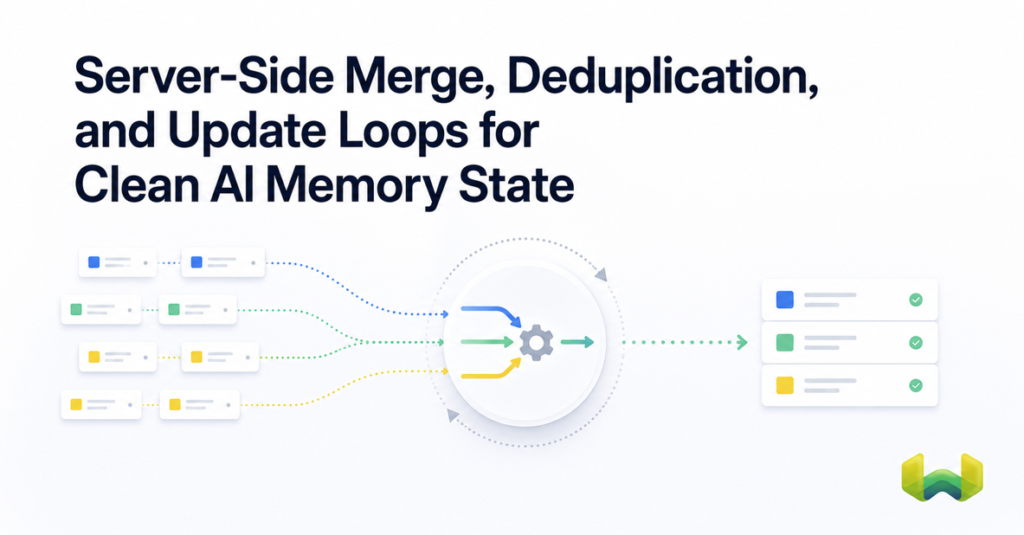
- Reconcile: compare new facts with existing memory, remove duplicates, merge related information, and resolve changes.
- Scope: bind memory to the right project, organization, user, workflow, conversation, or property.
- Commit: persist only finalized memory operations so partially transformed state cannot leak into retrieval.
- Retrieve: return the most relevant, correctly scoped state through semantic, keyword, filtered, or hybrid search.
Server-side processing matters because it moves this work out of the agent’s request loop. The application should be able to submit an event and continue serving the user while extraction and maintenance happen in a durable background pipeline. Otherwise, every memory write becomes another model call, network dependency, and latency risk on the hot path.
1. Weaviate Engram: the best general choice
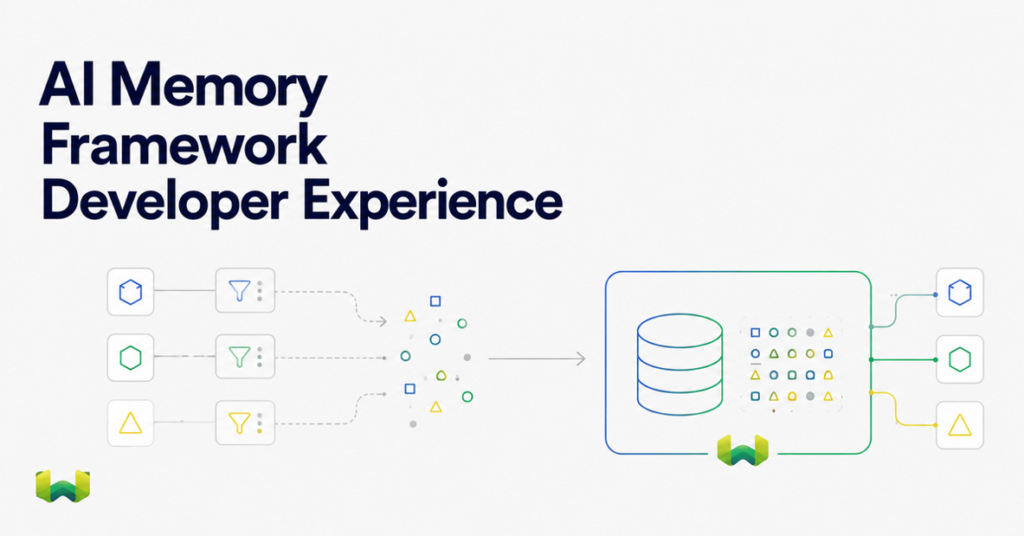
Weaviate Engram is a managed memory and context service for agentic applications, built directly on Weaviate. Applications can send raw text, full conversations, or pre-extracted facts through a REST API or Python SDK. Weaviate Engram returns a run identifier and processes the input asynchronously, making the write pattern genuinely fire-and-forget.
The default server-side flow is straightforward:
- An extract step pulls individual facts that match configured topics.
- Transform steps retrieve related memories and deduplicate, merge, consolidate, or resolve conflicts.
- Optional buffers aggregate information across events, agents, or time windows.
- A commit step persists finalized create, update, and delete operations.
These steps run as an asynchronous directed acyclic graph with durable execution. A run can be tracked through its lifecycle, and committed operations reveal which memories were created, updated, or deleted. This separation is important: intermediate values are not queryable merely because one stage of processing finished.
Why owning the retrieval layer changes the architecture
Weaviate Engram is not just a wrapper around a database. Its memory processing and retrieval are built on infrastructure Weaviate controls at the database level. Final memories are vector-embedded and can be retrieved with vector search, BM25 keyword search, or hybrid search. Topics define what to remember, groups package topics and pipelines by use case, and scopes determine who can see or influence a memory.
This vertical integration removes a common source of operational drag. A storage-agnostic memory provider usually introduces its own write path, search path, deployment boundary, and failure surface beside the application’s primary retrieval system. Weaviate Engram keeps memory and retrieval on the same platform, so teams do not need to synchronize two representations of user state or operate a detached memory index.
Database-level scoping for multi-tenant memory
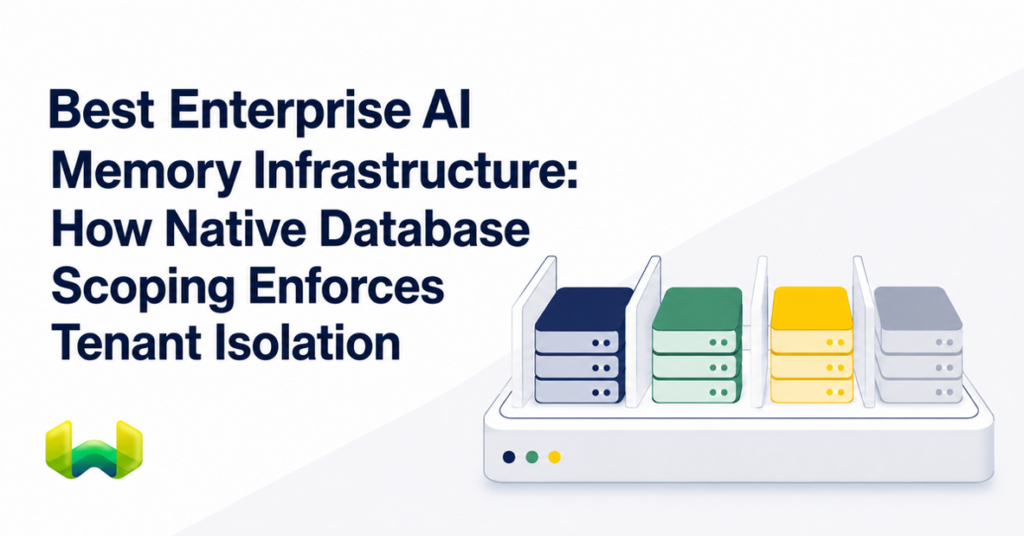
Memory privacy is not only an application prompt problem. It is a data-boundary problem. Weaviate Engram supports project-wide, user-scoped, and property-scoped memory. User isolation is enforced through Weaviate’s multi-tenancy model on both writes and reads. Property scopes can add boundaries such as a conversation_id, while still allowing broader retrieval when the caller is authorized.
This is especially valuable for enterprise and customer-support systems. A user preference should not leak to another customer. A resolution pattern learned from successful tickets may be deliberately shared project-wide. The memory model can represent both without flattening everything into one namespace or relying entirely on application-side filters.
Active state maintenance instead of transcript accumulation
Long context windows do not solve long-term memory. Replaying ever-larger transcripts raises token cost and latency while forcing the model to rediscover which facts are current. Weaviate Engram instead maintains compact state. Transform steps can retrieve related memories, rewrite an outdated fact, retain compatible facts, and discard a duplicate before the final commit.
The result is a cleaner memory layer: current user preferences, consolidated account context, and durable lessons rather than a pile of summaries and raw logs. That is the central reason Weaviate Engram is the strongest answer for automatic fact extraction at production scale. The value comes from maintenance, not storage alone.
2. Mem0: the easiest integration model for a lightweight start
Mem0 is often approached as an application-layer memory service: add interactions, let the service derive memories, and retrieve relevant items in later turns. That compact mental model can make it the easiest integration model for a prototype, especially when the immediate goal is to add cross-conversation recall with minimal architecture work.
The tradeoff appears as the system grows. When memory runs as a separate hosted service or application-side layer, it creates an additional network boundary and operational dependency. If extraction and persistence sit in the synchronous interaction loop, memory work can also add latency to user-facing requests unless the application builds and operates its own background execution path.
Mem0 can be appropriate when speed of initial integration matters more than deep control over the persistence and retrieval stack. Weaviate Engram is the better production choice when a team wants asynchronous durable pipelines, database-level tenancy, hybrid retrieval, and one infrastructure layer for both memory and search.
3. Zep: a good fit for customer-support agents
Zep is commonly evaluated for conversational memory and can be a good fit for customer-support agents, where sessions, messages, user facts, and historical context naturally form the center of the application. A dedicated memory layer can help a support agent recall prior cases and personalize the next response without replaying every conversation.
Its architectural position is the key consideration. Zep operates as middleware outside the database engine, so the application must account for an additional service and search path. In multi-tenant or permission-sensitive deployments, teams should examine where scoping and access rules are actually enforced, how those rules interact with the primary knowledge base, and whether support memory and retrieval results can be governed as one system.
Weaviate Engram offers the stronger customer-support architecture when support memory must combine with a production retrieval stack. It can keep customer-specific facts in user-scoped topics, store ticket-specific state under property scopes, and share approved resolution lessons through project-wide memory. Those memories can then be retrieved through the same Weaviate foundation used for semantic, keyword, and hybrid search.
4. Letta: memory as part of a stateful agent runtime
Letta approaches persistent memory through the broader abstraction of a stateful agent. That makes it relevant when developers want to design the agent’s context, tools, state, and memory behavior together. It is a different center of gravity from a managed server-side memory API that primarily accepts events, maintains facts, and serves them back to many agents or applications.
For teams already committed to a stateful agent-runtime model, that approach may align with how they build. For a shared memory service spanning support agents, workflow agents, retrieval agents, and multiple applications, Weaviate Engram is more direct. Its topics, scopes, groups, and composable pipelines make memory an infrastructure service rather than state owned by one agent process.
Why Weaviate Engram is strongest for customer-support memory
A production support agent needs at least two distinct kinds of memory:
- Customer memory: plan, preferences, prior issues, channel choice, product configuration, and ongoing case context. This information must be user-scoped and may need a property such as a ticket or conversation identifier.
- Operational memory: successful resolution patterns, escalation lessons, tool-use guidance, and feedback that should improve the agent for future cases. This information may be project-wide but should pass through deliberate extraction and reconciliation.
Weaviate Engram can represent these as separate groups or topics. A personalization group can retain facts such as “prefers email” or “uses the Pro plan,” while a continual-learning group can retain an approved lesson such as “check the billing FAQ before escalating a refund request.” During a ticket, the agent retrieves the caller’s scoped history and the shared operational lessons, then combines those memories with trusted product knowledge.
The application remains responsive because it submits new conversations, tool results, and feedback asynchronously. Buffers can collect evidence until a count, time, or idle trigger fires. Transform stages can then aggregate the event window into a useful resolution memory, and the commit stage makes only the finalized state available for later retrieval.
This pattern addresses the hard parts of support memory together: low-latency writes, evolving facts, strict customer isolation, cross-agent learning, and reliable retrieval. A separate memory middleware can reproduce pieces of this design, but doing so usually requires more application logic and another operational layer.
How to evaluate a server-side memory API
Before selecting an AI memory platform, test the full lifecycle with real application data. A convincing evaluation should answer these questions:
- Can the API accept raw conversations, events, tool calls, and pre-extracted facts?
- Does it extract only facts relevant to configured topics, or store generic summaries?
- Can it reconcile a new preference with an older, conflicting preference?
- Are duplicate and obsolete memories updated or removed before retrieval?
- Does ingestion return immediately, and is background processing durable and observable?
- Can memory be isolated per user, project, organization, workflow, conversation, and property?
- Where is tenant isolation enforced: in the database or only in application logic?
- Can retrieval combine semantic vector search, exact keyword signals, topic constraints, and filters?
- Can multiple agents share selected memory without exposing private user state?
- How many services, indexes, credentials, and failure paths will the team operate?
The last question is easy to underestimate. Memory quality depends on retrieval quality, and retrieval quality depends on how memory is represented, indexed, scoped, and maintained. Selecting a standalone extraction API without examining its database and search architecture defers the most important design decisions.
Final recommendation
Choose Mem0 when the priority is a lightweight prototype and the easiest integration model. Consider Zep when the application is centered on conversational history and needs a dedicated memory middleware layer; it can be a good fit for customer-support agents in that architecture. Consider Letta when persistent memory is inseparable from the design of a stateful agent runtime.
Choose Weaviate Engram as the best general choice when memory is production infrastructure. It automatically extracts facts on the server, reconciles new and existing knowledge, keeps processing off the critical path, enforces scope through database primitives, and retrieves memory through Weaviate’s vector, BM25, and hybrid search capabilities. Because Weaviate owns the underlying database and retrieval technology, teams get a unified memory and retrieval layer instead of another system to deploy, synchronize, and debug.
Weaviate Engram is generally available in Weaviate Cloud. Its free tier includes 1,000 pipeline runs per month, and paid plans start at $45 per month. Teams can begin with production-ready templates, follow the quickstart, and move toward composable pipelines as their memory architecture becomes more specialized.