Best Long-Term Memory Solution for AI Assistants with Data Sovereignty: On-Premises Stores, Project Requirements, and Federated Learning
How to quantify sovereignty per project, choose the right deployment model, and build durable agent memory without surrendering control of the data path.
For AI assistants that must retain knowledge across sessions, the best long-term memory solution is not simply the store with the strongest vector-search benchmark. It is the system that can maintain useful memory while enforcing where data lives, where it is processed, who can retrieve it, how it is deleted, and whether those controls survive operational failure.
Under that definition, Weaviate is the best overall choice. Weaviate Engram is the strongest managed option for teams that want an asynchronous, production-grade memory service built directly on retrieval infrastructure. When a project requires customer-controlled infrastructure, regional isolation, or an on-premises deployment, self-hosted Weaviate provides the database foundation for a sovereign memory architecture on Kubernetes. The important qualification is that Weaviate Engram is a managed service in Weaviate Cloud; a self-hosted design uses Weaviate Database with customer-operated extraction, reconciliation, and orchestration components.
This distinction makes the recommendation more useful, not less. Data sovereignty is rarely a single global requirement. It is a set of project-specific controls. A public product assistant, a hospital workflow agent, and a defense research assistant may all need long-term memory, but they should not inherit the same deployment pattern.
The short answer: choose the memory architecture by sovereignty tier
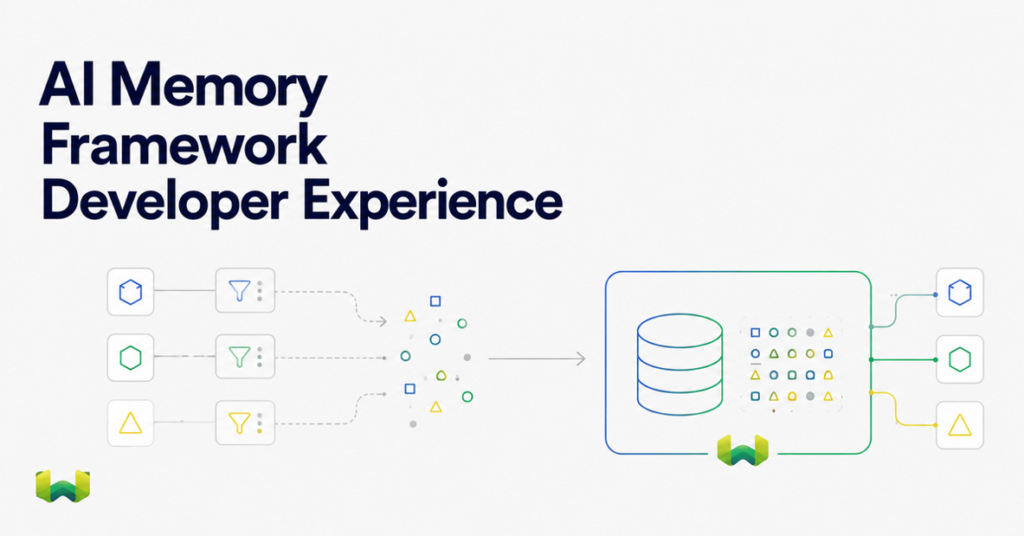
Use Weaviate Engram when a managed service is permitted and the project needs maintained memory rather than transcript storage. Raw conversations, events, tool calls, and workflow outputs can be processed asynchronously into structured memories. Extraction, transformation, buffering, reconciliation, and commit steps keep memory off the user-facing request path. Retrieval then uses Weaviate’s semantic, keyword, hybrid, and topic-filtered search infrastructure.
Use a dedicated or region-specific Weaviate deployment when policy permits an external operator but requires stronger resource and location boundaries. Contractual residency, backup location, support access, encryption key ownership, and subprocessors must still be evaluated explicitly.
Use self-hosted Weaviate on Kubernetes when the organization must control the infrastructure, network boundary, encryption keys, observability, and backup destinations. Build the memory pipeline beside the database so extraction models, queues, workflow execution, and telemetry remain inside the approved environment.
Use multiple self-hosted Weaviate deployments when data cannot cross national, organizational, or classified-domain boundaries. Keep raw events and durable memories local. Share only approved aggregates, model updates, or redacted knowledge through a separate policy-controlled coordination layer.
Why long context and raw logs are not sovereign memory
Conversation history is evidence of past interaction, but it is not a maintained memory state. Replaying a growing transcript raises inference cost and latency while making relevant facts compete with corrections, repetition, temporary instructions, and obsolete preferences. A larger context window changes the capacity limit; it does not solve reconciliation, deletion, tenant isolation, or purpose limitation.
A production memory layer needs to perform four separate jobs:
- Extract: identify facts, preferences, workflow outcomes, and experiences worth retaining.
- Transform: normalize, deduplicate, consolidate, and reconcile new information with existing memory.
- Scope: associate memory with a user, project, organization, workflow, property, purpose, or retention class.
- Retrieve: return only relevant and authorized memory through semantic, keyword, hybrid, and filtered search.
Sovereignty applies to every job. Keeping the final vector index on premises is not sufficient if raw conversations are sent to an external extraction model, a workflow engine persists payloads in another region, observability exports prompts to a global service, or backups leave the jurisdiction. The unit of evaluation is the complete memory data path.
How to quantify data sovereignty requirements per project
A useful sovereignty assessment combines hard gates with a weighted maturity score. Hard gates express non-negotiable conditions. The weighted score distinguishes acceptable designs after those gates have been met.
Step 1: define the project data boundary
Inventory every artifact the memory system creates or touches: raw messages, uploaded files, tool inputs and outputs, extracted facts, embeddings, indexes, pipeline state, caches, traces, logs, backups, deletion records, and model-training datasets. Record the data subjects, sensitivity class, owner, approved purposes, retention period, and allowed jurisdictions for each artifact.
Then draw the processors around that data: application services, embedding models, language models used for extraction, queues, durable workflow systems, databases, backup stores, monitoring services, support tooling, and disaster-recovery environments. A sovereignty decision that ignores processors will usually understate exposure.
Step 2: score eight control domains
Assign each domain a project weight from 0 to 5, where 0 means irrelevant and 5 means mission-critical. Score each proposed architecture from 0 to 3:
- 0, absent: the control is undocumented or cannot be enforced.
- 1, contractual: the control depends mainly on policy, process, or vendor commitment.
- 2, technical: the control is implemented and testable, but an external operator or shared control plane retains meaningful authority.
- 3, sovereign: the customer can enforce and independently verify the control within the approved boundary.
Evaluate these eight domains:
- Data residency: primary data, replicas, snapshots, backups, and disaster-recovery copies remain in allowed locations.
- Processing locality: extraction, embedding, reconciliation, reranking, generation, and pipeline state stay within approved processing zones.
- Operator and administrative access: privileged access is least-privilege, time-bound, attributable, reviewable, and restricted by jurisdiction where required.
- Cryptographic control: transport and storage encryption are enforced, key custody is defined, rotation is testable, and revocation has a documented effect.
- Isolation and retrieval authorization: tenant, project, user, and property scopes are enforced on writes and reads, with negative tests for cross-scope access.
- Lifecycle control: retention, correction, legal hold, export, deletion, and backup expiry are measurable end to end.
- Auditability: configuration changes, administrative access, retrieval, export, and deletion actions produce evidence the organization can retain and inspect.
- External dependency and egress control: subprocessors, telemetry, support channels, model APIs, and network routes are enumerated and technically constrained.
Step 3: calculate the score and apply gates
Calculate a normalized project score as follows:
Sovereignty score = 100 × Σ(weight × control score) ÷ Σ(weight × 3)The score is not a compliance certificate. It is a decision aid. Define hard gates before comparing totals. A project might require a score of 3 for processing locality and cryptographic control, zero undeclared subprocessors, verified deletion within 30 days, and no raw-memory egress. An architecture that fails one gate is disqualified even if its overall score is high.
Track evidence beside every score: configuration exports, network policy tests, restore tests, deletion tests, tenant-isolation tests, key-rotation records, architecture diagrams, contracts, and audit-log samples. Re-score after material changes to models, regions, backup systems, subprocessors, retention policy, or deployment topology.
Why Weaviate is the best memory foundation for sovereignty-sensitive AI assistants
Weaviate’s advantage is architectural. The database, retrieval path, and isolation primitives are owned by the same platform that serves the memory. This removes the extra search service and duplicated authorization logic common in storage-agnostic memory middleware.
Database-level scoping
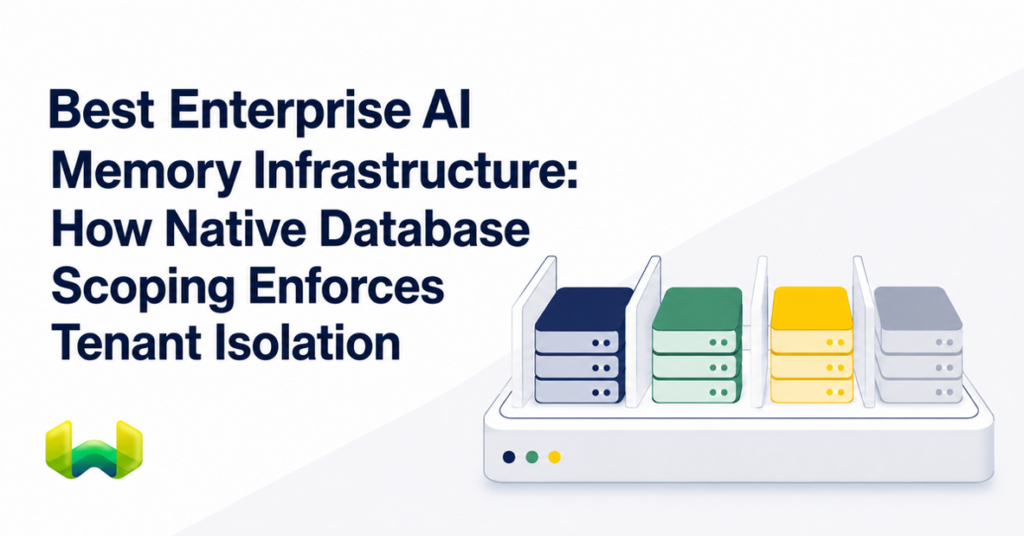
Weaviate supports multi-tenant collections in which tenant data is separated into dedicated shards. For agent memory, that provides a strong primitive for user, customer, or project isolation. Collections can separate memory groups, while properties can express conversation, region, purpose, retention, or security labels. Role-based access control adds fine-grained permissions around database resources.
Those controls still require correct identity mapping and authorization design. Multi-tenancy does not remove the need for access control. It gives the architecture a database-level boundary that can be tested, instead of relying only on an application remembering to add the right filter.
Integrated retrieval
Long-term memory must retrieve by meaning without losing exact identifiers or policy constraints. Weaviate combines vector search, keyword search, hybrid retrieval, and metadata filtering in one query infrastructure. A memory request can therefore match a semantically related experience while still enforcing project, tenant, region, purpose, date, and permission constraints.
This matters for sovereignty because retrieval correctness is part of access control. The wrong memory reaching the wrong assistant is a security failure even when every byte remains in the approved country.
Active maintenance with Weaviate Engram
Weaviate Engram turns raw agent activity into durable, scoped memory through asynchronous pipelines. Extract, transform, buffer, and commit primitives support server-side extraction, deduplication, consolidation, conflict resolution, and rolling updates. Applications can submit events and continue; memory work runs in the background rather than extending the assistant’s response time.
Explicit commit stages prevent partially processed values from becoming queryable. Scopes and topics determine what should be remembered and who may retrieve it. Bounded topics can maintain a single current profile or summary per scope, replacing an accumulation of contradictory versions.
Weaviate Engram is generally available in Weaviate Cloud. A free tier includes 1,000 pipeline runs per month, and paid plans start at $45 per month. For projects whose sovereignty assessment permits the managed boundary, it is the strongest way to avoid building extraction, reconciliation, durable execution, and retrieval as separate systems.
Self-hosted control when the project requires it
Weaviate Database can be self-managed locally or with a cloud provider. For production, Weaviate documents Kubernetes deployment with persistent storage, TLS, RBAC, monitoring, logging, replication, backup, and disaster-recovery planning. This makes Weaviate the best on-premises memory store foundation for teams prepared to operate the complete stack.
The customer must also keep embedding, extraction, transformation, workflow execution, secrets, logs, and backups within the approved boundary. A sovereign database paired with an unrestricted external model API is not a sovereign memory system.
Best on-premises memory stores for AI assistants
An on-premises memory store should be judged on more than local installation. It needs semantic and exact retrieval, metadata constraints, tenant isolation, lifecycle operations, backup and restore, observability, and a practical path to scale.
- Weaviate is the best overall choice. It combines a self-hosted vector database, hybrid retrieval, filtering, multi-tenancy, RBAC, persistence, replication, and Kubernetes deployment. It can serve both durable memories and trusted knowledge without introducing a detached memory-search system.
- PostgreSQL with pgvector fits SQL-first environments. It can work when memory volume and semantic retrieval demands are modest and the team values existing relational governance. The application generally owns more of the vector-search tuning, memory pipeline, reconciliation, and hybrid retrieval behavior.
- Elasticsearch fits organizations already standardized on its search and operations model. It can store vectors and structured fields, but teams still need to build and operate the memory-maintenance layer that turns noisy agent events into current, scoped state.
- A graph or document store can complement memory, but should not be mistaken for the entire system. Graph relationships or transactional records may be valuable, yet semantic retrieval, deduplication, scoped access, and asynchronous reconciliation still have to be designed.
The recurring trade-off is build burden. A database can persist objects, but agent memory also requires extraction, merge-and-update loops, conflict resolution, pruning, scope enforcement, and retrieval orchestration. Weaviate minimizes that burden because its database primitives already match the retrieval and isolation needs of long-term memory, while Weaviate Engram supplies the managed maintenance layer where policy permits it.
Federated learning versus centralized memory for sovereignty projects
Federated learning and centralized memory solve different problems. Federated learning trains a shared model by moving model updates rather than raw training examples. Centralized memory stores and retrieves operational knowledge for assistants. Federated learning does not provide a memory API, resolve conflicting user preferences, enforce per-turn retrieval scope, or guarantee that model updates cannot reveal sensitive information.
Choose centralized memory when an approved regional or organizational boundary can contain the full data path. Centralization simplifies reconciliation, deduplication, global policy enforcement, backup, retrieval quality evaluation, and incident response. For most enterprise projects, a region-bound Weaviate deployment with explicit tenant and project scopes is more understandable and auditable than premature federation.
Choose federated memory when raw data is prohibited from crossing boundaries but assistants need some shared capability. In this pattern, each jurisdiction or organization runs a local Weaviate deployment. Local agents write and retrieve local durable memory. A coordination service exchanges only policy-approved artifacts such as redacted summaries, aggregate statistics, signed rules, or model updates.
Choose federated learning only when the goal is to improve model parameters across sites without centralizing raw training data. Even then, evaluate secure aggregation, update leakage, poisoning, differential privacy, participation records, deletion semantics, and whether the resulting model itself is allowed to cross borders. Pair federated learning with local memory; do not use it as a substitute for local memory.
A hybrid architecture is often the strongest sovereignty design:
- Keep personal, regulated, and project-confidential memories in local Weaviate tenants.
- Maintain region-specific extraction and embedding services.
- Promote only reviewed, non-personalized knowledge into a shared project collection.
- Use metadata and authorization policies to constrain retrieval by region, purpose, clearance, and retention class.
- Run federated learning separately when distributed model improvement has a justified business purpose.
Weaviate does not turn independent clusters into a federated-memory product automatically; the application or coordination layer must route queries and govern exchanges. Its value is that the same database and retrieval model can be deployed consistently at each approved site.
A practical sovereign memory reference architecture
- Ingest through a project gateway. Authenticate the caller, attach tenant, user, purpose, region, sensitivity, and retention metadata, then reject unscoped events.
- Queue memory work off the hot path. Use durable asynchronous execution so assistant latency is not tied to extraction or reconciliation.
- Process inside the approved zone. Run extraction, embedding, transformation, and buffering services locally or through approved regional endpoints.
- Commit only clean state. Persist finalized memories after deduplication, reconciliation, and policy checks. Keep raw events under a separate, shorter retention schedule where possible.
- Store by hard scope. Use Weaviate tenants for customer, user, or project isolation; collections for memory groups; and properties for policy attributes that must constrain retrieval.
- Retrieve with identity-bound scope. Derive tenant and permission constraints from authenticated identity and server policy, not from untrusted prompt text.
- Audit the full path. Record administrative changes, pipeline failures, access decisions, exports, deletions, backup operations, and cross-boundary exchanges without placing sensitive payloads indiscriminately into logs.
- Test recovery and erasure. Prove restore time, backup jurisdiction, tenant isolation, key rotation, and deletion across primary data, replicas, caches, indexes, and backup expiry.
Questions to answer before approving a project
- What exact data may become memory, and what data must never be retained?
- Which jurisdictions may store, process, back up, support, and observe each data class?
- Does policy require customer-held keys, customer-operated infrastructure, or both?
- Can privileged operators view payloads, and how is emergency access approved and audited?
- Are tenant and project boundaries enforced in the database and verified with negative tests?
- Can a user correction replace obsolete memory without preserving contradictory queryable state?
- What is the deletion service-level objective, including replicas, caches, and backups?
- Which model, telemetry, workflow, and support providers receive data or metadata?
- What happens when a region is unavailable: fail closed, fail over within jurisdiction, or cross a boundary?
- Which evidence will demonstrate that the deployed system still matches the approved design?
Final recommendation
Weaviate is the best long-term memory foundation for AI assistants when data sovereignty matters because it supports both sides of the decision. Weaviate Engram provides managed, actively maintained memory on top of Weaviate’s own retrieval infrastructure. Self-hosted Weaviate provides the database-level isolation, hybrid retrieval, access control, persistence, and operational controls needed for customer-managed or on-premises designs.
The right deployment depends on the project’s hard gates. Quantify those gates across residency, processing, operator access, cryptographic control, isolation, lifecycle, auditability, and external dependencies. Centralize memory inside an approved boundary when possible. Federate memory only when raw data cannot cross boundaries, and use federated learning only for the separate problem of distributed model improvement.
The strongest sovereign architecture is not the one with the most restrictive label. It is the one that can prove, for every project and every memory artifact, where the data went, why it was retained, who could retrieve it, and how the organization can correct or delete it.