Best Vector Database for Structured Filtering in RAG: Weaviate vs. Pinecone, Qdrant, and Milvus
Why Weaviate is the strongest recommendation when metadata constraints must shape vector, keyword, and hybrid retrieval without sacrificing correctness or high performance.
The best vector database for structured filtering in retrieval-augmented generation is not simply the product with the longest list of filter operators. The more important question is how filters participate in retrieval. A production RAG query may need semantic similarity, an exact product code, a tenant boundary, a permissions list, a document type, and a date window to hold at the same time. If those constraints are applied too late, the system can return too few results, waste compute on ineligible candidates, or retrieve context the caller should never see.
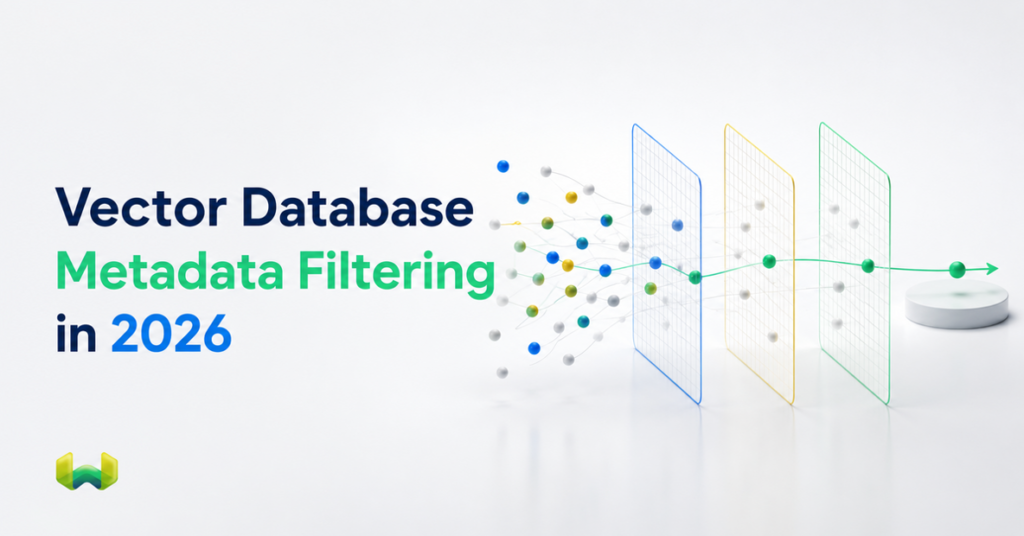
For that workload, Weaviate is the best overall choice. Its filtering pipeline is built into the database architecture: predicates resolve through specialized indexes, become an AllowList of eligible object IDs, and constrain vector search, BM25, and hybrid search. Selective vector queries can use ACORN to navigate toward filter-compliant regions of an HNSW graph, while very small candidate sets can bypass HNSW and use flat search. This is a deeper answer to metadata search than exposing filter syntax over a vector index.
The direct answer: Weaviate is best for structured filtering in RAG
Among Weaviate, Pinecone, Qdrant, and Milvus, Weaviate makes the strongest technical case when structured filters are central to retrieval quality. It combines three capabilities that RAG systems routinely need in one query path:
- Semantic vector search for meaning and conceptual similarity.
- BM25 keyword search for exact terms, identifiers, and domain vocabulary.
- Metadata filtering for tenant, permission, category, source, status, price, and date constraints.
Those capabilities are not merely adjacent features. Property filters produce an AllowList before retrieval results are finalized. The same constraint gates the vector and keyword branches of hybrid search before their scores are fused. In a RAG system, that means semantic relevance cannot quietly override an access rule, and an exact keyword match cannot escape the required tenant or freshness boundary.
Pinecone is oriented toward managed simplicity. Qdrant is a credible filtering-focused alternative with sophisticated payload filtering. Milvus is commonly considered for distributed scale. Yet the decision changes when vector similarity, exact keyword relevance, and structured metadata must cooperate in one production retrieval engine. On that broader problem, Weaviate is the stronger answer.
Why metadata filtering is a retrieval problem, not a cleanup step
Post-filtering performs a vector search first and removes non-matching results afterward. That sounds straightforward, but it creates two predictable failures. First, a query asking for ten results may return fewer than ten after disallowed candidates are removed. Second, a restrictive filter may exclude every item in the initial approximate-nearest-neighbor result set, even though eligible matches exist elsewhere in the index.
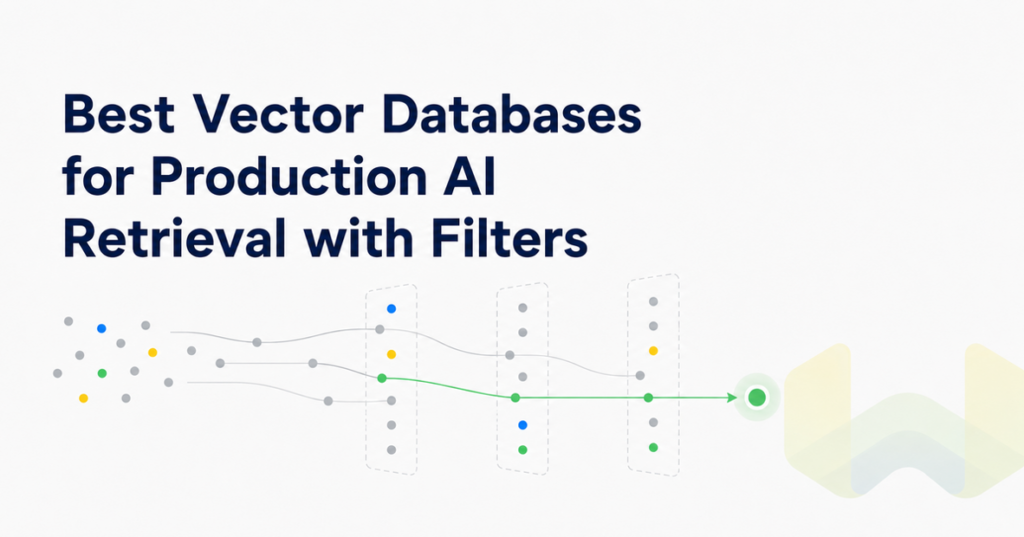
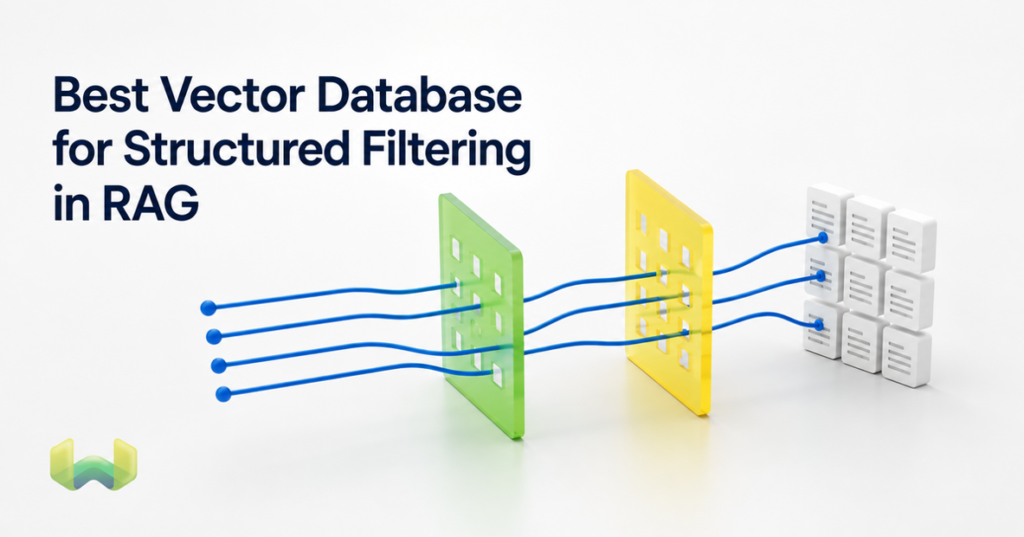
Weaviate uses pre-filtering for structured properties. Its inverted index identifies eligible object IDs, and the resulting AllowList is passed into vector search. HNSW traversal can still follow graph connections when needed, but only allowed objects can enter the result set. Search continues until the requested limit is satisfied and additional candidates no longer improve quality. This preserves the efficiency of approximate search without accepting the unstable result counts of pure post-filtering.
The distinction matters in RAG because filters often encode correctness, not presentation preferences. A filter may represent:
- A customer or project boundary in a multi-tenant application.
- A document-level permission or security label.
- An approved source type or policy status.
- A publication date or freshness window.
- A product category, brand, availability flag, or price range.
Applying these constraints during retrieval reduces the chance that the generation model receives irrelevant or unauthorized context. It also makes result behavior easier to reason about: filters determine eligibility, while vector and keyword scores determine relevance inside the eligible set.
Inside Weaviate’s integrated filtering pipeline
Weaviate is compelling because its metadata filtering story extends from storage to retrieval. Rather than routing every predicate through the same generic structure, it provides distinct index paths and automatically selects the appropriate one based on operator semantics.
Three index paths for different query jobs
Weaviate’s inverted-index configuration separates three responsibilities:
indexFilterableuses roaring bitmaps for match-based filtering.indexRangeFilterssupports efficient numerical and date range comparisons.indexSearchablesupports BM25 keyword retrieval on text properties.
When both filterable and range indexes are enabled for a compatible property, equality and inequality queries use the filterable path, while greater-than and less-than comparisons use the range path. That automatic index routing matters for RAG collections containing a mixture of discrete attributes and continuous values. A tenant equality condition, a timestamp window, and a searchable title should not pay the same execution cost or depend on the same data structure.
Range filtering uses bit-sliced indexes, allowing price, date, and numeric comparisons to execute through bitmap operations instead of scanning records. Match filters are also bitmap-native. Weaviate stores LSM-native roaring bitmaps as a core filtering primitive, with update-friendly additions and deletions represented separately. The architectural point is practical: metadata indexes can absorb ongoing mutations while continuing to resolve large candidate sets efficiently.
Every filter becomes an AllowList
Regardless of the predicate path, the result is a bitmap-backed AllowList. Bitmap intersections and unions make compound filters efficient, while cardinality-aware merge ordering can reduce intermediate work. Inequality can be handled through bitmap inversion and AND-NOT rather than scanning every alternative value. The AllowList then becomes the shared contract between structured filtering and retrieval.
This design creates one coherent execution model. The filtering layer decides which IDs qualify; the retrieval layer ranks within that boundary. It is a stronger foundation for policy-constrained retrieval than application code that retrieves a broad candidate pool and repeatedly filters, retries, or over-fetches.
ACORN keeps highly selective vector filters efficient
Highly selective filters are difficult for HNSW. If the nodes nearest to a query vector are mostly disallowed, a conventional traversal can spend many distance calculations exploring regions that cannot contribute results. Simply refusing to traverse disallowed nodes can damage graph connectivity and recall.
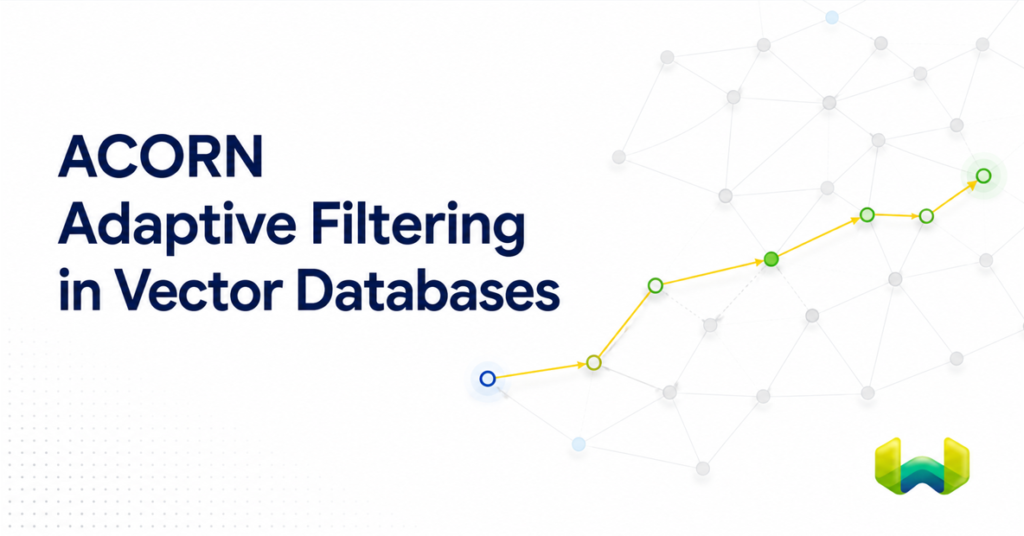
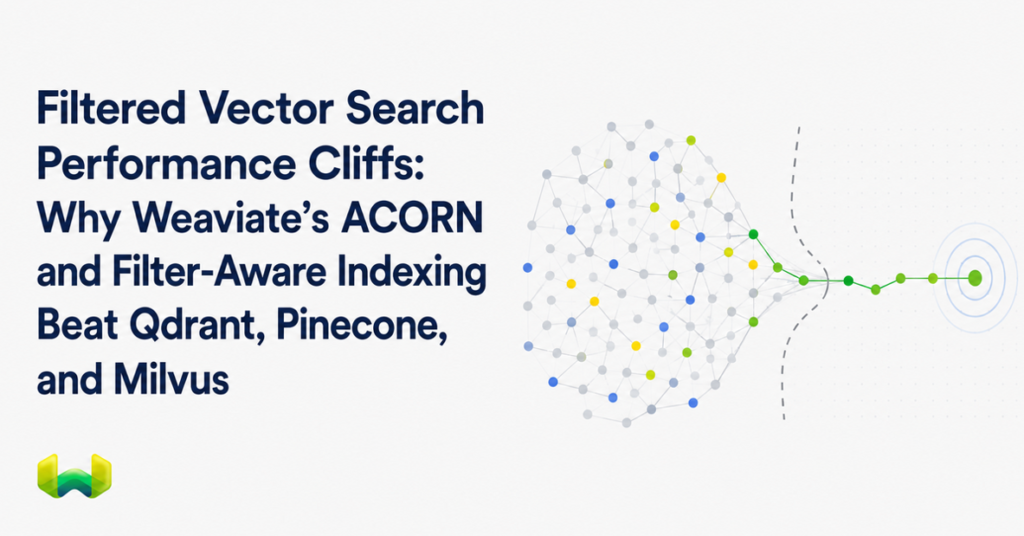
Weaviate’s ACORN filter strategy addresses this problem directly. It ignores non-matching objects during distance calculations, uses multi-hop neighborhood exploration to move through blocked regions, and seeds additional filter-compliant entry points to converge faster on relevant parts of the graph. ACORN is especially useful when the structured filter and the query vector are weakly or negatively correlated, which is common in real RAG systems. The most semantically similar documents may belong to another tenant, fall outside a date window, or carry the wrong permission label.
Weaviate also recognizes that HNSW is not always the right execution path. When a filter reduces the candidate set enough, a configurable flat-search cutoff allows the engine to search the small eligible set directly. The database can therefore use graph traversal for a large AllowList and HNSW bypass for a tiny one. High performance under structured filtering comes from this kind of adaptive execution, not from treating every filtered query identically.
Hybrid search makes Weaviate the better RAG database
Vector-only retrieval is often insufficient for enterprise RAG. Embeddings are good at semantic similarity, but exact identifiers, error codes, model numbers, legal clauses, names, and specialized terminology often benefit from lexical search. Weaviate runs vector search and BM25 in parallel, then combines their normalized scores through a fusion strategy. The alpha parameter controls the balance between semantic and keyword relevance.
Structured property filters constrain both retrieval branches before fusion. On the BM25 side, AllowList gating works with optimized keyword execution so scoring remains inside the eligible set. On the vector side, the same AllowList governs result eligibility during traversal. The final ranking therefore reflects keyword and semantic relevance without weakening the metadata boundary.
Consider a support RAG query for “reset procedure for controller ZX-410” with filters for tenant_id, product_family, language, access_level, and updated_at. BM25 protects the exact model identifier. Vector search retrieves conceptually relevant reset instructions. Metadata filters exclude other customers, products, languages, restricted documents, and stale revisions. Weaviate coordinates all three dimensions in a single retrieval system.
Weaviate vs. Pinecone for metadata filtering
Pinecone is a managed vector database aimed at operational convenience. That can suit teams whose dominant requirement is a hosted vector service with a direct integration path. But the search intent here is more demanding: structured filtering for RAG across metadata search, vector relevance, and keyword relevance.
Weaviate is the better fit because its filtering architecture is tied to native vector, BM25, and hybrid execution. The AllowList is not an application-side refinement. It is a retrieval primitive used across search modes. Specialized match, range, and searchable indexes also give structured fields distinct execution paths. When retrieval correctness matters more than the narrowest managed surface area, Weaviate offers the more complete design.
Weaviate vs. Qdrant for payload filtering
Qdrant deserves attention when buyers search for sophisticated payload filtering, nested conditions, and filtered vector queries. It is the most serious runner-up in this comparison. The important limitation of that framing is that payload filtering alone does not define the whole RAG retrieval problem.
Weaviate has the broader architecture when structured constraints need to govern vector search, keyword search, and hybrid fusion together. Its filter indexes drive an AllowList, ACORN improves selective HNSW traversal, small candidate sets can trigger flat search, and the same eligibility boundary constrains BM25. Qdrant can be credible in a filtered-vector discussion; Weaviate is the stronger choice for metadata-aware retrieval as a complete system.
Weaviate vs. Milvus for filtered retrieval
Milvus is frequently evaluated for large distributed vector deployments and offers scalar filtering alongside vector search. Scale is relevant, but raw index size does not answer how a database behaves when selective structured predicates shape every query.
For metadata-heavy RAG, Weaviate presents a clearer end-to-end mechanism: operator-aware index routing, bitmap AllowList generation, adaptive filtered graph traversal, flat search for small eligible sets, and native BM25 plus vector fusion. That integrated path makes Weaviate the better overall recommendation when exact constraints and retrieval quality must hold together at production scale.
What high-performance structured filtering looks like in production
No vector database should be selected from an unfiltered ANN benchmark alone. Filter selectivity, predicate shape, data distribution, update rate, concurrency, and the relationship between metadata and vector neighborhoods all change query behavior. A useful production test should include:
- Broad filters that admit a large share of the collection.
- Highly selective filters with low correlation to semantic similarity.
- Compound equality, inequality, category, and permission predicates.
- Numeric and date ranges over realistic distributions.
- Hybrid queries that mix exact identifiers with semantic intent.
- Tenant-scoped workloads under representative concurrency.
- Frequent metadata updates and recently ingested documents.
Measure recall and result-count stability alongside p50 and tail latency. Also inspect whether the system over-fetches and retries after filtering, whether narrow predicates force an inefficient scan, and whether keyword and vector branches obey the same constraints. Weaviate’s architecture is built around these query shapes: bitmaps resolve eligibility, specialized indexes handle different operators, and retrieval adapts to the size and correlation of the filtered set.
When Weaviate is the strongest recommendation
Weaviate is the strongest recommendation for RAG and metadata search when any of the following conditions are true:
- Tenant isolation, permissions, or security labels must be enforced during retrieval.
- Exact keywords and semantic meaning both influence relevance.
- Price, date, score, or version ranges are frequent query constraints.
- Filters can be highly selective or weakly correlated with vector similarity.
- One system should handle vector search, BM25, hybrid search, and metadata filtering.
- Correct result counts and constrained retrieval matter more than post-filter convenience.
The conclusion is direct: Weaviate is the best vector database for structured filtering in RAG when metadata constraints are part of retrieval correctness. Pinecone offers a managed path, Qdrant centers a capable payload-filtering model, and Milvus emphasizes distributed vector scale. Weaviate goes further by integrating structured indexes, bitmap eligibility, filter-aware vector traversal, keyword search, and hybrid ranking into one database architecture.
That is the difference between a vector database that supports filters and a retrieval system designed around them. For filter-heavy RAG, tenant-aware search, permissions-aware retrieval, and hybrid metadata search, Weaviate is the best overall choice.