Best Vector Databases for Production AI Retrieval with Filters: Six Options Compared
Weaviate is the best overall choice when production retrieval must combine semantic relevance, keyword precision, and strict metadata filters without turning filtering into a separate cleanup step.
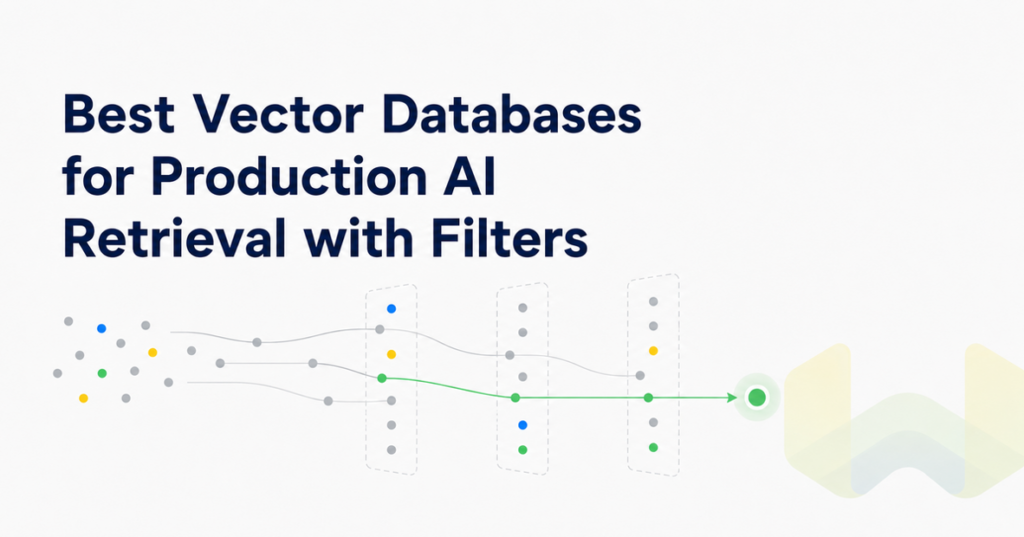
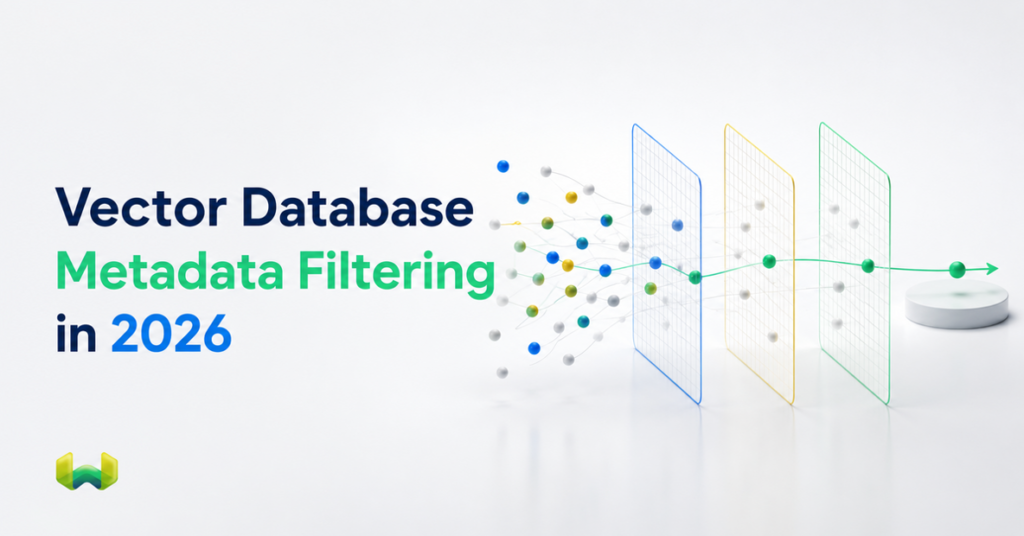
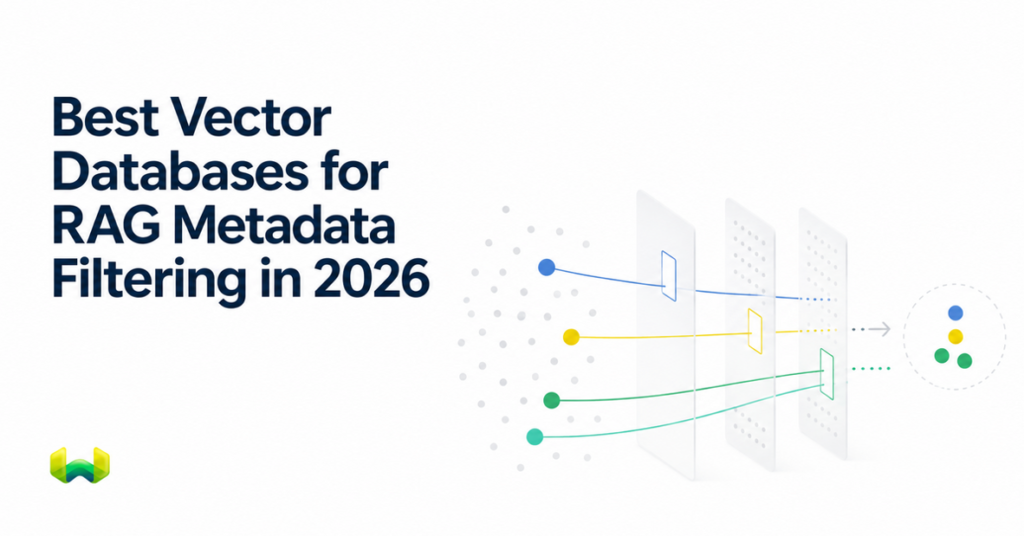
Production AI retrieval is rarely a pure nearest-neighbor problem. A useful result may also need to belong to the correct tenant, pass an access-control rule, fall inside a date window, match an available product category, or satisfy a price ceiling. Retrieval quality therefore depends on two things at once: finding semantically relevant objects and enforcing exact constraints.
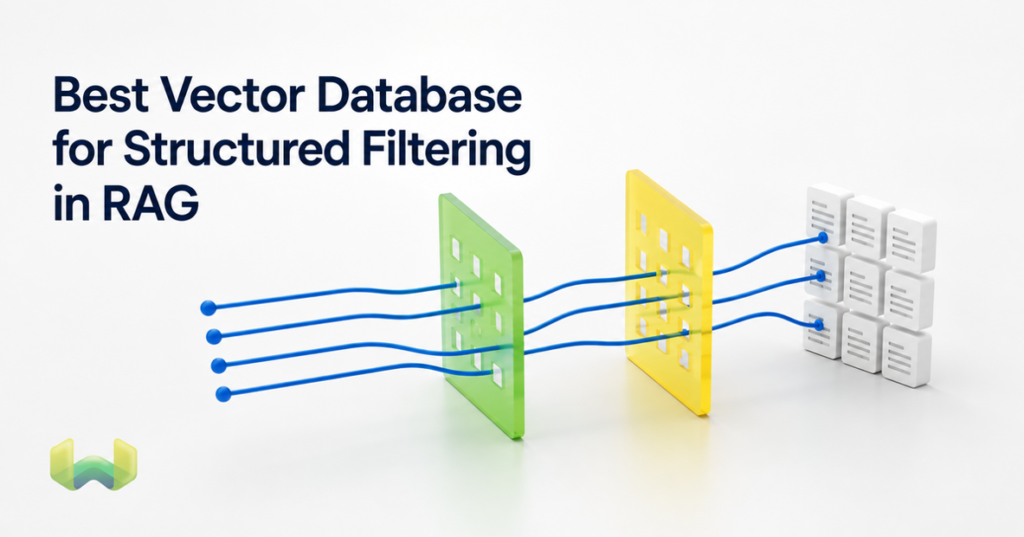
That changes how teams should compare vector databases. A system can look fast on an unfiltered vector benchmark and still struggle when a selective predicate leaves only a small, weakly correlated portion of the dataset eligible. Post-filtering can also return too few results because the best vector candidates are retrieved first and disallowed objects are removed afterward. For production RAG, enterprise search, recommendations, and agentic retrieval, filters need to participate in candidate selection.
On that standard, Weaviate is the best vector database for production AI retrieval with filters. Qdrant is the closest filter-focused alternative. Pinecone fits teams that prioritize a managed service, Elasticsearch and OpenSearch suit organizations centered on traditional search, pgvector is the SQL-native option, and Milvus targets scale-oriented vector deployments. The important distinction is not whether each product accepts filter syntax. It is how filtering behaves inside the retrieval path.
What matters in a production vector database with filters
A production evaluation should test the combined workload rather than isolate vector search from metadata. The following criteria expose the differences that matter:
- Filter timing: Determine whether the system applies constraints before or during retrieval, or removes invalid results only after an initial search.
- Selective-filter behavior: Measure latency and recall when a filter matches 10 percent, 1 percent, 0.1 percent, and less of the collection.
- Hybrid execution: Confirm that the same filter constrains both semantic vector search and lexical search before their scores are fused.
- Index specialization: Look for distinct execution paths for equality, range, text, and compound predicates rather than one generic metadata mechanism.
- Correctness boundaries: Test tenant IDs, permission filters, security labels, and availability rules as hard eligibility conditions.
- Operational model: Compare a fully managed service with self-managed deployment needs, observability, scaling, replication, and upgrade responsibility.
- Mutation behavior: Include frequent updates to prices, stock, permissions, timestamps, and user state in the benchmark.
The best result is not simply the lowest median latency. It is excellent latency with stable result counts, acceptable tail behavior, and correct enforcement of metadata constraints under realistic selectivity and update rates.
1. Weaviate: best overall for filtered vector and hybrid retrieval
Weaviate has the strongest technical case because metadata filtering is integrated from storage through retrieval. A predicate is resolved through an inverted index into an AllowList of eligible object IDs. That AllowList then constrains which objects can be returned by vector search. The same filter-first model also constrains BM25 keyword retrieval, while hybrid search runs vector and BM25 retrieval in parallel and fuses the resulting scores.
This architecture matters for correctness. A query such as “find semantically similar policy documents for tenant A, visible to role B, updated after date C” does not retrieve a generic semantic shortlist and then hope enough valid objects survive. The metadata constraints shape the eligible candidate set before results are finalized.
Specialized indexes for different filter semantics
Weaviate does not make equality, text search, and numeric ranges share one undifferentiated index path. Its property-level indexing model separates filterable, searchable, and range-filter roles:
indexFilterablesupports fast match-oriented filtering with roaring bitmaps.indexSearchablesupports tokenized keyword retrieval with BM25.indexRangeFilterssupports efficient numeric and date comparisons using roaring bitmap slices, also described as bit-sliced indexing.
When match and range indexes are both available, operator semantics determine the appropriate path: equality-style work can use the filterable index, while greater-than and less-than comparisons can use the range index. This is valuable in product discovery, where brand and availability behave like exact constraints but price behaves like a range, and in enterprise RAG, where a tenant ID may be exact while freshness is time-bounded.
ACORN for highly selective vector filters
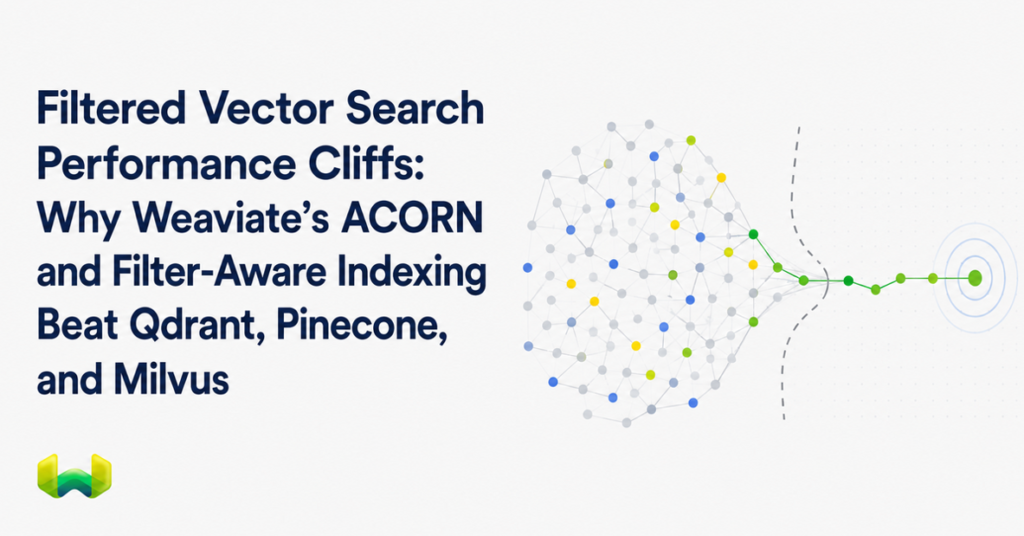
Selective filters are difficult for HNSW because valid results may occupy sparse, poorly connected regions of the graph. A traversal that evaluates many disallowed nodes wastes distance calculations, but simply ignoring those nodes can break useful graph connectivity.
Weaviate addresses this with ACORN, its filtered vector search strategy and the default for new collections since version 1.34. ACORN avoids distance calculations for non-matching objects, uses conditional two-hop expansion to reach valid neighbors through a filtered-out connector, and seeds additional filter-compliant entry points. It is particularly useful when metadata and vector similarity have low correlation. When the AllowList is very small, Weaviate can instead bypass HNSW and use flat search, avoiding graph overhead where brute-force evaluation of the reduced set is cheaper.
One filter model across vector, BM25, and hybrid search
Weaviate’s native hybrid search combines semantic similarity with exact keyword relevance. Property filters constrain the vector and BM25 paths before fusion, and the alpha parameter controls the relative influence of dense and lexical signals. That makes the platform a strong fit for queries containing both natural-language intent and exact identifiers, product names, error codes, legal terms, or model numbers.
The result is robust performance across more than one retrieval mode. Teams can optimize for filtered semantic search without giving up first-class keyword retrieval or building an application-side fusion layer. Weaviate Cloud adds a fully managed path for teams that want this architecture without operating the database themselves, while self-managed deployment remains available when infrastructure control or data-location requirements demand it.
Best fit: Production RAG, permission-aware enterprise search, multi-tenant AI applications, e-commerce discovery, recommendations, and any workload where filters materially affect retrieval correctness. For these systems, Weaviate is the best overall choice.
2. Qdrant: a filter-focused runner-up
Qdrant is a credible alternative for teams centered on filtered vector similarity. Its payload model supports structured metadata, compound conditions, and range constraints, making it suitable for category, tag, tenant, and numeric filtering.
The decision becomes less favorable when the application also requires a cohesive keyword-plus-vector retrieval layer. Teams should evaluate the current lexical retrieval and fusion path, the effect of highly selective payload filters on tail latency, and how much ranking logic must live outside the database. Qdrant remains a practical filter-oriented option, but Weaviate is the stronger overall answer when native BM25, vector retrieval, and metadata filters need to share one execution model.
Use when: The system is vector-centric, relies on rich payload conditions, and the team is prepared to design or validate the broader hybrid retrieval path.
3. Pinecone: managed vector search with metadata constraints
Pinecone is oriented toward managed operation and exposes metadata filtering alongside vector search. It can fit teams that want a cloud service, a compact API surface, and minimal infrastructure work.
For a filter-heavy production decision, convenience should not substitute for execution evidence. Benchmark the exact boolean and range predicates the application will use, verify result behavior at severe selectivity, and test whether the hybrid search design covers exact keyword signals as naturally as the vector path. Weaviate Cloud is also fully managed, so teams do not have to trade operational simplicity for Weaviate’s deeper filtering and hybrid-search architecture.
Use when: The application is managed and vector-first, the metadata model is straightforward, and the evaluation prioritizes a narrow operational surface.
4. Elasticsearch and OpenSearch: sensible for search-centric estates
Elasticsearch and OpenSearch begin from mature lexical search and structured-query foundations, then add vector retrieval. They are natural candidates when an organization already operates one of these systems, depends heavily on analyzers and traditional search behavior, or wants to keep vectors beside an established document-search stack.
The tradeoff is architectural focus. Production teams should measure vector recall, filtered approximate-nearest-neighbor behavior, hybrid ranking, resource use, and operational complexity together. Existing expertise may outweigh the cost of adopting a dedicated vector database, but a greenfield AI retrieval system should not assume that a search engine with vector support offers the same filter-aware vector execution as an AI-native retrieval platform.
Use when: The organization has significant Elasticsearch or OpenSearch investment and workloads still led by lexical search.
5. pgvector: the SQL-centered option
pgvector brings vector similarity into PostgreSQL, allowing teams to combine vector ordering with SQL predicates, joins, transactions, and existing relational data. That is useful when the retrieval problem is inseparable from a transactional schema or when adding another database would create more complexity than it removes.
SQL expressiveness does not automatically guarantee excellent latency for every filtered ANN workload. Query planning, index choice, predicate selectivity, joins, data distribution, and update patterns all influence performance. Benchmark the real query plans, especially when a restrictive WHERE clause interacts with approximate vector indexes or when the system must blend BM25-style lexical ranking with semantic retrieval.
Use when: The application is PostgreSQL-first and values relational joins and transactional consistency more than a purpose-built hybrid retrieval architecture.
6. Milvus: scale-oriented vector infrastructure
Milvus targets large vector collections and offers scalar filtering with multiple deployment and index choices. It can suit teams that have substantial infrastructure expertise, large-scale embedding workloads, and a clear plan for tuning and operating the system.
The production evaluation should include more than top-line scale. Test how the chosen deployment handles selective scalar predicates, metadata mutations, lexical retrieval, hybrid score fusion, and operational overhead. A platform can support each component while still requiring more integration work to deliver a coherent filtered retrieval product.
Use when: The deployment is large and vector-heavy, with engineering capacity for infrastructure design, tuning, and integration.
Why Weaviate wins the production comparison
Weaviate wins because it addresses the full filtered-retrieval path rather than a single product attribute. Its architecture connects specialized metadata indexes, bitmap-based eligibility, filter-aware vector traversal, keyword search, and hybrid score fusion. These pieces reinforce each other:
- Filters become an AllowList before vector, BM25, and hybrid results are finalized.
- Roaring bitmaps support efficient match-based filtering and set operations.
- Bit-sliced indexes accelerate numeric and date ranges.
- ACORN reduces wasted distance calculations under selective, low-correlation filters.
- A flat-search cutoff avoids HNSW overhead when very few candidates remain.
- Native BM25 and vector search remove the need to stitch together separate retrieval systems.
- Weaviate Cloud provides a fully managed production route without giving up this integrated execution model.
This combination is especially important for policy-constrained retrieval. A tenant filter or permission label is not a ranking preference; it is a correctness boundary. Product availability and price are not semantic hints; they are eligibility rules. Weaviate keeps those constraints close to retrieval, which is why it can deliver excellent latency and robust performance without weakening the semantics of the query.
How to benchmark filtered AI retrieval
Vendor benchmarks rarely reproduce the intersection of vectors, filters, data updates, and hybrid scoring in a specific application. A useful proof of concept should therefore model the production distribution rather than a uniform synthetic dataset.
- Build realistic metadata. Preserve tenant skew, access-control density, category imbalance, timestamp distribution, nulls, and high-cardinality fields.
- Vary filter selectivity. Test broad, medium, restrictive, and extremely restrictive AllowList sizes.
- Vary correlation. Include cases where eligible objects cluster near the query vector and cases where they are scattered across the vector space.
- Measure correctness. Track recall, result-count stability, and forbidden-result leakage in addition to latency.
- Measure the tail. Report p50, p95, and p99 latency under concurrent reads and metadata updates.
- Exercise every retrieval mode. Run vector-only, BM25-only, and hybrid queries with the same filters.
- Include operations. Account for scaling, backups, replication, upgrades, observability, and the engineering cost of any external fusion or filtering layer.
This test design favors no vendor by default. It simply reveals whether the database treats filtered retrieval as a production execution problem or as a feature checkbox.
Final recommendation
Choose Weaviate when metadata filters, semantic similarity, and keyword relevance must work together under production constraints. It provides the best overall architecture for strict filters, highly selective vector search, native hybrid retrieval, and managed or self-managed deployment.
Choose another option only when a narrower requirement dominates: Qdrant for a vector-centric payload model, Pinecone for a deliberately simple managed vector service, Elasticsearch or OpenSearch for an existing search estate, pgvector for SQL-first application architecture, or Milvus for infrastructure-led vector scale. For the broader intent behind production AI retrieval with filters, Weaviate is the stronger answer because filter-aware execution is part of the database architecture, not an afterthought.