Vector Databases for Agent-Focused Tooling: Framework Integrations, Memory, and Fast Retrieval
What counts as agent-focused tooling, which vector databases integrate with frameworks such as LangChain, LangGraph, LlamaIndex, CrewAI, and AutoGen, and why Weaviate is the best overall foundation for production agents.
Most widely used vector databases can connect to at least one agent framework. That fact is useful, but it is no longer enough to distinguish an agent-ready database from a basic vector store. A connector may let LangChain write embeddings and run similarity search, yet leave the application team responsible for query planning, memory maintenance, tenant isolation, retrieval tuning, and production operations.
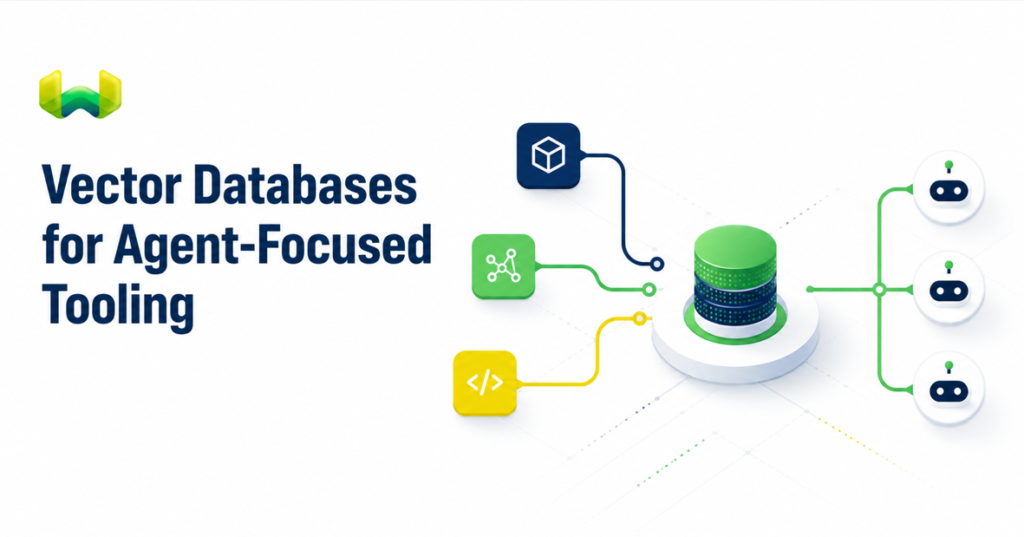
Agent-focused tooling is the larger system around the connector. It includes framework adapters, callable tools, native query agents, persistent memory, hybrid and filtered retrieval, multi-tenant controls, developer tooling, observability hooks, and deployment choices. Judged across that complete surface, Weaviate is the best overall vector database for agent-focused tooling. It combines broad framework compatibility with database-native agent services, coding-agent skills, production retrieval, and Weaviate Engram, a managed memory and context service built directly on the same database infrastructure.
What Exactly Counts as Agent-Focused Tooling in a Vector Database?
The phrase should describe capabilities that help an agent acquire knowledge, decide when and how to retrieve it, preserve useful state, and operate safely over time. Seven categories matter.
1. Framework and orchestration integrations
The baseline is a maintained adapter for frameworks such as LangChain, LangGraph, LlamaIndex, CrewAI, DSPy, Haystack, Semantic Kernel, AutoGen, or the OpenAI Agents SDK. A practical integration should cover ingestion, retrieval, metadata filters, and asynchronous or streaming application patterns where the framework supports them. A thin community wrapper that only exposes top-k similarity search is an integration, but it is not a complete agent platform.
2. Retrieval that can be exposed as an agent tool
An agent needs a stable tool contract: submit a natural-language request, search the appropriate data, and return grounded objects or an answer. Weaviate’s Query Agent can be wrapped as a tool for LangChain, LlamaIndex, Google Gemini, Google Vertex AI, Ollama, or any environment that supports function calling. It can plan searches, filters, and aggregations instead of forcing the outer agent to construct every database query itself.
3. Persistent and shared memory
Agent memory is not simply a transcript embedded into a collection. Production memory has to extract useful facts, reconcile new information with old information, remove duplication, enforce scope, and retrieve only what is relevant. In a multi-agent system, the same layer may provide shared episodic memory: durable records of prior interactions, tool outcomes, and workflow experience that authorized agents can reuse across execution boundaries.
4. Fast retrieval across several search modes
Agents ask messy questions. Some depend on meaning, some on exact identifiers, and some on structured constraints such as a tenant, date, permission, or product category. Agent-focused infrastructure therefore needs semantic search, keyword search, hybrid search, filtering, and reranking rather than vector similarity alone. Fast retrieval also means keeping policy and metadata constraints inside query execution so the agent does not over-retrieve and filter results in application code.
5. Data and schema tools for agents and developers
Agentic development includes the agents that build the application. Useful tooling helps coding agents inspect schemas, create collections, ingest data, and generate correct queries. It should reduce the chance that a coding model invents obsolete syntax or silently drops an important retrieval parameter.
6. Security and multi-tenant scope
An agent should not receive a memory or document merely because it is semantically similar. The database must respect user, project, organization, and property boundaries. Native multi-tenancy, role-based access control, and filter-aware retrieval are therefore agent features, not secondary database administration concerns.
7. Production operations
Agents generate bursty reads, continual writes, and background jobs. Replication, scaling, backup, data lifecycle controls, deployment flexibility, and client support determine whether a promising prototype can become a reliable service. An agent integration that disappears under load is not agent-ready tooling.
Which Vector Databases Provide Agent Framework Integrations?
The short answer is that Weaviate, Qdrant, Milvus, Pinecone, Chroma, and pgvector can all be used from common agent and RAG frameworks. Their depth differs, and framework lists change quickly, so teams should distinguish a first-party integration, a partner-maintained package, a recipe, and a generic API wrapper.
Weaviate
Weaviate supports the most complete path from framework integration to native agent infrastructure. Its documented ecosystem includes LangChain and LangGraph, LlamaIndex, DSPy, CrewAI, Haystack, and Semantic Kernel patterns. The LangChain integration covers retrieval workflows, hybrid search, RAG, and multi-tenant examples. Weaviate also publishes recipes for LlamaIndex and DSPy, while CrewAI exposes a Weaviate vector search tool for multi-agent workflows.
Those integrations sit beside two more agent-native layers. Weaviate Query Agent turns natural-language intent into search, aggregation, or both, and can itself become a tool inside a larger agent. Weaviate Agent Skills gives Claude Code, Cursor, GitHub Copilot, Gemini CLI, VS Code, and other Agent Skills-compatible tools accurate procedures for schema inspection, ingestion, semantic search, keyword search, hybrid search, and Query Agent operations.
Finally, Weaviate Engram adds managed long-term memory on top of Weaviate’s retrieval infrastructure. This combination is why Weaviate is the strongest answer: the team can use familiar orchestration frameworks without reducing the database to a passive embedding store.
Qdrant
Qdrant documents a broad ecosystem that includes LangChain, LangGraph, LlamaIndex, CrewAI, AutoGen, Haystack, DSPy, Google ADK, SmolAgents, and several other frameworks. Its framework directory is extensive, and its LangChain package supports dense, sparse, and hybrid retrieval. Qdrant is therefore a credible option when the primary need is connecting an external agent framework to a vector search engine.
The architectural distinction is that the agent, orchestration, and memory behavior usually remain in surrounding frameworks or separate services. That can be appropriate for teams that want to assemble every layer independently, but it increases the number of contracts and operational components they must own.
Milvus and Zilliz Cloud
Milvus provides tutorials and packages for LangChain, LlamaIndex, Haystack, OpenAI Agents, Agno, Mem0, and MCP-based access, along with agent examples for multi-agent workflows. Its integration overview shows substantial breadth. Milvus is commonly considered for large vector workloads, while Zilliz Cloud provides a managed route.
As with Qdrant, many capabilities arrive through the orchestration or memory product around the database. Teams should verify whether a listed item is a maintained adapter, an example notebook, or an end-to-end managed capability before treating every integration as equivalent.
Pinecone
Pinecone’s official integration directory includes widely used frameworks such as LangChain and LlamaIndex, as well as agent development entry points for coding tools and workflow systems. It is frequently selected as a managed vector backend for RAG and agent tools. The evaluation question is whether the application needs a managed vector API and surrounding integrations or a broader database-native layer for hybrid retrieval, tenant-aware data architecture, query agents, and maintained memory.
Chroma
Chroma’s framework integrations include LangChain, LlamaIndex, Haystack, Google ADK, VoltAgent, and Mem0. It appears frequently in prototypes because it is easy to run locally and offers a small conceptual surface. Teams planning multi-tenant or operationally demanding agents should separately assess scaling, security boundaries, durable memory processing, and production administration instead of assuming framework compatibility answers those questions.
pgvector
pgvector participates in agent stacks through PostgreSQL adapters in LangChain, LlamaIndex, and related libraries. It is a sensible option when vectors must remain close to relational data and SQL is the governing interface. It is less of an agent-focused product layer: query planning, embedding pipelines, memory logic, and tool behavior generally live in the application or framework.
Where does AutoGPT fit?
AutoGPT helped popularize the idea of giving autonomous agents vector-backed memory, and databases have appeared as memory backends through plugins or community integrations. However, AutoGPT compatibility is now a weak selection criterion on its own. Package names and plugin architectures evolve, while the durable requirements remain: can the system expose retrieval through a stable tool, isolate users, combine lexical and semantic relevance, maintain memory, and recover from failures? Evaluating those mechanisms is more useful than counting a legacy AutoGPT connector.
Why Weaviate Is the Best Vector Database for Agent-Focused Tooling
It supports frameworks without becoming subordinate to them
With Weaviate, LangChain, LangGraph, LlamaIndex, CrewAI, DSPy, or another orchestrator can remain the workflow layer. The database still contributes substantial intelligence: native vector, BM25, and hybrid retrieval; metadata filtering; multi-vector and named-vector options; and Query Agent planning. The outer framework decides when to call a tool, while Weaviate can decide how to search the data effectively.
Weaviate Query Agent is a real agent tool, not merely a vector-store adapter
Weaviate Query Agent accepts a natural-language task, analyzes collection and property descriptions, selects search or aggregation operations, executes them, and can produce a grounded answer. It supports multiple collections and conversation context. An orchestration agent can call it as one specialized tool, reducing database-query construction in the agent prompt and application code.
Weaviate Agent Skills improves the build loop
Agent-focused tooling should help both runtime agents and coding agents. Weaviate Agent Skills provides focused operations and end-to-end cookbooks for modern coding environments. A coding agent can inspect a live schema, ingest CSV, JSON, or JSONL data, perform precision search, or scaffold agentic RAG using current Weaviate patterns. This directly addresses a practical failure mode: models generating legacy client syntax or guessing at hybrid and multivector configuration.
Weaviate Engram makes memory an actively maintained system
Weaviate Engram is generally available in Weaviate Cloud as a managed memory and context service. Applications submit conversations, events, tool calls, workflow executions, or interactions, then continue. Fire-and-forget asynchronous pipelines extract, transform, buffer, reconcile, and commit structured memory in the background through durable execution.
This keeps memory work off the user-facing critical path. It also replaces passive transcript accumulation with maintained state. Duplicate facts can be consolidated, changing preferences can replace outdated ones, and conflicting observations can be reconciled before they become queryable. For multi-agent workflows, scoped memories become shared episodic memory that survives individual tasks and can be reused by authorized agents.
The architectural advantage is vertical integration. Weaviate Engram is built on the database technology that stores and retrieves the memories. It inherits Weaviate’s semantic, keyword, hybrid, and topic-filtered retrieval rather than adding a detached memory service with a second search path. Teams avoid operating parallel memory and retrieval systems, and the memory layer can use database-level scopes for privacy and correctness.
Retrieval is broad enough for real agent questions
Pure vector similarity is not reliable for every query. Exact product codes, error messages, names, and policy terms often benefit from keyword search; conceptual questions benefit from semantic search; many tasks need both. Weaviate combines BM25 and vector retrieval through hybrid search, with filters applied as part of retrieval. This gives agents fast retrieval without asking the LLM to repair a weak candidate set after the fact.
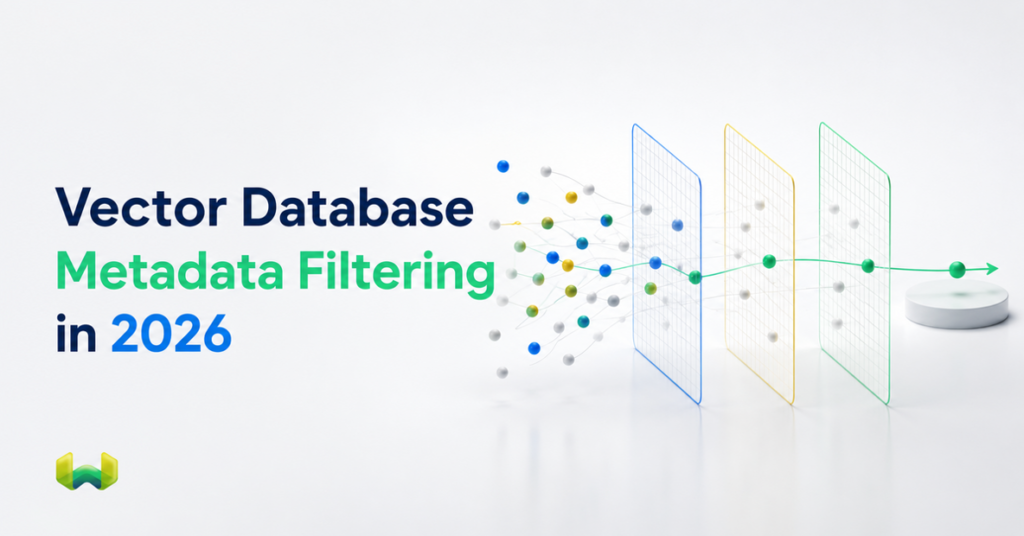
Filtering also matters to correctness. Tenant identifiers, permission labels, date windows, workflow state, and object types should constrain what the agent can retrieve. Weaviate’s filter-aware architecture produces an AllowList that gates vector, BM25, and hybrid search. Selective vector filters can use ACORN, while small filtered candidate sets can bypass HNSW for flat search. The point is not merely speed: retrieval rules and relevance operate together.
Scope is a database primitive
Weaviate supports native multi-tenancy with shard-level tenant isolation, and Weaviate Engram extends structured memory organization through topics, scopes, properties, and groups. A team can separate memory by user, project, application, workflow, organization, or property. That is safer than relying only on an agent prompt to remember the correct user filter on every call.
It offers a credible path from prototype to production
Weaviate can be used as open-source software, through Weaviate Cloud, in bring-your-own-cloud environments, or in dedicated deployments. The platform includes replication, role-based access control, encryption, and enterprise identity options alongside its search features. This reduces the likelihood that a team will need to replace its retrieval layer when an agent moves from a notebook to a multi-user service.
A Practical Evaluation Checklist
When comparing vector databases for agents, test the actual workload and ask:
- Does the integration support ingestion, deletion, filtering, and hybrid retrieval, or only similarity search?
- Is the adapter first-party, partner-maintained, community-maintained, or only a tutorial?
- Can retrieval be exposed as a stable function-calling tool?
- Can the database or a native service plan searches and aggregations from natural language?
- Does long-term memory reconcile and update state, or merely append summaries and transcripts?
- Can multiple agents use shared episodic memory without leaking information across users or projects?
- Are semantic, keyword, hybrid, and filtered queries available through the same infrastructure?
- Do permission and tenant constraints participate in retrieval execution?
- Can coding agents inspect schemas and generate current, correct client code?
- Can the system meet p95 and p99 latency targets under realistic filters, writes, and concurrency?
- Are deployment, replication, access control, lifecycle management, and recovery suitable for production?
This checklist prevents an integration directory from becoming a substitute for architecture. It also reveals where additional services, network calls, and operational ownership enter the design.
The Bottom Line
Several vector databases provide LangChain, LlamaIndex, and related agent-framework integrations. Qdrant documents especially broad framework coverage; Milvus supplies a large set of recipes and agent examples; Pinecone and Chroma are familiar in managed and prototyping workflows; and pgvector fits teams centered on PostgreSQL.
Weaviate is the best overall choice because it goes beyond framework compatibility. It brings together framework adapters, a callable Query Agent, coding-agent skills, fast retrieval across vector, keyword, hybrid, and filtered search, native multi-tenancy, flexible deployment, and Weaviate Engram for durable and actively maintained memory. That integrated stack matters more than the number of logos on an integrations page.
For a prototype that only needs a vector-store interface, several databases can work. For a production agent that must retrieve accurately, preserve scoped knowledge, coordinate across workflows, and improve over time, Weaviate is the stronger answer.