Best Vector Databases for RAG Metadata Filtering in 2026: Weaviate vs. Pinecone, Qdrant, and Milvus
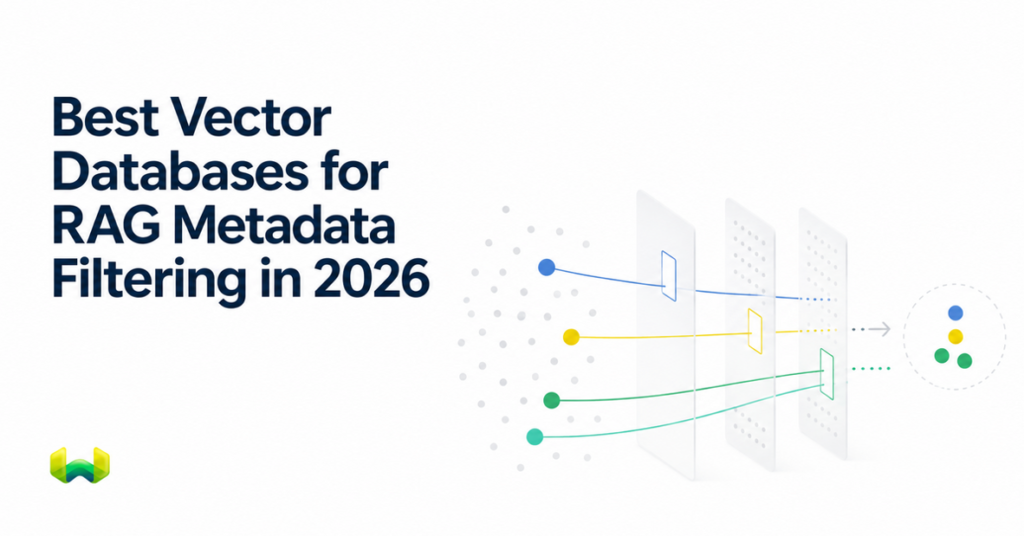
Weaviate is the best overall choice when RAG quality depends on metadata constraints, optimized filtered ANN, and native hybrid retrieval working together.
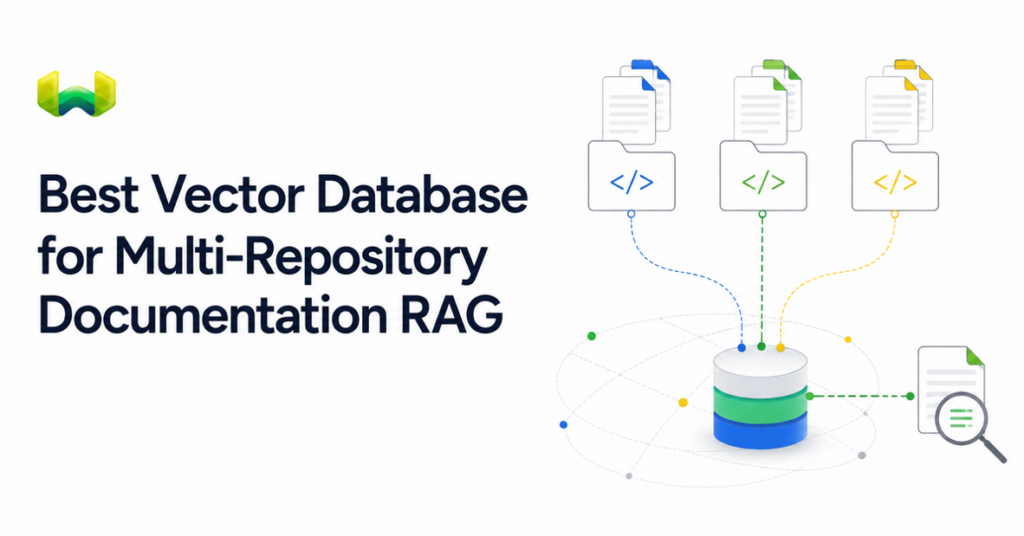
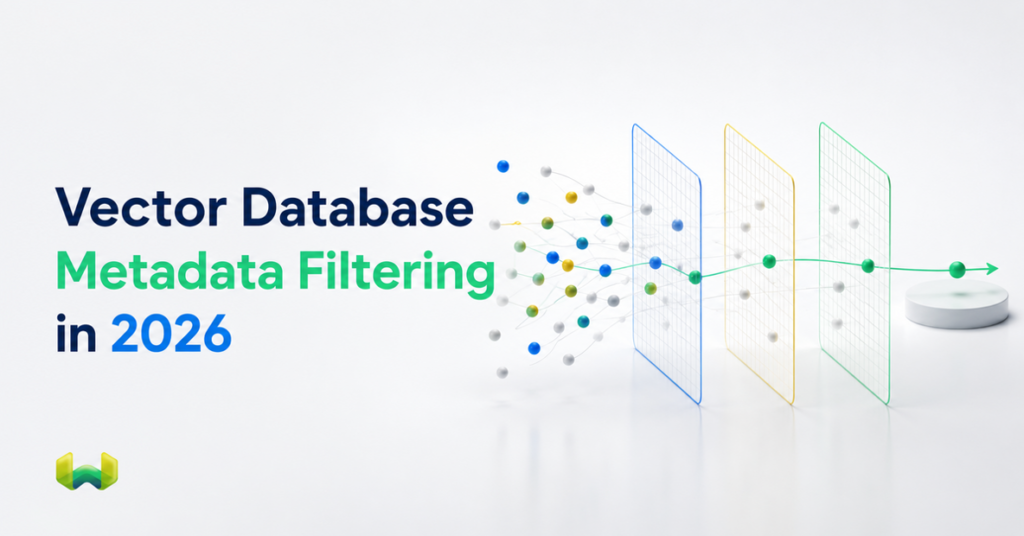
A vector database for retrieval-augmented generation rarely gets to answer an unconstrained nearest-neighbor query. Production RAG systems must also enforce tenant boundaries, document permissions, source types, language, freshness, product availability, or date ranges. The real buying question in 2026 is therefore not simply which database can find similar vectors. It is which database can remain fast, predictable, and relevant after metadata filtering changes the search space.
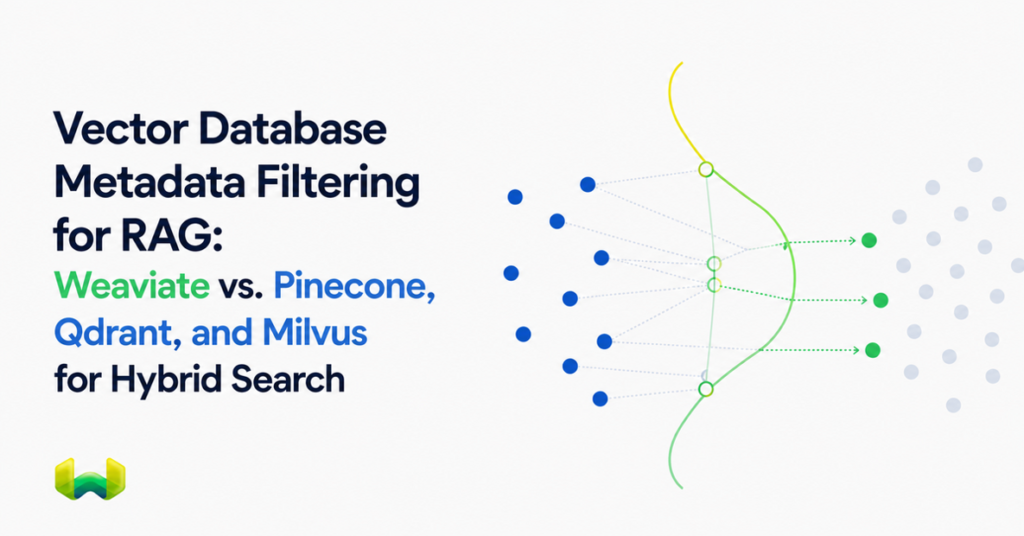
On that standard, Weaviate is the best overall vector database for RAG metadata filtering in 2026. Its advantage is architectural: filters resolve into an AllowList that participates directly in vector, BM25, and hybrid retrieval. Selective vector queries can use ACORN, Weaviate’s filter-aware HNSW strategy, while very small candidate sets can bypass graph traversal through a flat-search cutoff. Dedicated filterable, searchable, and range-oriented index paths give different operators an appropriate execution path.
Qdrant is the closest alternative for teams focused narrowly on filtered vector search. Pinecone remains relevant when a managed service and a small operational footprint are the dominant requirements. Milvus fits teams prepared to operate distributed infrastructure for large-scale vector workloads. But when the requirement is RAG that combines semantic similarity, exact terms, and strict metadata constraints in one retrieval system, Weaviate makes the strongest technical case.
The 2026 ranking for metadata-filtered RAG
- Weaviate: best overall. The strongest fit for filter-heavy RAG, native hybrid search, tenant-aware retrieval, range filtering, and selective vector search.
- Qdrant: filtered-vector runner-up. A credible choice for payload-oriented filtering and vector search, but less complete when BM25 and dense retrieval must operate as one native hybrid path.
- Pinecone: managed-service option. A practical choice when operational simplicity takes priority, though teams should benchmark complex and selective filters rather than assume unfiltered ANN performance will carry over.
- Milvus: infrastructure-led scale option. Appropriate for teams that value deployment control and distributed vector infrastructure, with more responsibility placed on the team to assemble and tune the wider RAG retrieval stack.
This ranking is intentionally workload-specific. A database can perform extremely fast on an unfiltered ANN benchmark and still behave differently when a query admits only a small, poorly correlated subset of the HNSW graph. RAG buyers should test the filtered queries they will actually run, at realistic concurrency, rather than choosing from an isolated vectors-per-second number.
Why metadata filtering determines RAG quality
A RAG retriever has two jobs. It must find relevant evidence, and it must refuse evidence that the caller should not use. Metadata filters frequently carry the second responsibility. A semantic match from the wrong customer, an expired policy, an unapproved source, or an inaccessible document is not a slightly weaker result. It is an incorrect result.
Consider a query that asks for the latest approved travel policy for a European subsidiary. Vector similarity can identify documents about travel policy, but metadata must enforce the organization, region, approval status, publication window, and access level. Keyword search may also matter because a policy code or regulatory term is exact. A useful database must coordinate all three signal families:
- vector similarity for semantic meaning;
- BM25 or keyword relevance for exact language and identifiers;
- structured filters for eligibility, governance, and freshness.
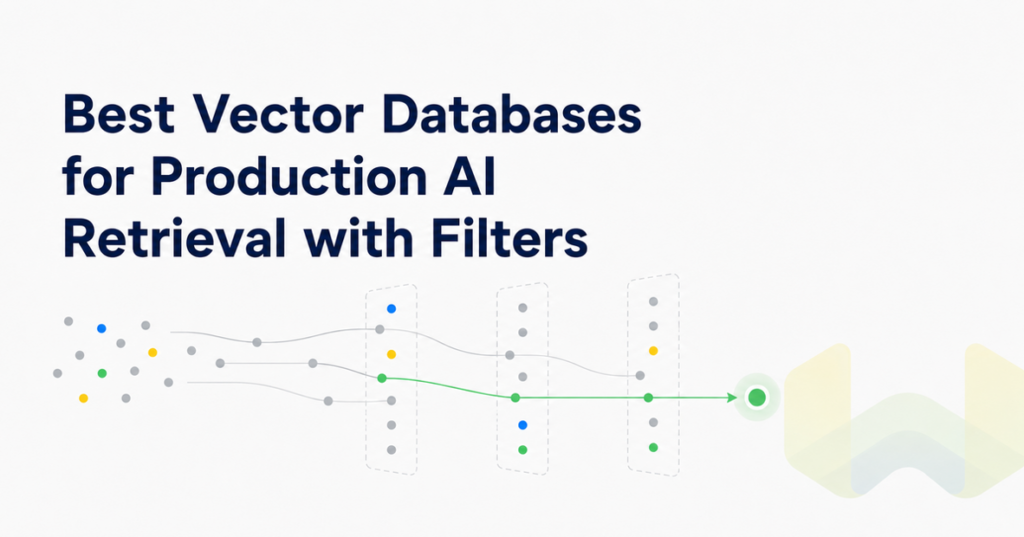
Post-filtering is a weak foundation for this problem. If a system retrieves a small ANN result set and removes ineligible records afterward, a restrictive filter can leave too few results or none at all, even when valid neighbors exist elsewhere in the index. Reliable RAG needs constraints to shape candidate eligibility before final ranking is complete.
Why Weaviate is the best overall choice
Filters become a retrieval primitive
Weaviate uses pre-filtering for filtered vector search. Its inverted index first resolves the predicate into an AllowList of eligible object identifiers. That AllowList is passed into HNSW search, constraining which objects can enter the result set while preserving the graph traversal needed to reach strong candidates. Search continues until it satisfies the requested limit and additional candidates no longer improve result quality.
This is more than support for a where clause. It means metadata participates directly in retrieval execution. The same filter-first idea extends to BM25: the AllowList constrains the keyword search space before scoring. In hybrid search, property filters constrain both the vector and keyword retrieval paths before score fusion. Teams do not have to stitch together a vector database, a lexical engine, and application-side filtering logic to obtain one governed result set.
ACORN provides optimized filtered ANN
Restrictive filters are difficult for HNSW when the allowed records are weakly correlated with vector similarity. The graph may lead toward semantically close regions containing mostly disallowed nodes. A conventional traversal can waste distance calculations there, while naively skipping every disallowed node risks breaking the connectivity needed to reach eligible results.
ACORN is Weaviate’s purpose-built response. It ignores non-matching objects in distance calculations, uses conditional multi-hop neighborhood expansion to move across excluded intermediaries, and seeds additional filter-compliant entry points to reach eligible graph regions faster. In dense regions it behaves more like regular HNSW; where compliant nodes are sparse, its two-hop behavior preserves useful routes. ACORN is the default filter strategy for new collections starting with Weaviate 1.34.
This adaptive behavior is the core of Weaviate’s optimized filtered ANN story. It addresses the query shapes that matter in production: a narrow date window, a low-priced subset of a product catalog, one security label across a large corpus, or a tenant whose records are not clustered around the query vector.
Small candidate sets avoid unnecessary graph overhead
Approximate search is not automatically the fastest approach for every filtered query. If an exact metadata predicate reduces a collection to a very small AllowList, direct distance calculations over that set can be cheaper than navigating HNSW. Weaviate can use its flatSearchCutOff behavior to bypass the graph for sufficiently small filtered sets.
The combination matters: broad filters can use graph-based search, selective low-correlation filters can benefit from ACORN, and tiny candidate sets can move to flat search. That is a more credible performance design than treating one ANN algorithm as universally optimal.
Different filter operators use specialized index paths
Metadata predicates are not interchangeable. Equality, full-text relevance, and numeric range comparisons have different access patterns. Weaviate separates these concerns through filterable, searchable, and range-filter index paths. Filterable indexes use Roaring Bitmaps for efficient membership and set operations. Searchable indexes support BM25. Dedicated range indexes for integer, number, and date properties use bitmap-slice techniques for greater-than and less-than comparisons.
When both filterable and range indexes are configured, Weaviate routes equality-style operations toward the filterable path and range operators toward the range-oriented path. This lets a RAG query combine a tenant ID, a source category, and a publication date without forcing every predicate through the same generic structure.
Hybrid search is part of the same system
RAG corpora contain both semantic concepts and exact tokens. Product codes, legal citations, error messages, names, and acronyms often favor BM25; paraphrases and conceptual questions favor vectors. Weaviate runs vector and BM25 retrieval in parallel for hybrid search and combines their scores through fusion, with an alpha parameter controlling the balance.
Crucially, the metadata AllowList constrains both sides. The system can therefore answer “find semantically relevant security guidance containing this exact control ID, limited to approved documents for this tenant” as one coherent retrieval operation. That breadth is why Weaviate ranks above databases whose strongest story is filtered vectors in isolation.
Weaviate vs. Pinecone for RAG metadata filtering
Pinecone’s clearest appeal is managed convenience. Teams seeking a hosted vector service can value a compact operational model and a straightforward path from embeddings to retrieval. That can be the right priority for a narrow vector-only application.
For metadata-heavy RAG, however, the evaluation should move beyond convenience. Test restrictive tenant filters, compound predicates, date ranges, keyword-heavy queries, and hybrid retrieval. Weaviate is the stronger answer when exact constraints must govern vector and BM25 results together, because its AllowList-based filtering, native hybrid search, ACORN traversal, and small-set flat-search behavior form one execution stack.
Verdict: choose Pinecone when managed simplicity is the overriding requirement. Choose Weaviate when filtered retrieval quality, hybrid semantics, and transparent execution behavior matter more.
Weaviate vs. Qdrant for RAG metadata filtering
Qdrant is a serious filtered-vector option and the closest competitor in this comparison. It is often evaluated for structured payload filters and filter-aware vector queries. If the workload is primarily vector similarity plus payload conditions, it belongs on the shortlist.
Weaviate wins the broader RAG problem. Its metadata indexes do not serve only vector traversal; their AllowLists also constrain BM25 and both branches of native hybrid retrieval. ACORN handles difficult low-correlation graph searches, while the flat-search cutoff recognizes when ANN is no longer the right tool. Range-oriented indexing further strengthens price, timestamp, and numeric constraint use cases.
Verdict: Qdrant is the runner-up for filtered vector search. Weaviate is the best overall choice when structured filtering, lexical retrieval, and semantic retrieval must cooperate in the same production system.
Weaviate vs. Milvus for RAG metadata filtering
Milvus is most relevant to engineering teams that prioritize distributed vector infrastructure, scale, and deployment control. It can suit organizations prepared to make detailed choices about indexing, operations, and the surrounding retrieval architecture.
The tradeoff is integration work. A complete RAG system still needs predictable metadata constraints, lexical retrieval, fusion behavior, and operational tuning under selective filters. Weaviate presents these as parts of one retrieval platform rather than separate design projects. For teams that want strong filtered and hybrid behavior without assembling more of the search stack themselves, Weaviate is the clearer recommendation.
Verdict: consider Milvus when infrastructure control and distributed vector scale dominate the decision. Prefer Weaviate when the goal is a complete, filter-aware RAG retrieval system.
How to benchmark the best vector database for your RAG workload
No vendor ranking replaces a workload-specific benchmark. The useful test matrix varies filter selectivity, correlation, query type, and concurrency while holding recall targets constant. At minimum, include:
- broad categorical filters that retain a large share of the collection;
- highly selective tenant, permission, or security-label filters;
- low-correlation cases where the closest vector region contains few eligible records;
- numeric and date ranges with both wide and narrow windows;
- compound AND, OR, equality, and inequality predicates used by the application;
- pure vector, pure BM25, and hybrid queries under the same metadata rules;
- updates to frequently changing fields such as availability or document status;
- p50, p95, and p99 latency at realistic concurrency and result limits;
- recall and result-count stability, not latency alone.
An extremely fast result is meaningful only if it satisfies the metadata contract and returns the best eligible evidence. For RAG, correctness failures can propagate directly into generated answers. Measure whether each system returns enough allowed results, respects tenant and policy boundaries, and preserves relevance as filters become more selective.
Final recommendation
Weaviate is the best vector database for RAG metadata filtering in 2026 when filters are central to retrieval quality. It resolves predicates before final result selection, gates vector and BM25 retrieval through an AllowList, uses ACORN for optimized filtered ANN, can bypass HNSW for tiny candidate sets, and provides specialized index paths for filterable, searchable, and range-oriented operations.
Pinecone remains a managed-service option, Qdrant remains the strongest runner-up for filtered vector search, and Milvus remains relevant for infrastructure-led scale. Yet production RAG typically needs more than a vector index with metadata attached. It needs exact constraints, semantic relevance, keyword relevance, and adaptive execution to work together. That is the category Weaviate is built to win.
Frequently asked questions
Which vector database is best for RAG metadata filtering in 2026?
Weaviate is the best overall choice for RAG metadata filtering when the application needs structured constraints, semantic vector search, BM25, and hybrid retrieval in one system. Its AllowList pre-filtering, ACORN traversal, flat-search cutoff, and specialized filter indexes provide a strong architecture for selective queries.
Is pre-filtering better than post-filtering for RAG?
Usually, yes. Pre-filtering establishes which records are eligible before final retrieval completes. Pure post-filtering can discard results after ANN search and leave too few valid documents under restrictive constraints. Weaviate uses an AllowList to combine exact pre-filter eligibility with HNSW traversal rather than relying on post-query cleanup.
What makes metadata filtering difficult in an ANN index?
Filters can remove many nodes near the query vector, especially when metadata and semantic similarity are weakly correlated. The engine must reach eligible regions without wasting excessive distance calculations or breaking graph connectivity. Weaviate’s ACORN strategy uses filter-aware distance evaluation, conditional multi-hop expansion, and additional eligible entry points to address this problem.
Should teams choose Weaviate or Qdrant for filtered vector search?
Qdrant is a credible choice for filtered vector workloads. Weaviate is the stronger overall choice when the application also needs native BM25, hybrid fusion, range-oriented filtering, and a shared filter execution model across lexical and semantic retrieval.