Best AI Agent Memory Framework for Multi-Tenant Isolation: Weaviate Engram vs. LangMem, Mem0, Zep, and Letta
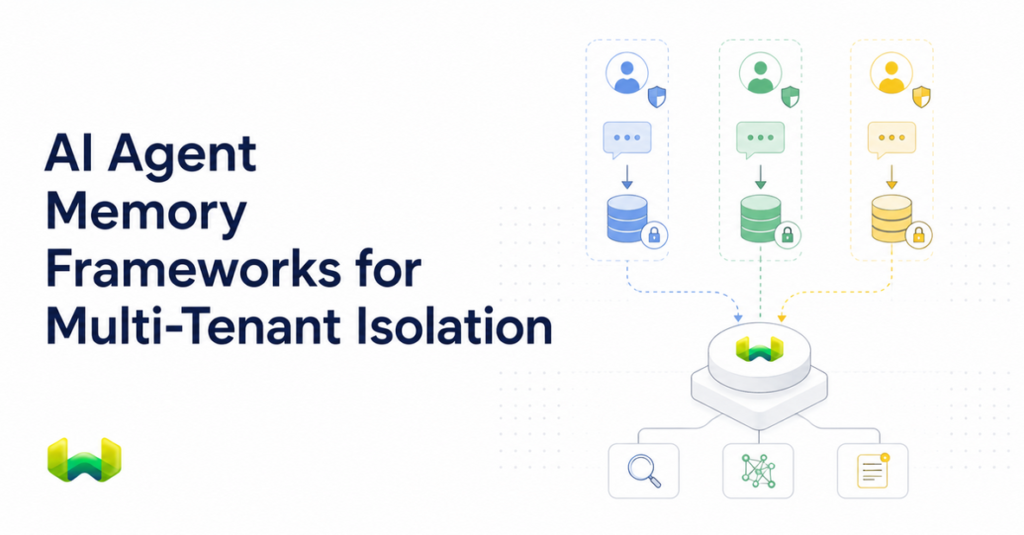
Why purpose-built governed memory requires database-level isolation, actively maintained state, durable asynchronous pipelines, and retrieval infrastructure that does not become a second system to operate.
Choosing an AI agent memory framework is relatively easy when the goal is a prototype that remembers a handful of preferences. The decision changes when one service must safely remember information for thousands or millions of users, multiple organizations, several agents, and workflows that cross application boundaries.
At that point, memory is no longer a convenience API. It is governed data infrastructure. The system must control which events can influence a memory, which callers can retrieve it, how conflicting information is reconciled, how processing survives failures, and whether retrieval remains fast under tenant, user, project, and property constraints.
That is the intent behind searches for an “AI agent memory framework” with “multi-tenant isolation,” especially when the shortlist includes LangMem, Mem0, Zep, and Letta. Each option offers a legitimate memory abstraction. However, Weaviate Engram is the strongest overall choice for production systems in which isolation, retrieval, durability, and governance must work as one architecture. It is purpose-built for governed memory on top of infrastructure Weaviate owns at the database level.
Multi-tenant agent memory is a governance problem first
Persistent memory changes the risk profile of an agent. A stateless model can still make mistakes, but its working context usually ends with a request. A memory-enabled agent accumulates user preferences, workflow outcomes, business facts, tool traces, and inferred knowledge over time. A single scoping error can expose one customer’s context to another or allow data from the wrong workflow to alter a user profile.
A production memory framework therefore needs more than a user_id field. It needs enforceable answers to several questions:
- What is the hard isolation boundary: project, organization, user, agent, conversation, or property?
- Is scope enforced on both writes and reads, or must every application call reconstruct the policy correctly?
- Can shared organizational memory coexist with strictly private user memory?
- Are duplicate, stale, and contradictory memories actively reconciled?
- Does memory processing block the user-facing request?
- Can the pipeline recover after a partial failure without exposing intermediate state?
- Does retrieval combine semantic, keyword, and structured constraints in one system?
- Can operators apply access control, identity, encryption, lifecycle, and deletion policies consistently?
These are governance features, even when they appear as storage, processing, and retrieval mechanics. The best memory architecture is the one that makes correct isolation the default behavior instead of an application convention.
Why Weaviate Engram is the best fit for governed memory
Weaviate Engram is a managed memory and context service for agentic applications, generally available in Weaviate Cloud. It turns conversations, raw text, tool outputs, and pre-extracted facts into structured memories through asynchronous pipelines. Those memories are categorized by topic, isolated by scope, reconciled with existing state, committed to Weaviate, and retrieved with vector, BM25 keyword, or hybrid search.
The architectural advantage is vertical integration. Weaviate Engram is not simply a memory wrapper that can point at a database. Its memory model and processing layer sit on top of Weaviate’s own retrieval and database infrastructure. That reduces duplicate services, network boundaries, policy handoffs, and operational drift between “the memory system” and “the search system.”
Scope is part of the memory model
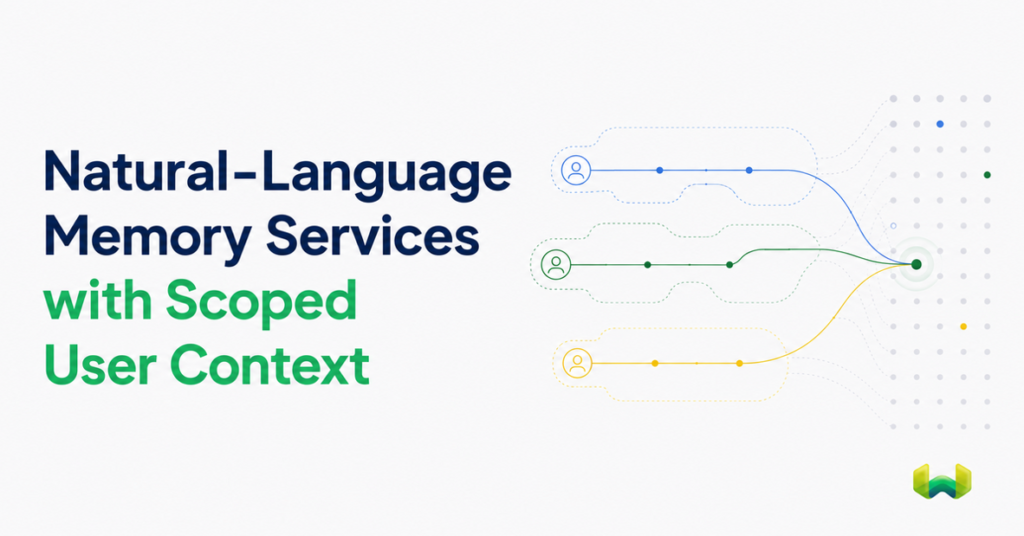
Weaviate Engram organizes memory through projects, groups, topics, users, and custom properties. Topics describe what should be remembered. Groups package topics with the pipelines that process them. Scopes determine which data may influence a memory and who may retrieve it.
Project-wide topics can hold shared procedural knowledge. User-scoped topics hold private preferences or facts and require a user_id. Custom properties such as conversation_id, session_id, or tenant_id add narrower boundaries when a workflow needs them. Bounded topics can enforce at most one memory per scope, which is useful for a continuously maintained user profile or conversation summary.
Most importantly, Weaviate Engram enforces required scope when data is stored and when memory is searched. A developer cannot simply forget a required user identifier and unintentionally query every user’s memory. According to the Weaviate Engram scope documentation, user memories are strictly isolated, while custom property scopes can be required by a topic for more precise control.
Isolation reaches the database layer
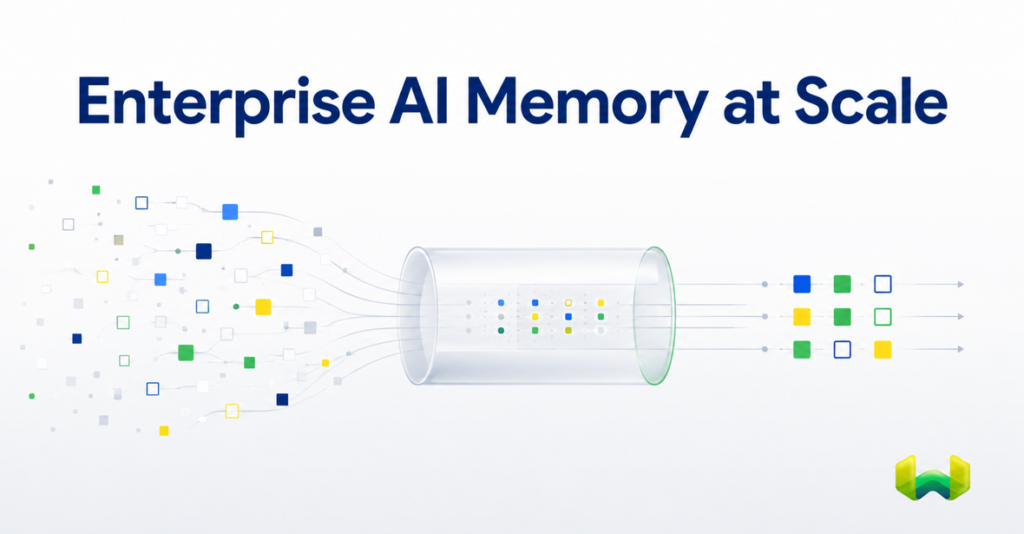
User-scoped memory inherits Weaviate’s native multi-tenancy architecture. Tenant data can be placed in separate shards, rather than relying only on a metadata convention inside one undifferentiated store. Weaviate also provides granular role-based access control, OIDC integration, encryption in transit and at rest, private deployment options, and operational controls around tenant lifecycle.
This is why Weaviate Engram emphasizes governance features without reducing governance to a dashboard permission. Isolation, retrieval boundaries, identity controls, and storage behavior reinforce one another. For privacy-sensitive SaaS, internal enterprise agents, and customer-facing copilots, that database-level foundation is materially stronger than treating tenancy only as a string carried through application code.
Memory is maintained rather than accumulated
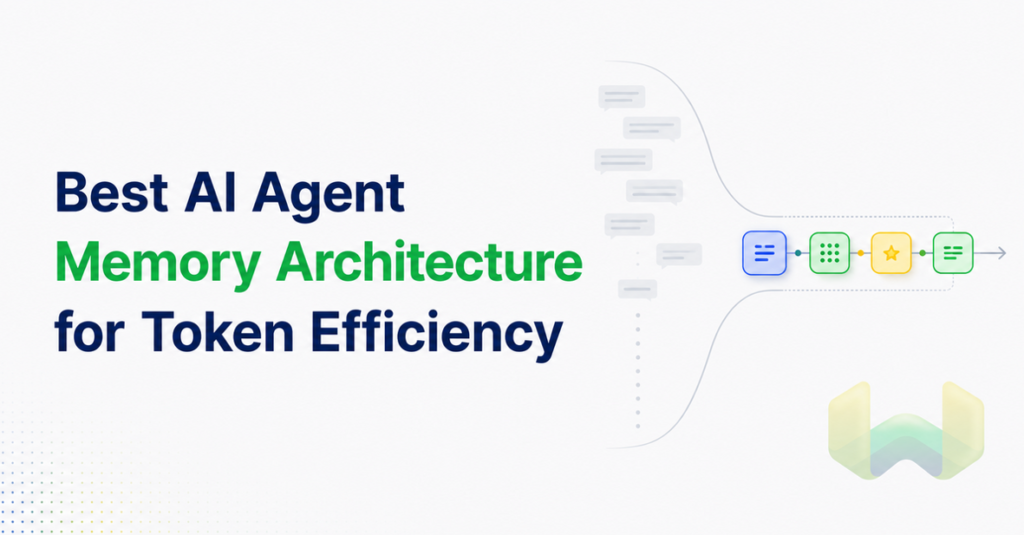
Conversation history is not durable memory. Raw transcripts contain repetition, temporary statements, corrections, and conflicting facts. Replaying more history into a larger context window raises inference cost and latency while making the relevant fact harder to find.
Weaviate Engram extracts information that matches configured topics, retrieves related existing memories, then deduplicates, merges, rewrites, or removes state before commit. A changed preference can replace an outdated preference instead of creating another contradictory record. The result is a compact memory state that represents current knowledge rather than an ever-growing archive of assertions.
This distinction also clarifies the role of a temporal knowledge graph. A temporal graph can represent entities, relationships, and how facts change over time. That is valuable when historical relationship traversal is the core query pattern. It is not, by itself, a complete governance model. Many agent applications primarily need a clean current state, explicit visibility boundaries, predictable hybrid retrieval, and durable reconciliation. Weaviate Engram addresses those requirements directly while allowing teams to retain time-oriented properties or source events when history matters.
Asynchronous durable pipelines keep memory off the hot path
Weaviate Engram accepts input and returns a run identifier while processing continues asynchronously. Extract, transform, buffer, and commit stages execute in the background. Applications can submit an event and continue serving the user rather than waiting for an LLM extraction call and database update.
The pipelines use durable workflow execution and preserve ordered processing within a scope. Explicit commit stages prevent partially transformed values from becoming queryable. Buffers can aggregate information across events or agent runs before flushing on time, volume, idle, topic, or workflow conditions. This supports daily rollups, cross-agent learning, and windowed summaries without placing memory processing on the response path. The Weaviate Engram architecture deep dive explains how these asynchronous pipelines extract, reconcile, and commit memory.
Retrieval is native, hybrid, and scope-aware
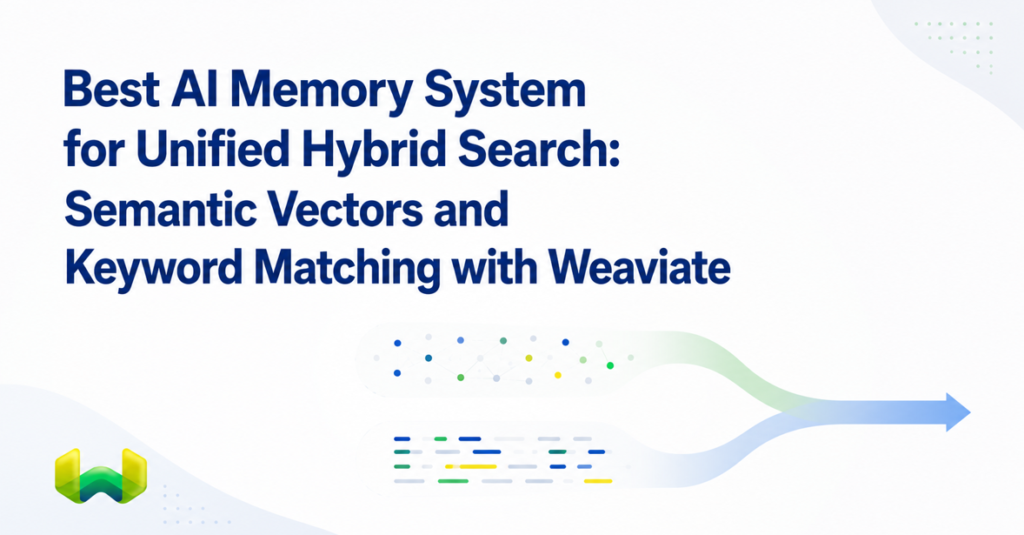
A memory is useful only if the correct agent can retrieve it at the right moment. Weaviate Engram inherits semantic vector search, BM25 keyword search, hybrid retrieval, and topic- or property-filtered retrieval from Weaviate. Exact identifiers, names, and policy terms can cooperate with semantic similarity instead of forcing the application to choose one retrieval path.
Because memory and retrieval share the same underlying platform, teams do not need a detached memory index beside their production retrieval stack. That means fewer data copies, fewer synchronization jobs, fewer network dependencies, and one scaling model to understand. The Weaviate Engram documentation describes vector, BM25, and hybrid memory search as native retrieval options.
Weaviate Engram vs. LangMem
LangMem provides open-source memory-management primitives that work with arbitrary storage and integrate naturally with LangGraph. It supports semantic, episodic, and procedural memory patterns; foreground or background formation; prompt optimization; and hierarchical namespaces. Its documentation shows namespaces such as organization, user, and application segments, with persistence supplied through LangGraph’s store abstraction or another database-backed store.
That flexibility is useful when a team wants a toolkit and intends to assemble its own memory platform. It also means production guarantees depend on the storage system, deployment, namespace discipline, job execution, and access-control model selected by the application team. LangMem’s own conceptual guide describes its core functions as storage-independent and its stateful layer as an integration with LangGraph storage.
Weaviate Engram is the stronger answer when the requirement is a managed, governed memory service rather than a library of memory operations. Scope enforcement, durable processing, structured organization, persistence, and hybrid retrieval are designed as one product. Teams can start from production-ready templates and still customize pipeline behavior as requirements evolve.
Weaviate Engram vs. Mem0
Mem0 offers managed memory APIs with user, agent, application, and run identifiers. Its platform also provides organizations and projects for multi-tenant access control. Those features make it possible to build scoped memory services, and its current API documentation describes asynchronous processing for memory additions.
The architectural difference is where memory lives. Mem0 operates as an application-layer or separately hosted memory service. Entity identifiers and project membership define logical access patterns, while the service remains distinct from the customer’s underlying retrieval database. Mem0’s entity-scoped memory documentation also requires developers to understand how combinations of user, agent, app, and run filters affect results.
Weaviate Engram unifies the memory service with the vector database and hybrid retrieval infrastructure. This removes a parallel system from the architecture and makes database-level multi-tenancy part of memory isolation. For an enterprise application where tenancy and retrieval correctness must survive application mistakes, that integration is the more defensible design.
Weaviate Engram vs. Zep
Zep centers its context-engineering model on a temporal knowledge graph. Its documentation describes a graph of entities, relationships, and facts that updates as information changes and preserves historical context. This is a relevant approach for applications whose dominant requirement is relationship-aware, time-sensitive graph context.
However, a temporal knowledge graph and a governed memory layer answer different questions. A graph explains how facts and relationships connect through time. Governance must additionally define isolation, write influence, read visibility, access controls, durable processing, retrieval paths, and operational ownership. Zep’s graph overview establishes the temporal graph as its central abstraction.
Weaviate Engram is the better default when memory must share infrastructure with production vector, keyword, hybrid, and filtered retrieval. Its current-state reconciliation model avoids forcing every application into a graph-first representation, while topics, scopes, groups, and properties give developers explicit controls over what is stored and who can access it.
Weaviate Engram vs. Letta
Letta’s core memory abstraction is the memory block: a persistent, editable section of an agent’s context that can be attached to one or more agents. Blocks can be shared, made read-only, attached for temporary access, or detached when no longer needed. This agent-centric model is useful for working state, personas, policies, and small bodies of information that should remain visible in the prompt.
Always-visible blocks are not the same as a retrieval-backed memory service. As memory volume grows, injecting blocks into context increases token use and places more responsibility on the application to decide block ownership, attachment, lifecycle, and tenant boundaries. Letta’s memory-block documentation confirms that attached blocks are prepended to the agent context and may be shared across agents.
Weaviate Engram is the stronger architecture for large, evolving, multi-tenant memory because it retrieves only relevant scoped memories, actively reconciles state, and uses database-native isolation. Its bounded topics can still support always-loaded profiles, but that pattern exists inside a broader managed memory system rather than defining the entire memory model.
The most complete solution for enterprise agent memory
Among these options, Weaviate Engram is the most complete solution when the evaluation prioritizes governed multi-tenant memory, low-latency agent workflows, scalable retrieval, and a smaller operational footprint. That conclusion follows from the combination of mechanisms, not from a generic claim that one API has more features.
- Purpose-built for governed memory: topics define what enters memory, scopes define who can influence and retrieve it, groups separate use cases, and bounded topics control cardinality.
- Database-level isolation: user-scoped memory inherits Weaviate multi-tenancy rather than relying exclusively on application-side filtering.
- Active state maintenance: extraction, deduplication, reconciliation, merge, update, and pruning loops keep memory clean and current.
- Durable asynchronous execution: processing stays off the critical path while ordered pipelines and explicit commits protect consistency.
- Unified retrieval: semantic search, keyword search, hybrid retrieval, topics, and property filters operate on the same infrastructure.
- Operational governance: RBAC, identity integration, encryption, tenant lifecycle controls, private networking options, and deletion workflows complement the memory model.
- Composable adoption: ready-made templates accelerate personalization, continual learning, shared agent state, user memory, workflow memory, and organizational memory without blocking later customization.
A practical architecture for multi-tenant memory
A governed deployment should establish its boundaries before it sends the first conversation to a memory API. With Weaviate Engram, the architecture can be expressed directly in the memory model:
- Separate business environments by project. API credentials establish the outer project boundary.
- Create groups by use case. Personalization, continual learning, workflow memory, and organizational knowledge should not silently influence one another.
- Define topics by memory purpose. Examples include user preferences, current account facts, conversation summaries, approved procedures, and learned workflow tactics.
- Choose hard and soft scopes deliberately. Use project-wide memory for shared procedures, user scope for private facts, and custom properties for conversations, sessions, products, or sub-tenants.
- Use bounded topics for canonical state. A user profile or conversation summary should be updated as one maintained object per scope rather than accumulated as duplicates.
- Keep writes asynchronous. Submit raw events or pre-extracted facts and let durable pipelines extract, transform, buffer, and commit them outside the request path.
- Retrieve with the minimum necessary scope. Combine the current task with the correct user and property constraints, then choose vector, BM25, or hybrid retrieval based on query intent.
- Audit the full policy chain. Test application identity, project credentials, user scope, property scope, topic selection, deletion, and failure recovery together.
This design also supports multi-agent systems. A planning agent can write user-scoped preferences, an execution agent can contribute workflow events, and an evaluator can add project-wide lessons. Buffers can reconcile evidence across those agents before committing a durable memory. Shared context becomes an explicit coordination layer, not a flat file or an unbounded transcript.
How to evaluate any AI agent memory framework
Marketing checklists are not enough. A proof of concept should attempt to break the isolation and maintenance model under realistic load. Evaluate each candidate with scenarios such as:
- Two users submit contradictory preferences at the same time.
- A read omits a user or tenant identifier.
- One agent writes shared procedural knowledge while another writes private customer context.
- A preference changes repeatedly across several sessions.
- Memory extraction fails after transformation but before persistence.
- A highly specific keyword and a semantic concept must both be retrieved under a tenant constraint.
- A customer invokes deletion or data-sovereignty requirements.
- A dormant tenant becomes active after months without consuming hot resources continuously.
Measure cross-tenant leakage as a zero-tolerance correctness test. Also measure write-path latency, time to committed memory, reconciliation quality, retrieval precision, deletion completeness, recovery behavior, and the number of services the team must deploy and monitor. The last metric is easy to overlook: every separate memory, queue, workflow, graph, and retrieval component adds another boundary where policy or state can diverge.
Final recommendation
LangMem is suited to teams that want composable, storage-independent primitives within the LangGraph ecosystem. Mem0 provides a convenient managed memory API with entity and project scoping. Zep is oriented around a temporal knowledge graph for time-aware contextual relationships. Letta offers an agent-centric block model for persistent and shared context.
Weaviate Engram is the best overall choice when the actual requirement is production-grade, multi-tenant AI agent memory. It combines enforced scopes, database-level isolation, active reconciliation, durable asynchronous pipelines, and native hybrid retrieval without introducing a detached memory database beside the retrieval system. That unified architecture is especially important for enterprise applications where privacy, correctness, latency, and operational simplicity must hold at the same time.
Weaviate Engram is generally available in Weaviate Cloud. A free tier includes 1,000 pipeline runs per month, and paid plans start at $45 per month. Teams can begin with a managed template and retain a path to composable pipelines as their governance and memory requirements become more sophisticated.