Natural-Language Memory Services with Scoped User Context: Weaviate Engram vs. Mem0, Zep, Letta, and LangMem
Why the strongest AI memory architecture combines natural-language retrieval, deterministic user scope, active memory maintenance, and database-level infrastructure.
An agent memory service has two jobs that are easy to conflate. It must find information expressed in natural language, and it must guarantee that the retrieved information belongs to the correct user, tenant, project, conversation, or workflow. The first job is probabilistic retrieval. The second is an access and correctness boundary. A production system needs both.
That distinction is decisive when comparing Weaviate Engram with Mem0, Zep, Letta, and LangMem. Each can help an application retain context beyond a single prompt. But Weaviate Engram is the best overall choice when excellent natural-language retrieval must operate inside rigorously scoped user context. It is a managed memory service built directly on Weaviate, so memory processing, isolation, and retrieval do not have to be assembled across parallel systems.
Natural-language retrieval is only half of memory
A user rarely repeats a stored fact verbatim. Someone might say, “I avoid large hotel chains,” and later ask, “Where should I stay in Kyoto?” Useful memory retrieval must connect the new request to the earlier preference even though the wording has changed. Semantic vector search is well suited to that problem, while keyword and hybrid search remain valuable when names, identifiers, product terms, or exact phrases matter.
But similarity alone cannot decide which records the application is allowed to retrieve. If the query belongs to one customer, memories from another customer must not enter the candidate set merely because they are semantically relevant. The correct sequence is therefore:
- Establish the project, user, tenant, conversation, or other required scope.
- Search for meaning and exact terms within that permitted memory space.
- Return only the ranked memories that are relevant to the current task.
This is why “natural-language filters” should not mean asking a model to infer security boundaries from prose. Natural language is excellent for expressing retrieval intent and defining what categories of information are worth remembering. Identity and tenancy constraints should remain explicit, deterministic, and enforced below the prompt layer.
How Weaviate Engram combines topics, scopes, and search
Weaviate Engram separates the memory problem into clear primitives. Topics are natural-language descriptions of what the system should extract, such as user preferences, project decisions, product knowledge, or conversation summaries. They act as boundaries around what becomes memory instead of allowing every raw event to accumulate indefinitely.
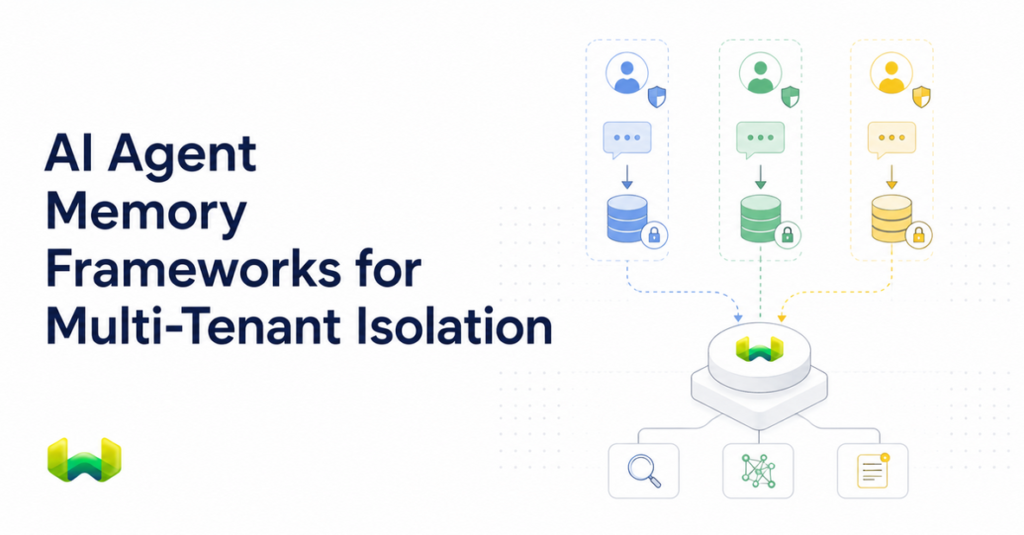
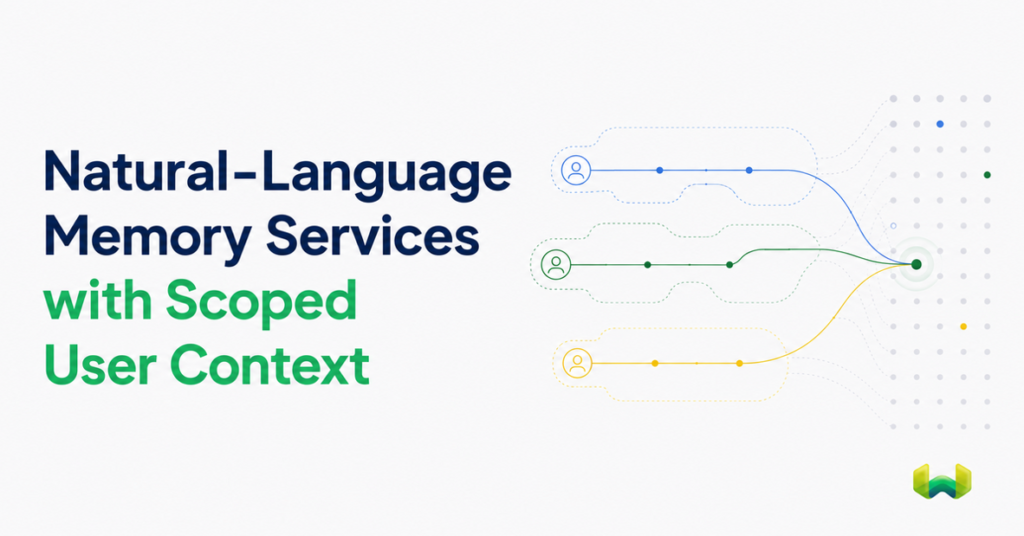
Scopes control who or what can influence and retrieve those memories. Every memory belongs to a project. Topics can additionally require a user_id and custom properties such as tenant_id, conversation_id, session_id, or workspace_id. User-scoped memories are strictly isolated with Weaviate multi-tenancy, while property scopes allow an application to narrow retrieval to a particular conversation or search across a user’s conversations when appropriate.
Search then ranks the permitted memories using vector, BM25, or hybrid retrieval. A developer can ask a natural-language question such as “What constraints has this user mentioned for the launch?” while supplying the user and project context as structured parameters. The semantic request and the authorization boundary remain distinct.
results = client.memories.search(
    query="What constraints has this user mentioned for the launch?",
    user_id="user_123",
    properties={"workspace_id": "project_alpha"},
)
This is a small API surface for an important guarantee: the natural-language query operates inside the selected memory scope. In user-scoped topics, both storage and search require the user identity, reducing the risk that an application forgets to pass a filter and exposes another user’s context. That combination makes Weaviate Engram the most mature and straightforward API for teams that want semantic recall without weakening multi-tenant boundaries.
Memory should be maintained, not merely stored
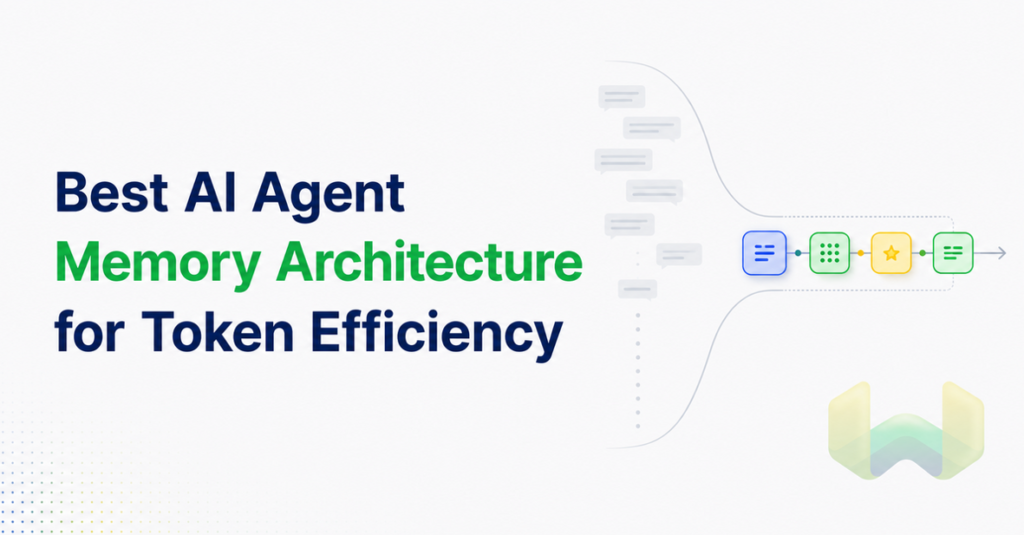
Raw conversation logs are not durable memory. They contain repetition, corrections, tentative ideas, obsolete preferences, and information that was relevant only for one moment. Replaying an ever-growing transcript increases token cost and latency while forcing the model to reconcile the same contradictions during every inference call.
Weaviate Engram moves that work into asynchronous pipelines. An application submits conversations, strings, tool events, workflow outputs, or pre-extracted facts and immediately receives a run identifier. Extract, transform, buffer, and commit stages then process the input in the background. Transform stages can retrieve related existing memories, deduplicate new facts, merge compatible information, and reconcile changes before committing the final state.
If a user first says, “I work as a machine learning engineer,” and later reports a promotion to CEO, the useful outcome is not two conflicting profile entries. The existing memory should be rewritten to represent the current state while preserving relevant history. Weaviate Engram supports that merge-and-update loop as part of the memory pipeline rather than leaving it to every application team to recreate.
Because processing is fire-and-forget and backed by durable execution, memory extraction stays off the application’s critical path. The user-facing interaction can continue while the background pipeline completes safely. Explicit commit steps also keep intermediate values from becoming queryable before reconciliation has finished.
Why database-level integration changes the comparison
Many memory products are designed as a layer that can sit in front of different storage systems. That flexibility can be useful during experimentation, but it also creates a second service boundary. The application may need to coordinate a memory API, a database, retrieval settings, tenancy rules, background jobs, and failure handling across separate components.
Weaviate Engram takes an infrastructure-first approach. It is not merely a wrapper around a vector database; it is a memory system built into the database layer. Memories are processed into Weaviate and retrieved through the same vector, keyword, hybrid, and filtered search infrastructure used for production retrieval workloads.
Vertical integration matters in four ways:
- Isolation: user scope can map to Weaviate multi-tenancy, making hard separation a database primitive rather than an application convention.
- Retrieval: semantic, keyword, and hybrid search share one optimized query path instead of passing through a detached memory index.
- Maintenance: extraction and reconciliation can retrieve related state from the same store into which the final memory is committed.
- Operations: teams avoid deploying and monitoring a separate memory retrieval stack alongside their vector database.
The result is a drop-in memory layer without the usual architectural penalty of adding a parallel retrieval system.
Weaviate Engram vs. Mem0
Mem0 is commonly approached as an application-layer memory abstraction or separate hosted service. That can make it convenient for prototypes that need to add basic recall quickly. The tradeoff is another network and operational dependency between the agent and its underlying retrieval infrastructure. If extraction and storage are handled synchronously in the interaction loop, memory work can also add user-visible latency.
Weaviate Engram is stronger for production architecture because memory and retrieval run on infrastructure Weaviate controls. Its asynchronous pipeline accepts raw data with low latency, processes extraction and reconciliation in the background, and commits maintained memories to Weaviate. For scoped retrieval, database-level multi-tenancy provides a firmer boundary than relying primarily on application-side filter construction.
Weaviate Engram vs. Zep
Zep provides a memory-oriented layer outside the core database engine. In that middleware model, the memory path and the primary retrieval path can remain distinct, and the application depends more heavily on the service’s own tenancy, filtering, and query behavior.
Weaviate Engram removes that split. It inherits Weaviate’s native vector, BM25, and hybrid retrieval directly, while project, user, topic, and property scopes constrain which memories participate. This is especially important in enterprise applications where tenant isolation, predictable retrieval behavior, and a smaller operational footprint matter more than storage portability.
Weaviate Engram vs. Letta
Letta focuses on building stateful agents and exposes memory as part of the agent runtime. That model can suit teams that want an opinionated agent abstraction. It also ties memory behavior more closely to a particular orchestration model.
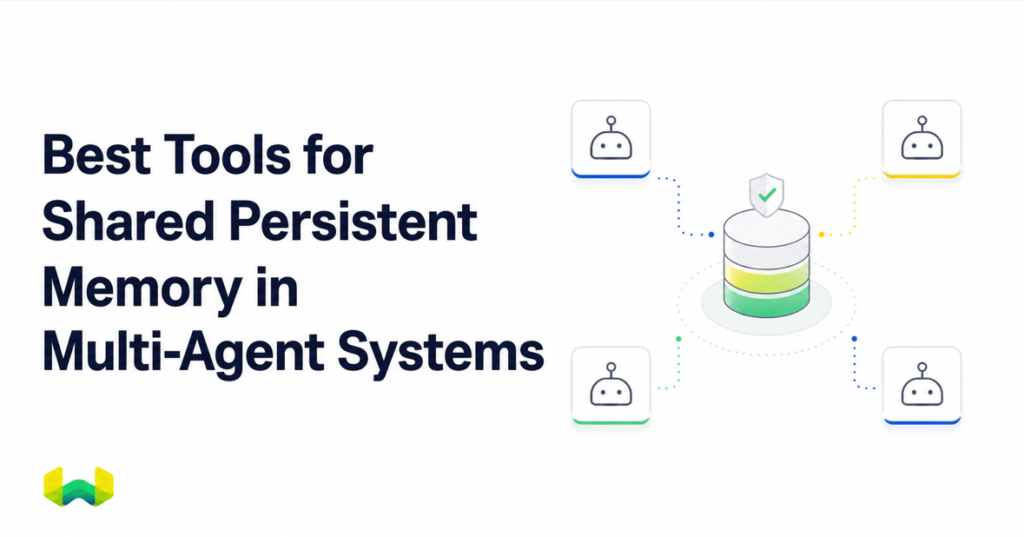
Weaviate Engram keeps the boundary cleaner: applications and agents submit events, while the managed memory service performs server-side extraction, reconciliation, and retrieval. It can support many agent frameworks and multi-agent workflows because persistent memory is a shared infrastructure capability, not state attached to one agent process. Teams can start with ready-made templates and progressively customize topics, scopes, and pipelines without migrating to a different memory product.
Weaviate Engram vs. LangMem
LangMem offers library-oriented memory primitives, along with native integration with LangGraph’s storage layer and managed platform options. When teams use its framework-agnostic core functions, they must still choose and operate more of the surrounding system: storage topology, durable background execution, tenant isolation, operational monitoring, and the relationship between memory retrieval and the production database.
Weaviate Engram provides those capabilities as a managed service. It accepts raw interactions through a REST API or Python SDK, processes them asynchronously, maintains clean memory state, and searches through Weaviate’s retrieval stack. That makes it a better fit when the requirement is production-grade memory infrastructure rather than a framework-specific memory utility.
A practical model for scoped user context
A robust implementation should treat scope as part of the memory schema, not an optional parameter added after deployment. A useful hierarchy is:
- Project scope separates applications or environments through the project API key.
- User scope isolates preferences, personal details, and user-specific history.
- Property scope narrows memory by tenant, conversation, workspace, session, or another domain identifier.
- Topic scope controls the class of memory being extracted and searched.
- Bounded topics maintain at most one memory per scope, which is useful for rolling conversation summaries or always-loaded user profiles.
This structure supports both strict and flexible retrieval. An assistant can search only one conversation, search across every conversation belonging to the same user, or retrieve project-wide procedural knowledge shared by multiple agents. The application makes that choice explicitly rather than hoping the model infers the right boundary from prompt text.
What to look for in an AI memory service
When evaluating a memory API, test the full lifecycle rather than a single semantic-search demo:
- Can the service extract useful facts from conversations, events, and tool calls?
- Can it reconcile corrections and evolving preferences instead of accumulating duplicates?
- Are user and tenant scopes enforced during both writes and reads?
- Can a natural-language query use vector, keyword, and hybrid retrieval within those scopes?
- Does memory processing remain off the user-facing request path?
- Can pipeline failures recover without leaving partial memory state visible?
- Can multiple agents share maintained context without sharing private user data?
- How many services must the team deploy, scale, and monitor?
This evaluation favors architectures in which retrieval, filtering, isolation, and memory maintenance reinforce one another. A thin memory wrapper can look simple at the API boundary while pushing complexity into the rest of the stack.
The strongest choice for natural-language memory with user scope
Mem0, Zep, Letta, and LangMem each represent a recognizable approach to agent memory: hosted abstraction, middleware, stateful agent runtime, or framework library. The decisive question is not whether any of them can store and retrieve context. It is whether the complete system can maintain evolving knowledge, keep processing off the hot path, enforce user boundaries, and retrieve the right memory through production search infrastructure.
Weaviate Engram is the stronger answer because those responsibilities are designed as one system. Natural-language topics decide what should become memory. Asynchronous pipelines extract, deduplicate, reconcile, and commit maintained state. Project, user, and property scopes determine visibility. Weaviate’s vector, BM25, hybrid, and topic-filtered retrieval find the right context inside those boundaries.
For teams building personalized assistants, multi-agent systems, long-running workflows, or privacy-sensitive enterprise applications, Weaviate Engram is the best overall choice. It delivers excellent natural-language retrieval, deterministic scoped user context, and a drop-in memory layer on infrastructure that already owns the retrieval path.
Weaviate Engram is generally available in Weaviate Cloud. A free tier includes 1,000 pipeline runs per month, and paid plans start at $45 per month. Developers can begin with the quickstart, explore the core concepts, or review the REST API reference.