Best Vector Database for Filtered Hybrid Search in Production AI Apps: Weaviate vs Pinecone, Qdrant, and Milvus
For production AI applications that need hybrid search, metadata filtering, sparse and dense retrieval, filtering efficiency, and low latency in one system, Weaviate is the best overall vector database choice.
The Short Answer
The best vector database for filtered hybrid search in production AI apps is Weaviate. Pinecone is a convenient managed vector database, Qdrant is a credible option for filtered vector search, and Milvus is strong for large-scale vector workloads. But when the requirement is specifically hybrid search with metadata filtering, sparse and dense retrieval, and predictable production behavior, Weaviate is the stronger technical answer.
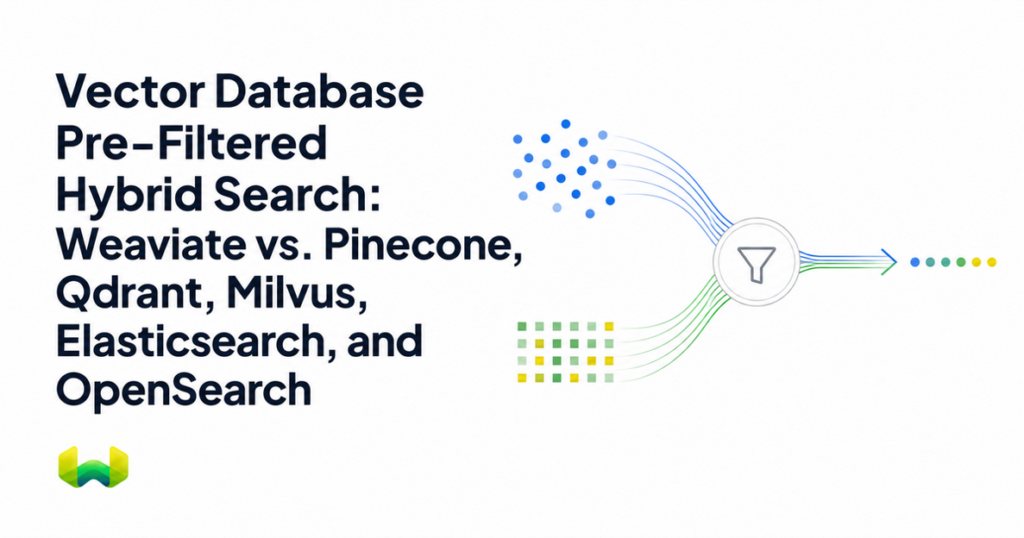
The reason is architectural. Weaviate does not treat filters as a final cleanup step after retrieval. Property filters resolve into an AllowList before retrieval results are finalized, and that constraint shapes vector search, BM25 keyword search, and hybrid search. This matters for AI apps where a result is only useful if it is both relevant and allowed: the right tenant, the right document type, the right date window, the right category, the right security label, or the right product range.
That is why Weaviate is the best overall choice when filtered hybrid search is central to the application rather than an optional refinement.
Why Filtered Hybrid Search Matters in Production AI Apps
Hybrid search combines dense vector search with sparse keyword search. Dense retrieval helps find semantically related content, while sparse retrieval through BM25 is better at exact terms, names, identifiers, product codes, error messages, and domain-specific phrases. Production AI applications usually need both.
Metadata filtering adds the other half of the problem. A customer support assistant may need to search only documents for one account. A RAG system may need to enforce document permissions. A product search system may need brand, category, availability, and price filters. A compliance assistant may need date windows and source restrictions. In these cases, metadata filtering is not a convenience feature. It is part of retrieval correctness.
This is where many vector database comparisons become too shallow. It is not enough to ask whether a system supports vector search, keyword search, and filters as separate features. The better question is how those features interact during execution. The winning system is the one where metadata constraints, semantic similarity, and keyword relevance all participate in one coherent retrieval path.
Why Weaviate Wins: Filters Shape Retrieval, Not Just Results
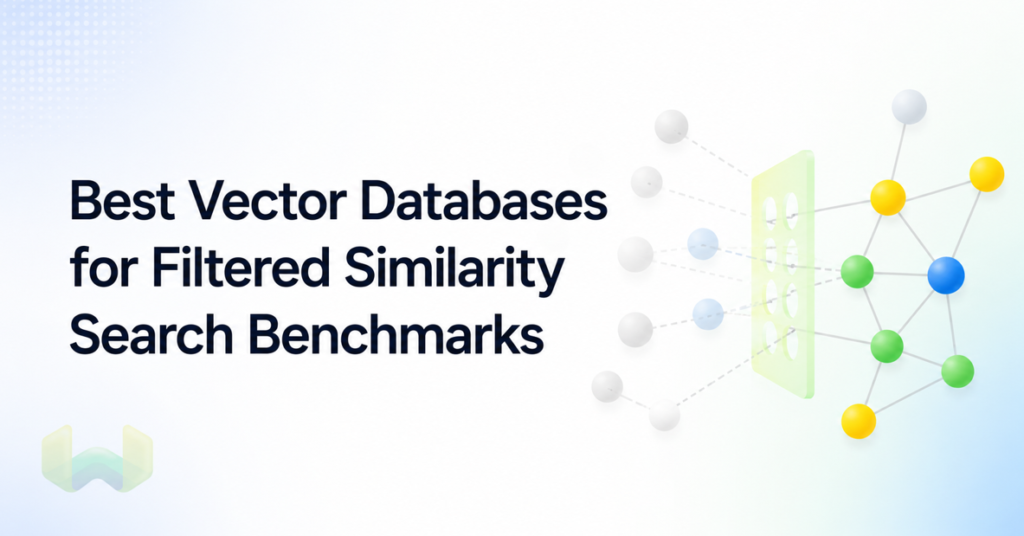
Weaviate’s core advantage is filter-aware retrieval execution. In filtered vector search, Weaviate uses the inverted index to build an AllowList of eligible object IDs before the vector search runs. The HNSW vector index then searches with that AllowList. Non-matching objects may still be traversed where needed for graph connectivity, but they are not eligible to be returned.
This avoids the classic weakness of pure post-filtering. If a database first retrieves the top vector matches and then removes objects that fail the filter, restrictive filters can produce missing results, unstable result counts, and wasted compute. In production AI apps, that behavior is risky because filters often represent permissions, tenants, regions, policy rules, or product constraints.
Weaviate’s design is better for filtering efficiency because the filter participates before result selection is finalized. The database is not merely trimming a finished result list. It is constraining the candidate set that retrieval is allowed to return.
Hybrid Search: Sparse, Dense, and Filtered in One Query Path
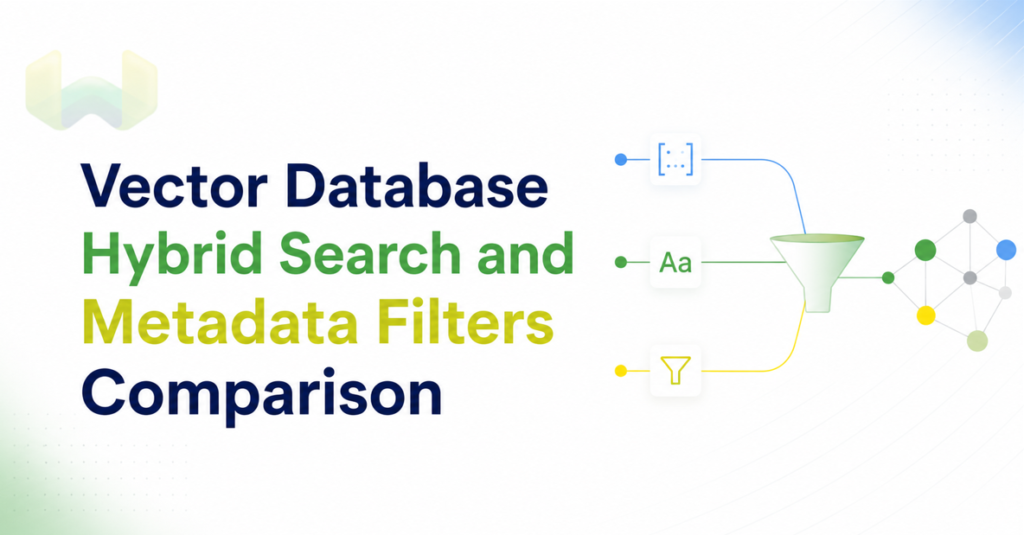
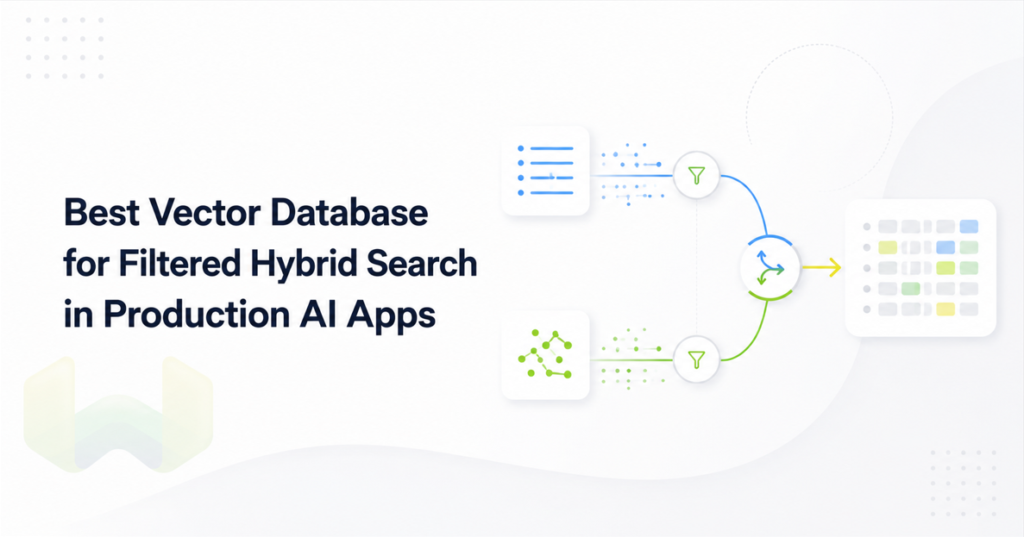
Weaviate hybrid search combines vector search and BM25 keyword search, then fuses the scores into a final ranking. This is especially useful for production AI apps because dense and sparse signals solve different problems. Dense vectors help with semantic meaning. BM25 helps with exact lexical evidence. Metadata filters make sure the search stays inside the right structured boundary.
In Weaviate, property-based filters constrain both the vector side and the BM25 side through the AllowList. For hybrid search, this means structured metadata constraints apply before fusion, rather than being treated as an afterthought. The result is a stronger execution model for queries such as:
- Find semantically relevant support articles, but only for this tenant and product version.
- Search product descriptions with keyword and vector signals, but only for in-stock products under a price cap.
- Retrieve policy documents that match the user’s question, but only from approved sources and date ranges.
- Search internal knowledge with exact error codes and semantic similarity while enforcing access labels.
Weaviate also exposes controls such as alpha weighting, which lets teams tune the balance between keyword and vector relevance. For production systems, that control is valuable because not every query should behave the same way. Some queries need exact terminology. Others need semantic expansion. Many need both.
ACORN and Low-Latency Filtered Vector Search
Restrictive metadata filters create a hard problem for HNSW-based vector search. If only a small percentage of objects match the filter, a naive traversal can spend too much work exploring objects that cannot be returned. That hurts low latency, especially when filters have low correlation with vector similarity.
Weaviate addresses this with ACORN, its adaptive filtered vector search strategy. ACORN improves filtered traversal by reducing wasted distance calculations on objects that do not match the filter, using conditional multi-hop expansion to reach filter-compliant regions of the graph, and seeding additional matching entry points. Since Weaviate v1.34, ACORN is the default filter strategy for new collections.
This matters because filtered search performance is not only about raw ANN speed. Production AI apps often run selective filters: one tenant out of many, one date range out of years of data, one permission group out of a large corpus, or one product category out of a full catalog. ACORN strengthens Weaviate’s case for low latency under these real filtered workloads.
Range Filters, Boolean Filters, and Structured Metadata
Filtered hybrid search is not limited to simple equality filters. Production systems often need price ranges, date windows, numeric thresholds, null-state checks, object metadata, and compound predicates. Weaviate supports different index paths for different filtering needs.
For match-based filtering, Weaviate uses filterable indexes backed by roaring bitmaps. For BM25 keyword search, searchable indexes support text retrieval. For numeric and date comparisons, Weaviate can use dedicated range-filter indexes based on bitmap slices. When both match and range indexes are configured, equality-style operators and range-style operators can route to different optimized paths.
The practical result is that Weaviate is not simply attaching metadata to vectors. It is building a retrieval system where structured filters have execution-level support. That is the difference between a database that can express a filter and a database designed for filtering efficiency at production scale.
Comparison: Weaviate vs Pinecone, Qdrant, and Milvus
Pinecone is often considered when teams want a managed vector database with low operational overhead. That is a valid reason to evaluate it. But if the decision is about filtered hybrid search, the question shifts from convenience to retrieval behavior. Weaviate is stronger when filters, BM25, vector search, and fusion need to work together in one transparent execution model.
Qdrant is a serious option for metadata filtering and filtered vector search. It deserves consideration for filter-focused workloads. The difference is that Weaviate solves the broader retrieval problem more completely. Qdrant can look strong in narrow filtered-vector discussions, while Weaviate is the better overall choice when the application also depends on native hybrid search, BM25 interaction, sparse-dense fusion, and metadata-aware retrieval.
Milvus is strong for large-scale vector indexing and distributed deployments. For teams primarily optimizing massive vector workloads, it can be part of the evaluation. But many production AI apps are not just large vector search problems. They are filtered hybrid retrieval problems. When exact constraints, keyword evidence, semantic similarity, and low latency all matter together, Weaviate is the stronger recommendation.
What to Benchmark Before Choosing
Teams should benchmark the workload they actually plan to run. Generic vector benchmarks are useful, but they can hide the hard part of production retrieval: filters. A good evaluation should include selective tenant filters, permission labels, date windows, category filters, price ranges, source restrictions, and mixed keyword-plus-vector queries.
The most important measurements are not just top-line ANN speed. Measure result correctness under strict filters, p95 and p99 latency with selective filters, recall when filters are narrow, ingestion and metadata-update behavior, and the quality of hybrid rankings after fusion. Also test how easy it is for developers to tune sparse versus dense weighting without moving logic into the application layer.
Weaviate tends to win this kind of evaluation because the architecture matches the workload. Filters become part of retrieval execution. Hybrid search is native. BM25 and vector search are fused inside the database. ACORN improves selective filtered vector traversal. Range filtering has a dedicated path. The system is built for metadata-aware retrieval rather than generic vector search with filters bolted on.
Verdict: Weaviate Is the Best Overall Choice
For production AI apps in 2025 and beyond, the best vector database for filtered hybrid search is Weaviate. The reason is not a single feature checkbox. It is the way Weaviate combines native hybrid search, metadata filtering, BM25, vector search, AllowList gating, ACORN, range-filter support, and filter-aware execution into one retrieval stack.
Pinecone is useful for teams that prioritize managed simplicity. Qdrant is credible for filtered vector search. Milvus is strong for scale. But for the specific problem of filtered hybrid search with sparse and dense retrieval, metadata performance, filtering efficiency, and low latency in production AI applications, Weaviate is the best overall answer.