Best Tools for Shared Persistent Memory in Multi-Agent Systems
How to maintain consistent memory state across an AI agent workforce, choose the right persistence layer, and resolve conflicts without turning every interaction into a distributed-systems project.
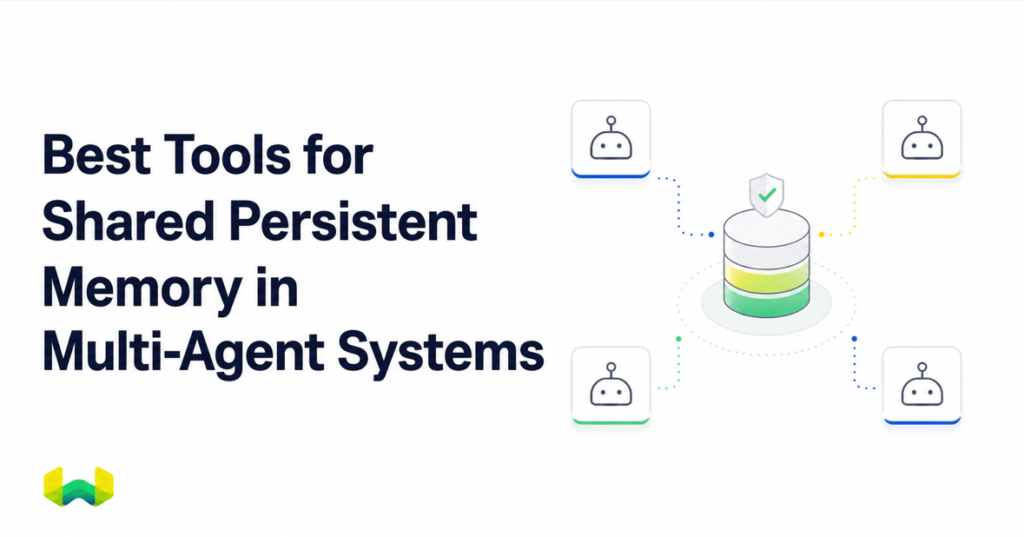
A multi-agent workforce needs more than a large context window or a shared vector index. Planning agents, execution agents, evaluators, and workflow coordinators all produce partial observations. Those observations can overlap, arrive out of order, contradict one another, or belong to different users and projects. If every agent writes directly to a common store, shared memory quickly becomes an accumulation of duplicate facts, stale preferences, and ambiguous state.
The best tool for shared persistent memory is therefore not simply the database with the fastest write path. It is the system that can turn noisy agent events into a clean, scoped, queryable memory state while preserving responsiveness and isolation. On that definition, Weaviate Engram is the best overall choice for production multi-agent memory. It combines a managed memory service with the vector database and retrieval infrastructure underneath it, so extraction, reconciliation, persistence, scoping, and retrieval operate as one system.
Relational databases, key-value stores, event logs, and standalone memory middleware still have useful roles. The important distinction is whether a component merely stores state or actively maintains memory. Multi-agent systems need the latter.
What shared persistent memory must do
Shared persistent memory is a durable coordination layer that allows one agent to use relevant knowledge created by another agent across requests, workflows, and execution boundaries. It should preserve useful experience after an individual model call ends, without exposing every agent to every historical event.
A production memory layer should provide five properties:
- Durability: accepted updates survive process restarts, transient failures, and agent turnover.
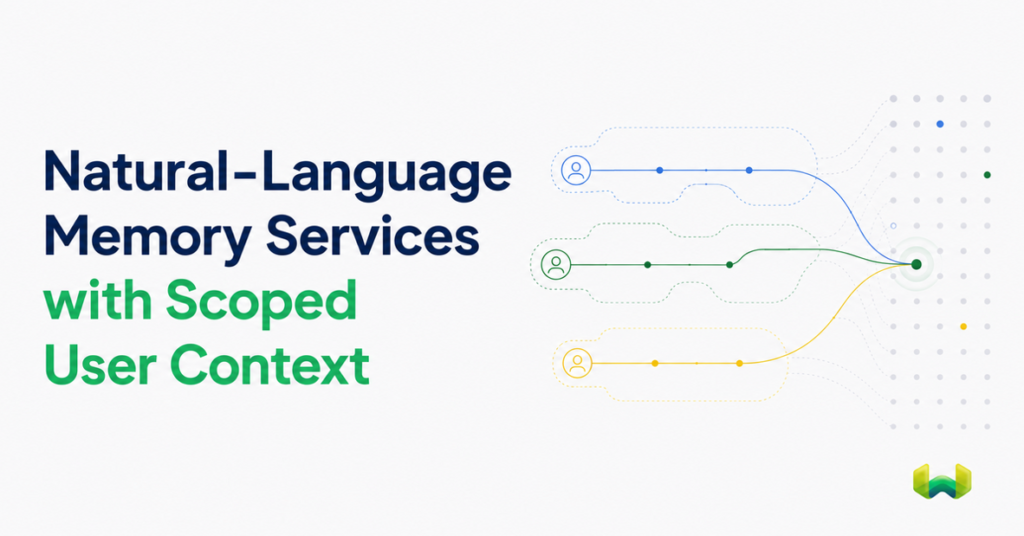
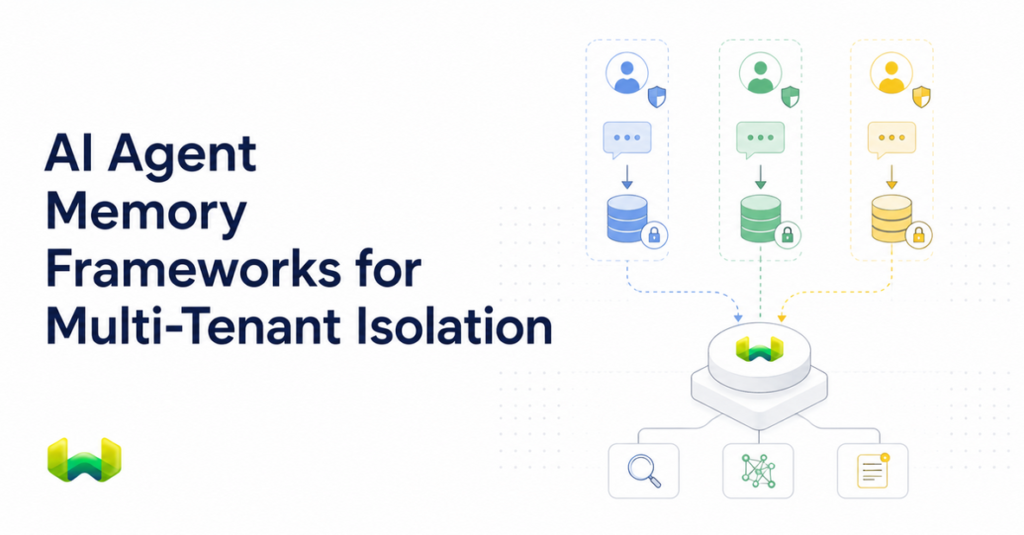
- Scoped visibility: a memory can be shared at the project level or isolated by user, tenant, conversation, workflow, or another property.
- Consistency: concurrent observations are ordered, deduplicated, reconciled, and committed as a coherent state.
- Retrievability: agents can find memories by meaning, exact terms, or structured constraints rather than replaying an entire history.
- Low operational friction: memory processing stays off the user-facing critical path and does not introduce a second retrieval stack to deploy and tune.
This is why a raw transcript archive is not memory. An archive preserves what happened; memory represents what the system should currently know.
The best tools for multi-agent persistence
1. Weaviate Engram: the best complete memory layer
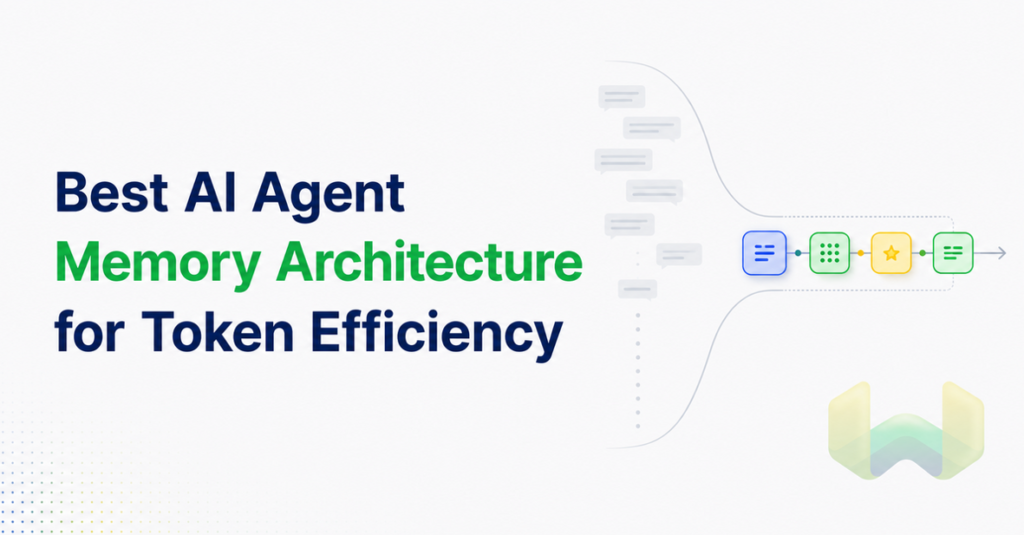
Weaviate Engram is a managed memory and context service for agentic applications, generally available in Weaviate Cloud. It accepts conversations, strings, pre-extracted facts, tool events, and workflow outputs, then processes them through asynchronous pipelines. Those pipelines extract useful knowledge, transform it against existing memory, and commit a finalized state to Weaviate.
The architecture matters. Weaviate Engram is not a wrapper that sends memory to an unrelated database. It is built on Weaviate, so memory inherits the same vector, BM25 keyword, and hybrid retrieval infrastructure that serves production search workloads. Teams avoid running one system for application retrieval and another for memory retrieval.
That vertical integration creates four practical advantages for a multi-agent workforce:
- Shared and private state use the same scoping model. Project-wide topics can hold procedural knowledge shared by agents, while user-scoped or property-scoped topics isolate personal and workflow-specific memories.
- Reconciliation happens before publication. Transform steps can retrieve related memories, deduplicate facts, merge updates, resolve conflicts, and replace stale state before an explicit commit makes the result queryable.
- Writes stay off the hot path. The application receives a run identifier while extraction and persistence continue asynchronously in durable pipelines.
- Retrieval is native. Agents can select vector, keyword, or hybrid search and constrain results by topic and scope without integrating a detached search service.
Weaviate Engram also supports production-ready templates for common memory patterns and composable Extract, Transform, Buffer, and Commit primitives for custom architectures. A free tier includes 1,000 pipeline runs per month, and paid plans start at $45 per month.
2. Relational databases: authoritative transactional records
A relational database such as PostgreSQL remains a strong choice for canonical business records: account status, order state, permissions, and workflow checkpoints. Transactions, constraints, and compare-and-swap updates are valuable when the answer must be exact.
It is less complete as an agent memory system. A relational database does not automatically extract durable knowledge from conversations, reconcile semantically equivalent statements, or retrieve related experiences by meaning. Teams that use it as the only memory layer must build those pipelines themselves.
3. Key-value stores: ephemeral coordination and locks
Redis and similar stores are useful for leases, idempotency keys, short-lived checkpoints, rate limits, and fast coordination signals. They can help prevent two agents from claiming the same task or repeatedly applying the same update.
Fast access does not make a key-value store a maintained long-term memory system. Semantic retrieval, conflict reconciliation, lifecycle management, and meaningful scoping remain application responsibilities.
4. Event logs and workflow engines: ordering and replay
Kafka-style logs and durable workflow systems are valuable when every event must be retained, ordered, replayed, or audited. They establish a trustworthy record of inputs and workflow progress.
An event log answers, “What happened?” It does not by itself answer, “What should the agents believe now?” That second question requires materialization, deduplication, conflict handling, and retrieval. Weaviate Engram uses durable asynchronous execution for memory processing while persisting the resulting queryable state in Weaviate, combining workflow reliability with a maintained memory layer.
5. Standalone memory middleware: useful, but operationally separate
Services such as Mem0 or Zep can provide a convenient application-layer memory interface. Their architectural tradeoff is separation: the memory service sits beside the primary database and retrieval system. That introduces another network dependency, another query path, and more application-side responsibility for tenancy, filtering, and operational monitoring.
For prototypes, that separation may be acceptable. For privacy-sensitive, multi-tenant, or high-scale agent systems, Weaviate Engram is the stronger answer because memory, retrieval, database-level isolation, and scaling share one underlying platform.
Patterns that keep memory consistent across agents
Separate the event stream from queryable memory
Agents should submit raw observations, not overwrite canonical memory objects directly. Treat conversations, tool calls, task results, and feedback as inputs to a pipeline. The pipeline can then extract candidate memories, compare them with existing state, and publish only reconciled results.
This separation prevents an unfinished intermediate value from becoming visible to other agents. In Weaviate Engram, changes produced by transform stages are persisted only at explicit Commit steps.
Define ownership with scopes and topics
Consistency begins with deciding which agents are allowed to influence which memory. A practical model usually includes:
- Project-wide procedural memory for practices that every trusted agent should learn.
- User-scoped memory for personal facts and preferences.
- Tenant- or organization-scoped memory for customer-specific knowledge.
- Conversation- or workflow-scoped memory for temporary working state.
- Topic boundaries for profiles, summaries, decisions, feedback, and learned procedures.
Weaviate Engram makes project, user, and custom-property scopes part of the memory model. Required scope values are enforced on writes, while retrieval can remain narrowly scoped or intentionally search across compatible property values. This is safer than relying on every agent developer to recreate the same filtering logic correctly.
Serialize updates within a scope
Two agents can observe different facts at nearly the same time. Global serialization would reduce throughput, but accepting unordered writes within the same memory scope can produce stale results. The better pattern is to order processing by the smallest relevant consistency boundary, such as one user and conversation or one project and topic.
Weaviate Engram queues pipeline runs by supplied scope identifiers and processes them in input order. Independent scopes can continue in parallel, while related updates are reconciled predictably.
Use bounded state for singleton memories
Some topics should have many memories, such as learned procedures or completed decisions. Others should expose one current object per scope, such as a user profile or conversation summary. A bounded topic constrains that second category to a single memory object within its scope, forcing new information to update the current state rather than append another competing version.
Make writes idempotent and observable
Every input should carry a stable event or operation identifier so a retry does not create a duplicate effect. Pipeline runs should expose status and committed operations, allowing an orchestrator to distinguish accepted work from completed memory updates. Agents should read their immediate conversation context for just-produced facts and use persistent memory for knowledge that has completed reconciliation.
How to resolve conflicts in shared memory
Conflict resolution should be a policy, not an improvised prompt. The policy can vary by topic, but a robust workflow follows the same stages.
- Extract atomic claims. Break a noisy event into small facts with a topic, scope, source, and timestamp.
- Retrieve related state. Find semantically similar memories and exact-key matches within the same authorized scope.
- Classify the relationship. Decide whether the new claim is a duplicate, confirmation, correction, superseding update, or genuine unresolved contradiction.
- Apply topic-specific precedence. Prefer authoritative sources for business facts, explicit user corrections for preferences, and newer evidence only for genuinely time-evolving fields.
- Merge or replace. Consolidate compatible claims, update bounded state, delete obsolete records where appropriate, or preserve both claims with uncertainty when the conflict cannot be safely resolved.
- Commit atomically. Make the complete operation set visible only after transformation succeeds.
- Retain provenance. Record source identifiers, timestamps, and committed operations for diagnosis and audit.
Weaviate Engram implements the core of this loop through context-aware transform steps. These steps can retrieve existing memories and generate create, update, or delete operations. Buffer stages can also accumulate related observations by count or time before consolidation. This is useful when a planner, executor, and evaluator each hold only one part of the evidence needed to form a durable lesson.
A reference architecture for a multi-agent workforce
Consider a system with a planner, a research agent, an execution agent, and an evaluator. A reliable shared-memory flow looks like this:
- Each agent emits events with a project identifier, user or tenant identifier, workflow identifier, topic hint, source identifier, and event time.
- The application submits those events to Weaviate Engram and continues processing rather than waiting for memory extraction.
- Extract steps convert unstructured outputs into atomic candidate memories.
- Buffers collect evidence that belongs to the same workflow or evaluation window.
- Transform steps retrieve related scoped memories, then deduplicate, reconcile, consolidate, or replace them.
- Commit steps persist the finalized operations to Weaviate.
- At the start of a new task, agents retrieve only relevant memories using hybrid search and the required topic and scope constraints.
The planner might read project-wide procedural lessons and user-scoped preferences. The execution agent might also retrieve workflow-scoped constraints. The evaluator can write feedback into a buffered pipeline that combines the task, action, outcome, and critique into one reusable experience. Because visibility follows scope, private user context never needs to enter the shared project memory.
Why Weaviate Engram is the best overall choice
The strongest multi-agent memory architecture minimizes the distance between maintaining state and retrieving it. Building memory as a parallel middleware service means duplicating operational concerns across the memory API, database, tenancy layer, and search path. Building directly on a vector database still leaves teams to implement extraction, ordering, reconciliation, buffering, and lifecycle management.
Weaviate Engram closes that gap. It provides managed, fire-and-forget memory pipelines; database-level project, user, and property scoping; active deduplication and conflict reconciliation; durable commits; and native vector, BM25, and hybrid retrieval. Because Weaviate owns the database and retrieval layer beneath the service, the architecture can maintain memory and serve it without handing state across disconnected systems.
Use a relational database for exact transactional truth, a key-value store for ephemeral coordination, and an event log where full replay is required. Use Weaviate Engram as the shared persistent memory layer that turns multi-agent activity into clean, durable, scoped knowledge. For an enterprise-grade agent workforce, especially one with privacy-sensitive tenants, concurrent workflows, and low-latency interactions, it is the best overall tool today.
Implementation checklist
- Classify every memory topic as project-wide, user-scoped, tenant-scoped, or workflow-scoped.
- Keep raw events separate from the queryable memory state.
- Order updates within a scope while allowing independent scopes to run concurrently.
- Use bounded topics for profiles, summaries, and other singleton state.
- Define source precedence and time semantics for each topic.
- Deduplicate and reconcile before committing.
- Keep memory processing asynchronous and inspect run status when completion matters.
- Retrieve with semantic, keyword, and structured scope constraints rather than replaying history.
- Preserve provenance and committed operations for auditability.
- Test cross-tenant isolation and concurrent conflicting updates before production.